Rijiju: 6th Indigenisation List adds 405 items, ₹3,070 cr opportunity

Synopsis
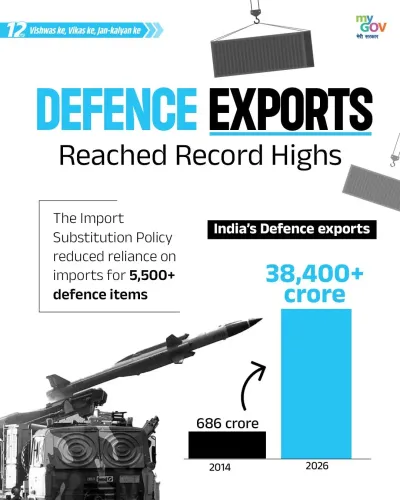
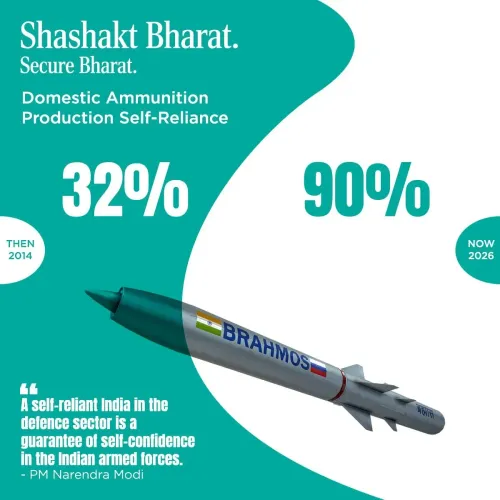
Union Minister Kiren Rijiju announced 405 new items on India's 6th Positive Indigenisation List on August 20, 2026, creating a ₹3,070 crore opportunity for domestic defence industry and pushing the cumulative indigenised-items tally past 15,700.
Key Takeaways
405 defence items added to the sixth Positive Indigenisation List , banning their import and mandating domestic procurement.
The additions create an estimated ₹3,070 crore opportunity for Indian manufacturers, MSMEs, and defence start-ups.
Cumulative indigenised defence items now exceed 15,700 across all six lists since 2020.
The first Positive Indigenisation List of 101 items was notified in August 2020 under the Aatmanirbhar Bharat initiative.
The Defence Acquisition Procedure (DAP) 2020 provides the procurement framework that gives preference to indigenously designed and developed products.
The policy explicitly targets MSMEs and start-ups as key industrial beneficiaries alongside the Indian Armed Forces.
India's defence self-reliance drive just got its most ambitious push yet. Union Parliamentary Affairs and Minority Affairs Minister Kiren Rijiju on Thursday, August 20, 2026 announced that 405 strategically important defence items have been added to the sixth Positive Indigenisation List, unlocking an estimated ₹3,070 crore opportunity for domestic industry — and signalling that the government has no intention of easing off the accelerator.
What the 6th list means for domestic defence manufacturing
The Positive Indigenisation List is a deceptively simple but powerful instrument: items on the list cannot be imported, forcing the armed forces to source them from Indian manufacturers. With this sixth edition, the cumulative tally of indigenised defence items crosses 15,700 — a number that would have seemed implausible when the first list of just 101 items was notified in August 2020 under the Aatmanirbhar Bharat framework.
Each successive list has climbed the technology ladder, moving from relatively straightforward components toward more strategically sensitive categories. The 405 new additions continue that trajectory, targeting items where import dependence carries both supply-chain and security risks.
MSMEs and start-ups in the crosshairs of a ₹3,070 crore pipeline
The ₹3,070 crore opportunity cited by Rijiju is not a subsidy — it is the procurement headroom that opens up for Indian firms once imports of these items are barred. MSMEs and defence start-ups are explicitly named as target beneficiaries, consistent with a policy design that has deliberately pushed contracts down the supply chain rather than concentrating them with large public-sector undertakings alone.
The Defence Acquisition Procedure (DAP) 2020 underpins this architecture, embedding an explicit preference for indigenous design, development and production at every procurement stage. Together, the negative-list mechanism and DAP incentives have drawn a growing number of private firms into a sector that was once almost entirely state-controlled.
Six lists in six years — and a pattern that is accelerating
The cadence tells its own story. The first list arrived in 2020; the second and third followed in 2021 and 2022; the fifth was notified in 2023. The sixth, announced in 2026, extends a run that has now spanned multiple budget cycles and defence acquisition revisions. What began as a crisis-response to pandemic-era supply shocks has hardened into a structural policy commitment.
For the Indian Armed Forces, the payoff is an assured domestic supply chain for a widening range of equipment — reducing the vulnerability that comes with import dependence in any strategic category. For the broader economy, it represents a deliberate effort to convert defence spending into an engine of domestic industrial growth rather than a drain on foreign exchange.
The next test will be implementation: whether the gazette notification, procurement timelines, and industry capacity can convert the listed opportunity into delivered hardware. That is where policy intent meets factory floor reality.
Point of View
070 crore) and a cumulative milestone (15,700+ items), the government is consciously framing defence indigenisation as an economic dividend, not merely a security imperative. The explicit inclusion of MSMEs and start-ups reflects a deliberate effort to broaden the political and industrial constituency for the programme. The real measure of success, however, will lie in whether procurement timelines and industry absorption capacity keep pace with the expanding lists.
NationPress
21 Aug 2026
Frequently Asked Questions
What is the Positive Indigenisation List in India?
The Positive Indigenisation List is a Ministry of Defence catalogue of items that the Indian Armed Forces must procure from domestic sources rather than import. Items on the list are effectively placed under an import ban, compelling the defence establishment to develop or source them within India.
How many items are on India's 6th Positive Indigenisation List?
The sixth Positive Indigenisation List adds 405 strategically important defence items , according to the announcement made by Union Minister Kiren Rijiju on August 20, 2026.
What is the ₹3,070 crore defence indigenisation opportunity?
The ₹3,070 crore figure represents the estimated domestic procurement opportunity unlocked by the 405 new items — the value of contracts that must now go to Indian manufacturers rather than foreign suppliers.
When did India start the Positive Indigenisation List programme?
The first Positive Indigenisation List, covering 101 items , was announced in August 2020 as part of the Aatmanirbhar Bharat self-reliance initiative launched that year.
How does the Positive Indigenisation List benefit MSMEs and start-ups?
By banning imports of listed items, the policy forces defence procurement toward Indian firms, including MSMEs and start-ups. This creates a guaranteed domestic market for companies that develop or manufacture these components, providing revenue certainty that is essential for smaller firms to invest in defence-grade technology.