Rijiju Highlights India's Defence Export Surge Under BJP Rule
Synopsis
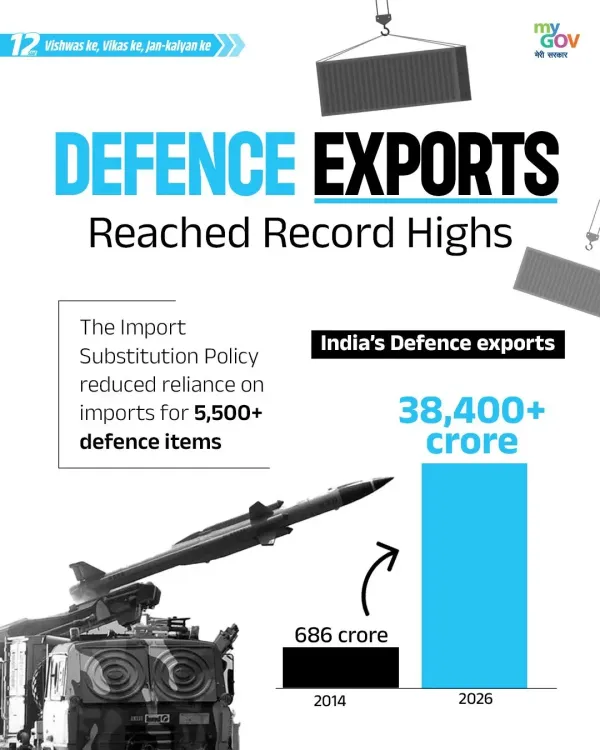
Union Parliamentary Affairs Minister Kiren Rijiju has marked twelve years of the Modi government by highlighting a near-56-fold surge in India's defence exports, from ₹686 crore in 2014 to over ₹38,400 crore in 2026, crediting Make in India and Atmanirbhar Bharat policies for the transformation.
Key Takeaways
India's defence exports have grown from ₹686 crore in 2014 to over ₹38,400 crore in 2026 , a near-56-fold increase.
The growth is attributed to policy shifts including Make in India (2014), revised Defence Procurement Procedure (2016), and Atmanirbhar Bharat Abhiyan (2020).
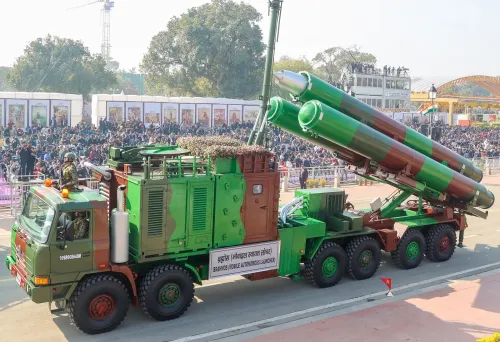
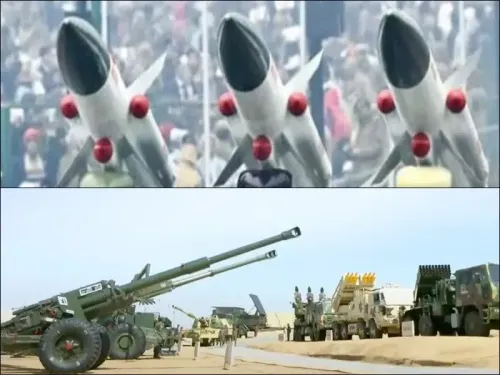
Key export products include the BrahMos missile, Akash air defence system, and small arms, reaching markets in Africa , Southeast Asia , and Latin America .
Both public-sector undertakings and private defence manufacturers have benefited from regulatory liberalisation and rising export demand.
The Defence Production and Export Promotion Policy is expected to be revised with higher export targets in the near term.
Rijiju's post is part of the BJP's #12YearsOfIndiaFirst campaign marking twelve years of NDA governance.
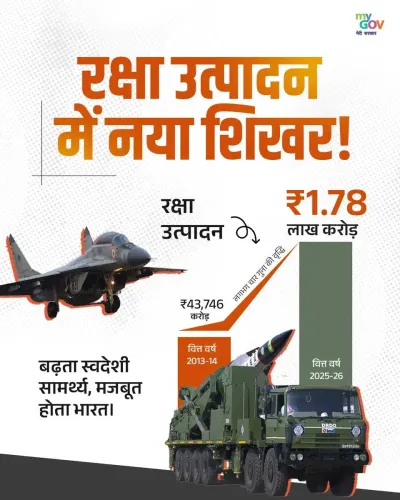
Union Parliamentary Affairs Minister Kiren Rijiju on Friday, June 19, 2026, highlighted India's dramatic rise as a defence exporter, citing a near-56-fold jump in defence exports from ₹686 crore in 2014 to over ₹38,400 crore in 2026 under the #12YearsOfIndiaFirst campaign.
Context
Rijiju's post, carrying the phrase 'Made in India. Trusted by the world.', is part of the ruling Bharatiya Janata Party's broader communication drive marking twelve years of the National Democratic Alliance government at the Centre. The figures cited span from the year the Modi government first assumed office to the present, framing the growth as a direct outcome of political will and policy continuity.
The post arrives as India consolidates its identity as a credible arms exporter — a status that was largely aspirational a decade ago. The contrast between the ₹686 crore baseline in 2014 and the current figure is intended to underscore the scale of the transformation in domestic defence manufacturing.
Policy Backdrop
The shift in India's defence posture traces back to the Make in India initiative launched in September 2014, which for the first time placed defence production at the centre of a national manufacturing push. The Defence Procurement Procedure was revised in 2016 to give priority to indigenously designed, developed, and manufactured equipment, gradually opening the sector to private players alongside public-sector undertakings.
The Atmanirbhar Bharat Abhiyan, announced in May 2020, deepened this thrust by setting explicit self-reliance targets, including a positive indigenisation list that restricted import of hundreds of defence items. Together, these policy levers created the conditions for both import substitution and export growth, with the Ministry of Defence setting successive export targets that have been progressively raised.
Products driving India's export growth include the BrahMos supersonic cruise missile, the Akash surface-to-air missile system, and a range of small arms and ammunition. Destination markets have expanded to include countries in Africa, Southeast Asia, and Latin America, reflecting India's ambition to deepen defence ties across the Global South and the Indo-Pacific.
Stakeholders and Impact
The beneficiaries of this export surge span both public-sector giants such as Hindustan Aeronautics Limited and Bharat Electronics Limited and a growing ecosystem of private defence manufacturers who have entered the sector following regulatory liberalisation. For partner nations — particularly smaller economies in the developing world — India's willingness to supply defence equipment on competitive terms offers an alternative to traditional Western or Chinese suppliers.
Domestic defence workers and ancillary industries have also gained from the production scale-up, with new defence corridors in Uttar Pradesh and Tamil Nadu intended to anchor manufacturing clusters. The broader strategic implication is that India is gradually translating defence exports into diplomatic leverage, reinforcing bilateral relationships through defence cooperation agreements.
What's Next
The government is expected to revise its Defence Production and Export Promotion Policy, with fresh export targets likely to be announced in the coming months. Parliamentary scrutiny of the annual defence budget will be a key moment for opposition parties to interrogate both the export figures and the quality of technology transfer accompanying these deals.
As India's defence export ambitions grow, the focus will increasingly shift from volume to the strategic value of the platforms being exported — and whether the country can move up the value chain from components and ammunition to complete weapons systems and platforms.
Point of View
Designed to convert a complex policy record into a single, shareable statistic. The near-56-fold export growth figure — if verified — would represent one of the most tangible outcomes of the Make in India programme, giving the ruling party a concrete rebuttal to critics who argue the initiative delivered more optics than output. The broader arc here is India's strategic pivot from being the world's largest arms importer to a credible exporter, a shift with implications not just for the defence-industrial base but for India's foreign policy toolkit in the Indo-Pacific and Global South. How the opposition interrogates the composition and quality of these exports — not just their rupee value — will define the next phase of this debate.
NationPress
24 Sept 2026
Frequently Asked Questions
How much have India's defence exports grown since 2014?
According to a post by Union Parliamentary Affairs Minister Kiren Rijiju, India's defence exports have grown from ₹686 crore in 2014 to over ₹38,400 crore in 2026, a near-56-fold increase attributed to Make in India and Atmanirbhar Bharat policies.
What is the Make in India initiative in defence?
Make in India is a flagship manufacturing initiative launched in September 2014 that placed defence production at its core, encouraging private-sector participation, indigenous design and development, and reducing dependence on arms imports.
Which Indian defence products are being exported?
India's defence export growth has been driven primarily by the BrahMos supersonic cruise missile, the Akash surface-to-air missile system, and a range of small arms and ammunition, sold to countries in Africa, Southeast Asia, and Latin America.
What is Atmanirbhar Bharat in the context of defence?
Atmanirbhar Bharat Abhiyan, announced in May 2020, set explicit self-reliance targets for India's defence sector, including a positive indigenisation list that restricted imports of hundreds of defence items to boost domestic production and exports.
What did Kiren Rijiju say about India's defence exports?
Kiren Rijiju posted on X on June 19, 2026, stating 'Made in India. Trusted by the world.' and citing a rise in defence exports from ₹686 crore in 2014 to over ₹38,400 crore in 2026 as part of the BJP's #12YearsOfIndiaFirst campaign.