Rijiju Marks 12 Years of Modi Govt's Security Doctrine
Synopsis
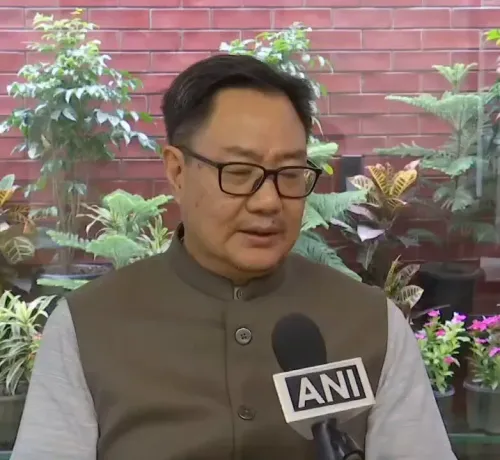
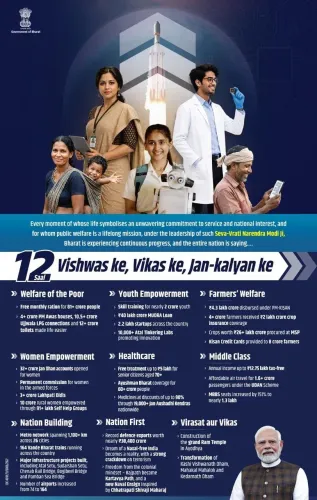
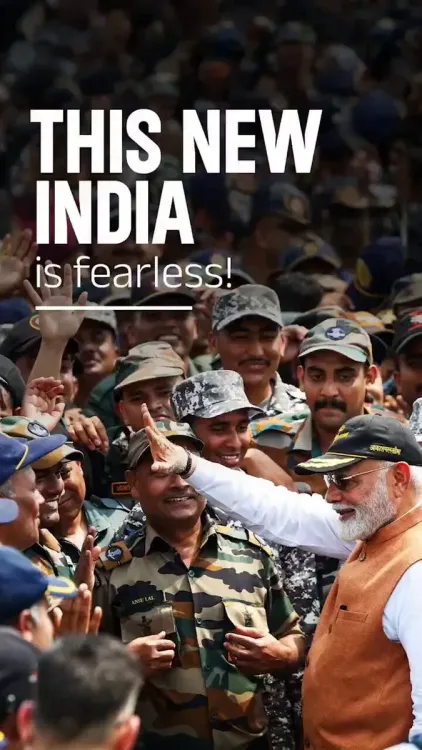
Union Parliamentary Affairs Minister Kiren Rijiju marked 12 years of the Modi government on June 17, 2026, declaring India 'fearless' and ready to defend its sovereignty, citing a strong and decisive national security approach under PM Modi since 2014.
Key Takeaways
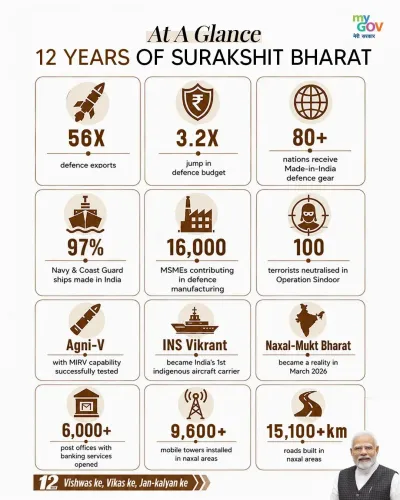
Kiren Rijiju posted on June 17, 2026 , marking 12 years of the Modi government with a focus on national security under the hashtag #12YearsOfSurakshitBharat .
The minister stated that 'a fearless India stands ready to protect its people and its sovereignty.' The BJP government created the post of Chief of Defence Staff in December 2019 , a landmark structural reform in India's higher defence organisation.
The Atmanirbhar Bharat defence initiative has sought to reduce import dependence through indigenous weapons procurement and manufacturing targets.
Significant border infrastructure development along the Line of Actual Control (LAC) has been a key pillar of the government's security posture since 2014 .
Parliamentary scrutiny of the next defence budget and the status of integrated theatre commands remain key issues to watch.
Union Parliamentary Affairs Minister Kiren Rijiju on Wednesday, June 17, 2026, invoked the #12YearsOfSurakshitBharat hashtag to highlight what the ruling dispensation describes as a decade-plus of assertive national security under Prime Minister Narendra Modi, stating that 'a fearless India stands ready to protect its people and its sovereignty.'
Context
Rijiju's post marks the completion of 12 years of the BJP-led government at the Centre, which came to power in May 2014. The minister characterised the period as defined by a 'strong and decisive approach to national security,' framing the anniversary in explicitly security-centric terms rather than through an economic or governance lens. The coordinated use of the hashtag across BJP leadership suggests a structured party communication exercise around the milestone.
Policy Backdrop
Since 2014, the Modi government has pursued a series of structural changes to India's defence establishment. The most significant institutional reform was the creation of the post of Chief of Defence Staff (CDS) in December 2019, aimed at integrating the three services under unified theatre commands. Alongside this, the government launched the Atmanirbhar Bharat initiative for defence manufacturing, seeking to reduce India's historically high dependence on weapons imports by promoting indigenous production through both public-sector undertakings and private industry.
The government has also significantly increased capital outlays in successive defence budgets and accelerated border infrastructure development along the Line of Actual Control (LAC) with China, including roads, bridges, and tunnels in Arunachal Pradesh, Ladakh, and Sikkim. A more proactive security posture — including publicly acknowledged surgical strikes — has been central to the BJP's political identity on national security.
Stakeholders and Impact
The primary stakeholders in this policy arc are India's armed forces, border-area civilian populations, and the domestic defence industry. Communities in frontier states such as Arunachal Pradesh — Rijiju's own constituency — have directly experienced the infrastructure push along sensitive borders. The defence manufacturing sector, both public and private, has been reshaped by indigenisation targets and revised positive indigenisation lists that bar or restrict imports of specified platforms and equipment.
For the broader electorate, the 'Surakshit Bharat' (Secure India) framing serves as a political signal, tying the government's 12-year record to themes of national pride and territorial integrity — issues that consistently rank high in Indian public opinion surveys on governance priorities.
What's Next
Parliamentary scrutiny of the next Union Defence Budget will be a key indicator of whether capital expenditure on modernisation continues to grow in real terms. Structural reforms to higher defence organisation — including the operationalisation of integrated theatre commands, which has seen repeated delays — remain a watch point. Any further policy announcements tied to the #12YearsOfSurakshitBharat campaign from the government or party are likely in the days ahead, as BJP leaders amplify the anniversary messaging across platforms.
Point of View
A framing that has proved electorally durable since 2014. By anchoring the anniversary message in sovereignty and fearlessness rather than economic metrics, the party is doubling down on the security narrative at a moment when defence policy — from theatre commands to the defence budget — faces ongoing parliamentary and public scrutiny. For Rijiju specifically, a minister from border-state Arunachal Pradesh, the security emphasis carries both national political weight and local resonance. The messaging signals that the BJP intends to keep national security at the centre of its political communication well into its third term.
NationPress
16 Sept 2026
Frequently Asked Questions
What is #12YearsOfSurakshitBharat?
#12YearsOfSurakshitBharat is a BJP campaign hashtag marking 12 years of the Narendra Modi government, highlighting the ruling party's claimed achievements in national security and defence since May 2014.
What did Kiren Rijiju say about India's national security?
Kiren Rijiju stated that 'a fearless India stands ready to protect its people and its sovereignty,' crediting Prime Minister Modi's 'strong and decisive approach' over the last 12 years.
What are the key defence reforms under the Modi government?
Key reforms include the creation of the Chief of Defence Staff post in December 2019, the Atmanirbhar Bharat defence manufacturing initiative, increased defence capital budgets, and accelerated border infrastructure along the Line of Actual Control.
Who is Kiren Rijiju?
Kiren Rijiju is a senior BJP leader from Arunachal Pradesh who serves as Union Minister of Parliamentary Affairs and Minister of Minority Affairs in the Modi government.
What is the significance of the Chief of Defence Staff post created in 2019?
The Chief of Defence Staff was created in December 2019 to integrate India's three armed services under a single military adviser and lay the groundwork for unified theatre commands, marking the most significant reform to India's higher defence organisation in decades.