Rijiju Marks 12 Years of NDA Govt's Legislative Record

Synopsis
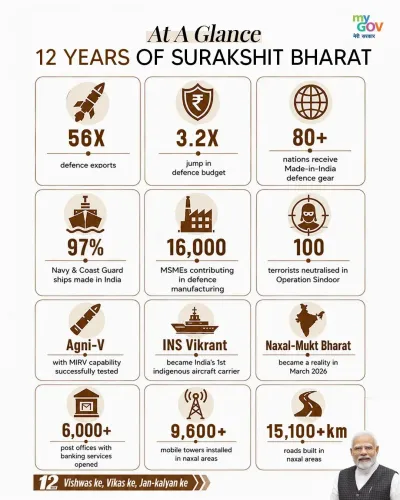
Union Parliamentary Affairs Minister Kiren Rijiju marked 12 years of the NDA government led by PM Narendra Modi on June 11, 2026, highlighting Parliament's passage of 'historic and transformational' laws — from GST and the IBC to the reorganisation of Jammu and Kashmir — as the coalition's defining legislative legacy.
Key Takeaways
Union Parliamentary Affairs Minister Kiren Rijiju posted on June 11, 2026 marking 12 years of the NDA government under PM Narendra Modi .
Rijiju described laws passed by Parliament during this period as 'historic and transformational.' Key legislation enacted includes the Goods and Services Tax (GST) laws in 2017 , the Insolvency and Bankruptcy Code in 2016 , and the Jammu and Kashmir reorganisation legislation in 2019 .
The NDA has used stable parliamentary majorities to accelerate structural reforms across taxation, insolvency, criminal procedure, and federal arrangements.
Rijiju serves as the minister responsible for managing government legislative business in both Houses of Parliament.
Upcoming Monsoon and Winter sessions of Parliament are expected to carry forward the government's legislative agenda.
Union Parliamentary Affairs Minister Kiren Rijiju on Thursday, June 11, 2026, highlighted the legislative legacy of 12 years of the National Democratic Alliance (NDA) government led by Prime Minister Narendra Modi, describing the laws passed by Parliament during this period as 'historic and transformational.'
Context
Rijiju's post, shared on the occasion of the NDA government completing 12 years in power, underscores the ruling coalition's emphasis on its parliamentary record as a defining achievement. As Union Minister of Parliamentary Affairs, Rijiju oversees the management of government business in both Houses of Parliament, making his voice on legislative output particularly significant.
The NDA, led by the Bharatiya Janata Party (BJP), first came to power at the Centre in May 2014 under Prime Minister Narendra Modi, winning successive general elections and maintaining a working majority in Parliament across multiple terms.
Policy Backdrop
The legislative record of the NDA government since 2014 includes several structural reforms that reshaped India's economic and constitutional framework. The Goods and Services Tax (GST) constitutional amendment and related laws, enacted in 2017, unified India's indirect tax regime into a single national market — one of the most consequential fiscal reforms since Independence.
In 2019, Parliament passed legislation reorganising Jammu and Kashmir into two Union Territories and revoked the special status conferred by Article 370 through a presidential order — a move with far-reaching constitutional implications. The Insolvency and Bankruptcy Code (IBC), enacted in 2016, overhauled corporate insolvency resolution processes and is widely credited with improving India's ease-of-doing-business metrics.
Beyond these landmark measures, the NDA governments have used stable parliamentary majorities to push through reforms in criminal procedure, labour consolidation, and data governance, accelerating legislative output particularly during sessions where both Houses were aligned.
Stakeholders and Impact
The legislative changes of the past 12 years have touched virtually every sector of the Indian economy and society — from taxpayers and businesses navigating the GST framework, to creditors and debtors operating under the IBC, to citizens and legislators grappling with the constitutional reorganisation of Jammu and Kashmir.
For the BJP and NDA, the legislative record forms a central plank of political messaging, positioning the coalition as a government of decisive reform rather than incremental governance. Opposition parties have contested the framing of several of these laws, raising concerns about federal consultation, constitutional propriety, and implementation gaps — debates that continue in and outside Parliament.
What's Next
With the government entering its 12th year, attention in parliamentary circles is turning to the legislative agenda for upcoming sessions — including potential implementation reviews and possible amendments to recently passed laws. The government's business list for the Monsoon and Winter sessions of Parliament will be closely watched for signals on new legislative priorities. Rijiju's post signals that the ruling coalition intends to keep its parliamentary record front and centre in public communication as it looks ahead.
Point of View
Deploying the language of legislative achievement to reinforce the coalition's reform narrative ahead of future electoral cycles. As the minister who manages parliamentary business, his framing of the record carries institutional weight beyond routine party messaging. The invocation of 'historic and transformational' laws points to a deliberate effort to anchor the NDA's identity in structural governance rather than welfare schemes alone — a subtle shift in emphasis. The broader pattern suggests the BJP intends to make its parliamentary productivity a durable political asset, particularly as debates over implementation and federal consultation on several of these laws remain live.
NationPress
23 Sept 2026
Frequently Asked Questions
What are the most important laws passed by the NDA government in 12 years?
Among the most significant laws passed during the 12 years of NDA government under PM Modi are the Goods and Services Tax (GST) constitutional amendment and related laws in 2017, the Insolvency and Bankruptcy Code (IBC) in 2016, and the legislation reorganising Jammu and Kashmir into two Union Territories in 2019.
Why did Kiren Rijiju post about 12 years of NDA government?
Kiren Rijiju posted to mark the 12th anniversary of the NDA government led by PM Narendra Modi, highlighting Parliament's legislative record as 'historic and transformational' — a message aligned with the ruling coalition's political communication strategy.
What is Kiren Rijiju's role in the Indian government?
Kiren Rijiju is the Union Minister of Parliamentary Affairs and Minister of Minority Affairs. He is a senior BJP leader from Arunachal Pradesh and is responsible for managing the government's legislative business in both Houses of Parliament.
When did the NDA government first come to power under Narendra Modi?
The NDA government under Narendra Modi first came to power in May 2014, following a decisive general election victory. The coalition has since won successive general elections and maintained a working majority in Parliament.
What is the significance of the GST and IBC for India?
The Goods and Services Tax unified India's fragmented indirect tax regime into a single national market, while the Insolvency and Bankruptcy Code overhauled corporate insolvency resolution — both are considered landmark structural reforms that reshaped India's economic framework.