Rijiju Marks 12 Years of Modi Govt's Security Vision
Synopsis
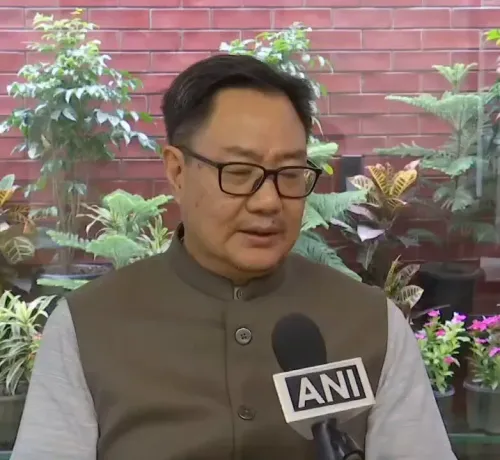
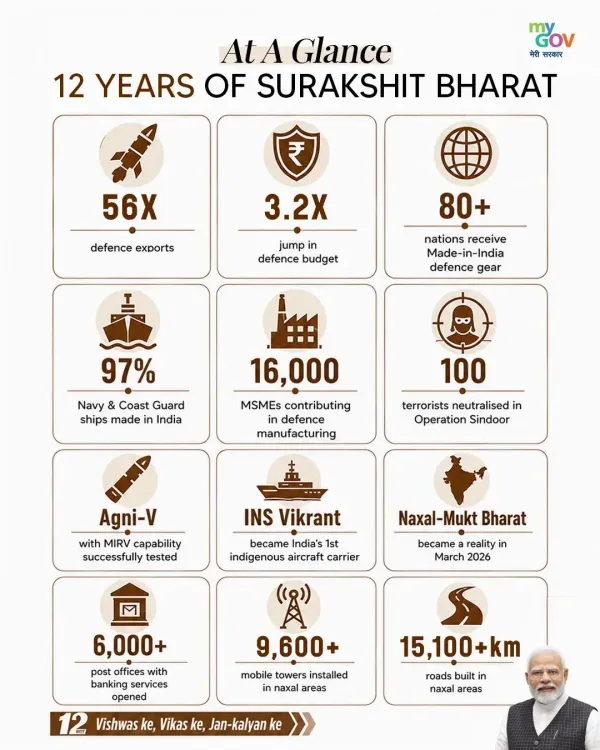
Union Minister Kiren Rijiju on 17 June 2026 marked twelve years of the Modi government under the hashtag #12YearsOfSurakshitBharat, citing security, strength, and self-reliance as its defining pillars — a message aligned with BJP's defence indigenisation and strategic-autonomy agenda.
Key Takeaways
Kiren Rijiju posted on 17 June 2026 using #12YearsOfSurakshitBharat to mark the Modi government's twelfth year in office.
He cited 'security, strength and self-reliance' as the three hallmarks of the Narendra Modi -led administration since May 2014 .
The Defence Procurement Procedure was revised in 2016 and 2020 to prioritise indigenously produced military platforms.
Positive Indigenisation Lists introduced from 2021 have progressively banned imports of specified defence items to boost domestic manufacturing.
The Atmanirbhar Bharat programme, launched in May 2020 , underpins the self-reliance pillar with production-linked incentives for defence hardware.
The next Union Budget and a possible parliamentary debate on the Defence Procurement Manual are key upcoming milestones for this agenda.
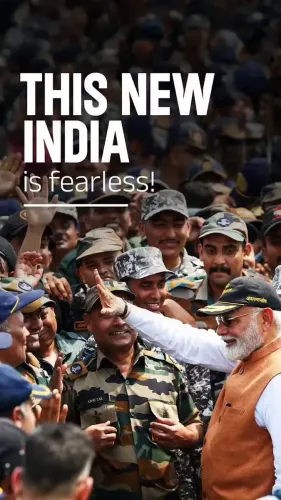
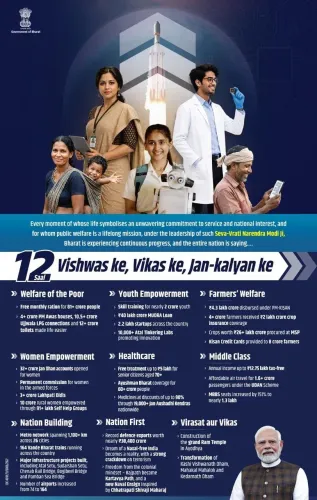
Union Parliamentary Affairs Minister Kiren Rijiju on Wednesday, 17 June 2026 invoked the hashtag #12YearsOfSurakshitBharat to mark what the ruling Bharatiya Janata Party frames as twelve years of security-centred governance under Prime Minister Narendra Modi, who first took office in May 2014.
Context
Rijiju's post describes 'security, strength and self-reliance' as the defining hallmarks of the Modi government's twelve-year tenure, calling the period one of building 'a stronger and more resilient India for the future.' The message is part of a coordinated BJP campaign marking the anniversary of the party's return to power in 2014, using the umbrella hashtag #12YearsOfSurakshitBharat — loosely translated as '12 Years of a Secure India.'
As Union Minister of Parliamentary Affairs and Minority Affairs, Rijiju is among the senior cabinet voices amplifying the government's record on national security and strategic autonomy ahead of what is expected to be an active parliamentary session.
Policy Backdrop
The three pillars Rijiju cites — security, strength, and self-reliance — map directly onto a series of policy shifts since 2014. The government revised the Defence Procurement Procedure in 2016 and again in 2020, each iteration giving greater preference to indigenously designed, developed, and produced platforms.
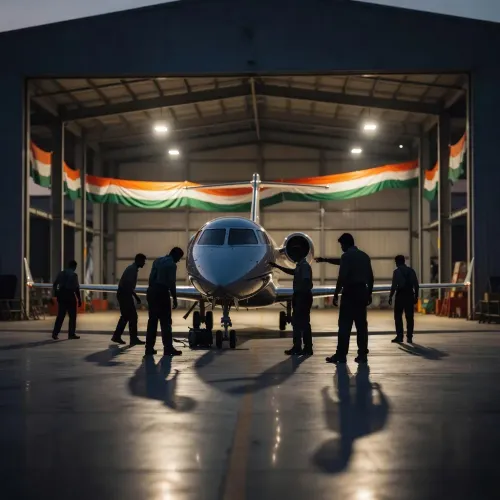
From 2021 onwards, successive Positive Indigenisation Lists have banned the import of specified defence items, channelling demand toward domestic manufacturers. These measures sit within the broader Atmanirbhar Bharat (self-reliant India) programme launched in May 2020, which extended production-linked incentives to military hardware and sought to transform India from one of the world's largest arms importers into a meaningful defence exporter.
Parallel investment in border roads, bridges, and forward infrastructure — particularly along the Line of Actual Control — has been presented by the government as the 'strength' dimension of this triad.
Stakeholders and Impact
The primary beneficiaries of the indigenisation push have been domestic defence manufacturers, both public-sector undertakings and a growing private-sector ecosystem that now includes major industrial conglomerates and specialised aerospace firms. The armed forces, as end-users, stand to gain from shorter supply chains and reduced foreign-exchange exposure on capital procurement.
Critics and opposition parties have periodically argued that capital budget allocations for defence modernisation have not always kept pace with stated ambitions, and that import substitution targets on complex platforms remain a work in progress — though Rijiju's post does not engage with these counterpoints.
What's Next
The government's next significant test on this agenda will be the upcoming Union Budget, where fresh capital outlay figures for defence research, development, and production will be scrutinised by analysts and lawmakers alike. A possible parliamentary discussion on the next Defence Procurement Manual could also provide a formal forum for debating the twelve-year record Rijiju and his colleagues are now highlighting. The #12YearsOfSurakshitBharat campaign signals that national security will remain a central BJP talking point through the current political cycle.
Point of View
Military modernisation, and economic self-reliance — into a single, electorally resonant narrative. By invoking self-reliance alongside security, the BJP is drawing a direct line from its defence indigenisation record to the broader Atmanirbhar Bharat brand, reinforcing that national security is both a strategic and an economic argument. The timing, at the twelve-year mark, suggests a sustained campaign to consolidate the party's identity as the steward of India's strategic autonomy before the next major electoral cycle. Whether the government's actual capital allocations and procurement timelines match the rhetorical ambition is a question the upcoming budget will begin to answer.
NationPress
16 Sept 2026
Frequently Asked Questions
What is #12YearsOfSurakshitBharat?
#12YearsOfSurakshitBharat is a BJP campaign hashtag marking twelve years of the Narendra Modi government since May 2014, highlighting the administration's record on national security, defence indigenisation, and self-reliance.
What is Atmanirbhar Bharat in defence?
Atmanirbhar Bharat, launched in May 2020, is a self-reliance programme that includes defence indigenisation lists banning specified imports and production-linked incentives to encourage domestic manufacturing of military hardware.
What are India's Positive Indigenisation Lists?
Positive Indigenisation Lists, notified from 2021 onwards, are government-issued lists of defence items that cannot be imported, compelling the armed forces to source them from Indian manufacturers.
Who is Kiren Rijiju?
Kiren Rijiju is a senior BJP leader from Arunachal Pradesh who currently serves as Union Minister of Parliamentary Affairs and Minister of Minority Affairs in the Modi cabinet.
How has India's defence procurement policy changed since 2014?
Since 2014, India revised its Defence Procurement Procedure in 2016 and 2020 to prioritise indigenously designed platforms, introduced successive import-ban lists, and expanded defence export targets as part of a broader strategic-autonomy agenda.