PM Modi marks 12 years of defence self-reliance push
Synopsis
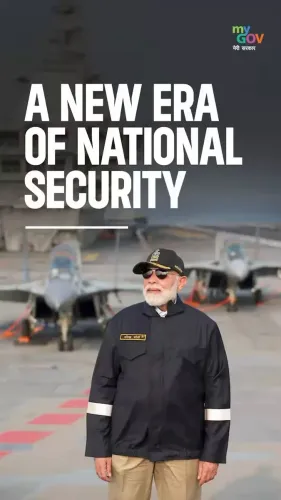
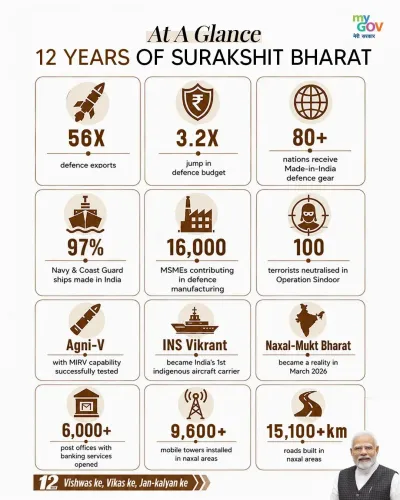
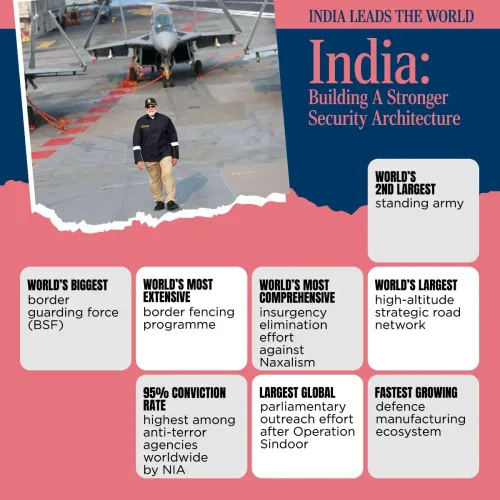
Prime Minister Narendra Modi on 17 June 2026 posted a thread marking twelve years of India's defence self-reliance push, citing advances across air, land, and sea and indigenous technologies under the hashtag #12YearsOfSurakshitBharat.
Key Takeaways
PM Modi posted a thread on 17 June 2026 marking 12 years of India's defence capability build-up under #12YearsOfSurakshitBharat .
The government's defence indigenisation drive rests on Make in India (2014) , Defence Procurement Procedure 2016 , and successive negative import lists from 2020 .
DRDO and HAL are the principal public-sector institutions delivering indigenous platforms such as the Tejas fighter.
The Atmanirbhar Bharat initiative set explicit defence production targets to curb import dependence when it launched in 2020 .
Private-sector participation has been expanded through iDEX and production-linked incentive schemes alongside strategic partnerships with the US, France, Israel , and Russia .
The next signposts are the 2026-27 defence budget allocations and Aero India 2027 .
Prime Minister Narendra Modi on Wednesday, 17 June 2026 posted a thread on X outlining how India has strengthened its defence capabilities across air, land, and sea over the past twelve years, citing advances in indigenous technologies and the broader goal of national self-reliance under the hashtag #12YearsOfSurakshitBharat.
Context
The post marks what the ruling establishment is framing as a twelve-year milestone in defence transformation since 2014, when the Bharatiya Janata Party-led government took office. Modi wrote that the thread 'explains how India has strengthened its defence capabilities across air, land and sea, advanced indigenous technologies and built a stronger foundation for self-reliance and national security.' The hashtag #12YearsOfSurakshitBharat — loosely translated as '12 Years of a Secure India' — signals a deliberate political and policy stocktaking exercise.
The post is part of a broader government communication campaign timed to the anniversary of the National Democratic Alliance's return to power, positioning defence indigenisation as one of its signature achievements.
Policy Backdrop
India's push for defence self-reliance has been built on several interlocking policy pillars. The Make in India initiative, launched in September 2014, explicitly included defence manufacturing as a priority sector, while the Defence Procurement Procedure 2016 introduced a dedicated 'Buy (Indian-IDDM)' category to favour domestically designed and developed equipment.
From 2020 onwards, the government notified successive negative import lists progressively banning the import of specified defence items, pushing the armed forces and the private sector toward domestic sourcing. The Atmanirbhar Bharat initiative, also launched in 2020, set explicit defence production targets to reduce dependence on foreign suppliers. Institutions such as DRDO (Defence Research and Development Organisation) and HAL (Hindustan Aeronautics Limited) have been central to delivering indigenous platforms including the Tejas light combat aircraft and a range of rotary-wing assets.
The government has also expanded private-sector participation through the iDEX (Innovations for Defence Excellence) framework and production-linked incentive schemes, while diversifying strategic partnerships with the United States, France, Israel, and Russia for joint development projects.
Stakeholders and Impact
The primary beneficiaries of this policy shift are India's armed forces — the Army, Navy, and Air Force — which have been directed to prioritise domestic procurement in their capital acquisition plans. Domestic defence manufacturers, both public-sector undertakings and a growing private ecosystem, stand to gain from a rising share of the defence capital budget being ring-fenced for indigenous production.
The government has steadily raised the proportion of domestic capital procurement within the overall defence budget since 2014. This has created a more competitive domestic industrial base, though analysts note that closing gaps in critical technologies — particularly in propulsion, advanced electronics, and precision munitions — remains a work in progress.
What's Next
Observers will watch for the release of the next tranche of the negative import list and the detailed 2026-27 defence budget allocations earmarked for indigenous programmes. Aero India 2027 is expected to serve as the next major showcase for new domestically developed platforms. The government's ability to translate political messaging into measurable induction timelines for key platforms will be the defining test of the 'Surakshit Bharat' narrative as it enters its next phase.
Point of View
IDEX, HAL production ramp-ups — into a consolidated electoral and diplomatic narrative. By anchoring the message in air, land, and sea domains simultaneously, the government signals comprehensive strategic intent rather than platform-specific wins. The move fits a broader BJP pattern of using milestone anniversaries to reframe governance as a security story, particularly ahead of budget and procurement cycles. Whether the narrative holds will depend on how quickly flagship platforms move from prototype to squadron-level induction.
NationPress
19 Sept 2026
Frequently Asked Questions
What is #12YearsOfSurakshitBharat?
#12YearsOfSurakshitBharat — meaning '12 Years of a Secure India' — is a hashtag used by Prime Minister Narendra Modi on 17 June 2026 to mark twelve years of the BJP-led government's defence indigenisation and national security policies since 2014.
What is India's Atmanirbhar Bharat defence policy?
Atmanirbhar Bharat, launched in 2020, is India's self-reliance initiative that includes specific defence production targets aimed at reducing the country's dependence on foreign arms imports through domestic manufacturing and R&D.
What is India's negative import list for defence?
India's negative import list is a government-notified roster of defence items that cannot be imported, compelling the armed forces to source them domestically. The lists have been issued in tranches from 2020 onwards to progressively expand indigenous procurement.
What role does HAL play in India's defence indigenisation?
Hindustan Aeronautics Limited (HAL) is India's primary public-sector aircraft manufacturer, responsible for producing the Tejas light combat aircraft and a range of military helicopters as part of the country's push for self-reliance in aerospace defence.
What is iDEX in Indian defence?
iDEX, or Innovations for Defence Excellence, is a government framework that provides funding and support to startups and MSMEs to develop innovative defence and aerospace technologies, expanding private-sector participation in India's defence industrial base.