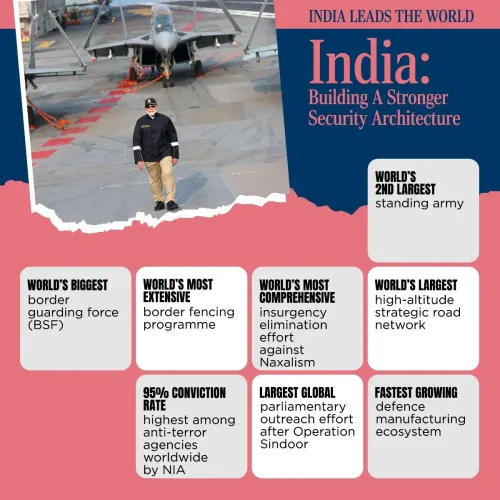
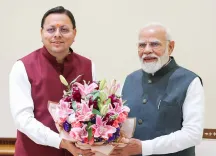
CM MP Office Backs Modi's Defence Self-Reliance Push
Synopsis
The Chief Minister's Office of Madhya Pradesh on 17 June 2026 aligned with PM Modi's national security agenda, highlighting twelve years of defence indigenisation, border infrastructure expansion, and self-reliant manufacturing under the Atmanirbhar Bharat framework.
Key Takeaways
The Chief Minister's Office of Madhya Pradesh posted on 17 June 2026 backing PM Modi's defence modernisation agenda.
The post marks twelve years of the Modi government's national security and self-reliance drive, flagged under #12YearsOfSurakshitBharat .
Atmanirbhar Bharat , launched in 2020 , introduced negative import lists compelling domestic defence production.
Two Defence Industrial Corridors in Uttar Pradesh and Tamil Nadu were established in 2018 to anchor private-sector manufacturing.
Border infrastructure development along northern and eastern frontiers has accompanied the indigenisation push, improving military logistics.
Future Union Budget defence capital allocations and indigenous platform induction timelines are the key metrics to watch.
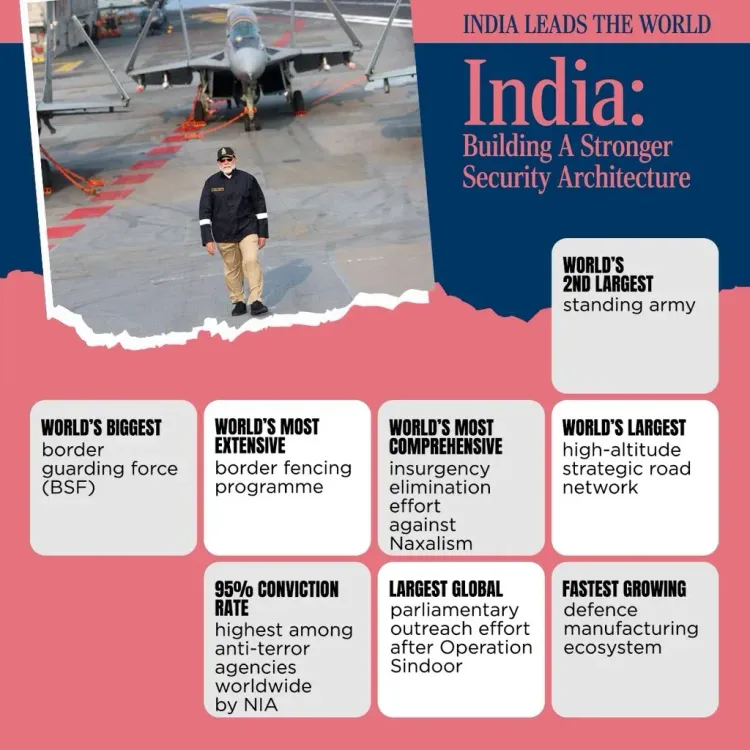
The Chief Minister's Office of Madhya Pradesh on Wednesday, 17 June 2026, posted a message on X reaffirming the state government's alignment with the central government's national security agenda, highlighting India's expanding defence capabilities, border infrastructure, and self-reliant defence manufacturing ecosystem under Prime Minister Narendra Modi.
The post, shared under the hashtags #12YearsOfNayaBharatNirman, #12YearsOfSeva, and #12YearsOfSurakshitBharat, frames the past twelve years as a period of deliberate, sustained investment in India's security architecture. It reads: 'India is building a robust security architecture through modern defence capabilities, stronger border infrastructure, and a rapidly expanding self-reliant defence ecosystem.'
Context
The post comes as the BJP-led central government marks over a decade of continuous rule under Prime Minister Modi, who first took office in May 2014. The messaging from Chief Minister Mohan Yadav's office places Madhya Pradesh squarely within the national narrative of defence modernisation and self-reliance, linking state-level political communication to central government achievements.
The hashtag #12YearsOfSurakshitBharat — translating to '12 Years of a Secure India' — signals a coordinated commemoration of the Modi government's security-related milestones since 2014.
Policy Backdrop
India's push for defence indigenisation has been one of the defining policy arcs of the Modi era. The Make in India initiative, launched in 2014, identified defence as a priority sector, opening the door to private-sector participation and technology absorption. This was followed by the establishment of two Defence Industrial Corridors — in Uttar Pradesh and Tamil Nadu — announced in 2018 to build concentrated manufacturing ecosystems.
The Atmanirbhar Bharat framework, launched in 2020, gave the indigenisation drive sharper teeth: the Ministry of Defence introduced successive negative import lists, banning imports of specific platforms and components to compel domestic production. The policy has been accompanied by liberalised foreign direct investment norms and a growing role for private defence firms alongside public-sector undertakings.
Border infrastructure development — particularly along the northern and eastern frontiers — has run in parallel, with accelerated road, tunnel, and logistics construction aimed at improving military mobility in strategic zones.
Stakeholders and Impact
The primary beneficiaries of this policy direction include domestic defence manufacturers, both public and private, who have gained expanded order books and technology-transfer opportunities. The Indian Armed Forces stand to benefit from faster induction of indigenously developed platforms, reducing dependence on foreign supply chains that can be disrupted during conflict.
Border states — including those in the north and northeast — have seen direct investment in road and tunnel connectivity that serves both civilian and strategic military purposes. The broader industrial ecosystem, including MSMEs supplying components to larger defence contractors, has also been drawn into this supply chain.
What's Next
Attention will now turn to forthcoming Union Budget allocations for defence capital expenditure and the pace of induction of platforms listed under recent negative import lists. The political messaging from state governments such as Madhya Pradesh suggests the BJP intends to make the defence self-reliance narrative a prominent theme in the run-up to future electoral cycles. Progress on indigenous platforms and border infrastructure timelines will determine how substantive this narrative remains beyond ceremonial commemoration.
Point of View
With real institutional changes — negative import lists, industrial corridors, FDI liberalisation — underpinning the rhetoric. Whether the pace of indigenous platform induction and border infrastructure delivery matches the scale of the commemorative messaging will be the harder political test in the months ahead.
NationPress
16 Sept 2026
Frequently Asked Questions
What is the Atmanirbhar Bharat defence initiative?
Atmanirbhar Bharat is a national self-reliance framework launched in 2020 that includes defence manufacturing as a priority sector, using negative import lists to ban specific foreign purchases and push domestic production by both public and private firms.
What are India's Defence Industrial Corridors?
India has two Defence Industrial Corridors — one in Uttar Pradesh and one in Tamil Nadu — announced in 2018 to create concentrated ecosystems of defence manufacturers, suppliers, and technology partners with private-sector participation.
Why did Madhya Pradesh's CM office post about national defence?
The post aligns with a coordinated BJP communications effort marking twelve years of the Modi government, using hashtags such as #12YearsOfSurakshitBharat to highlight national security achievements at the state level.
What is India's border infrastructure push under Modi?
Since 2014, India has accelerated construction of roads, tunnels, and logistics infrastructure along northern and eastern borders to improve military mobility and strategic connectivity in sensitive frontier zones.