CM MP Office Highlights Modi's Defence & Border Push
Synopsis
The Chief Minister's Office of Madhya Pradesh marked 12 years of PM Modi's governance by highlighting India's advances in defence modernisation, border infrastructure, and the Atmanirbhar Bharat self-reliance initiative, tagging CM Dr Mohan Yadav in a show of state-centre alignment.
Key Takeaways
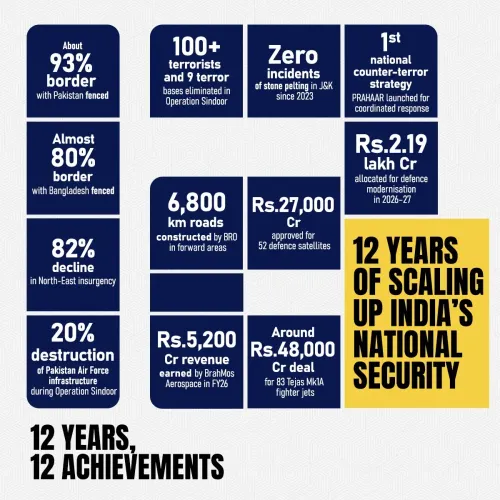
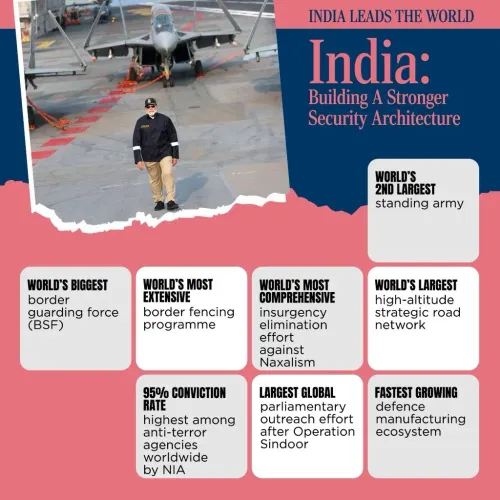
The Chief Minister's Office of Madhya Pradesh posted on 17 June 2026 crediting PM Narendra Modi with strengthening India's national security architecture.
The post was tagged with #12YearsOfNayaBharatNirman and #12YearsOfSurakshitBharat , framing the message as a governance milestone.
The Atmanirbhar Bharat initiative, launched in May 2020 , underpins India's push to reduce dependence on defence imports and scale up indigenous production.
Two Defence Industrial Corridors in Uttar Pradesh and Tamil Nadu were established to build domestic manufacturing clusters for the armed forces.
The Border Roads Organisation has accelerated infrastructure projects along the Line of Actual Control since 2014 , boosting both military logistics and civilian connectivity.
CM Dr Mohan Yadav was tagged in the post, reflecting Madhya Pradesh's alignment with the central government's security and self-reliance narrative.
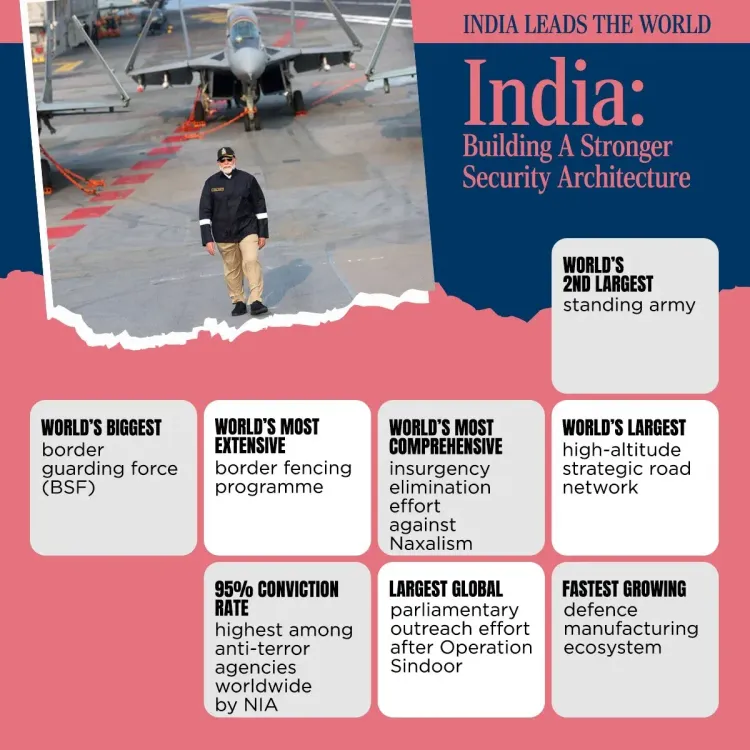
The Chief Minister's Office of Madhya Pradesh on Wednesday, 17 June 2026, posted a message crediting Prime Minister Narendra Modi with building a stronger national security framework through modern defence capabilities, upgraded border infrastructure, and an expanding self-reliant defence ecosystem.
Context
The post, shared under the hashtags #12YearsOfNayaBharatNirman and #12YearsOfSurakshitBharat (12 Years of a Secure India), marks a milestone in the ruling party's communication around a decade-plus of governance. The messaging frames PM Modi's tenure as a period of deliberate and sustained investment in national security architecture. It also tags Chief Minister Dr Mohan Yadav, signalling alignment between the state government and the central government's security narrative.
The phrase 'self-reliant defence ecosystem' is a direct reference to the Atmanirbhar Bharat initiative, launched in May 2020, which set targets for indigenous defence production and reduced dependence on imports.
Policy Backdrop
India's push for defence self-reliance has roots in a series of structural reforms. The Defence Procurement Procedure 2016 introduced priority categories for 'Make in India' capital acquisitions, reshaping how the armed forces source equipment. This was followed by the announcement of two Defence Industrial Corridors — in Uttar Pradesh and Tamil Nadu — designed to create manufacturing clusters and attract both domestic and foreign defence firms.
On the infrastructure front, the Border Roads Organisation accelerated road and tunnel construction along the Line of Actual Control, particularly after 2014, responding to sustained deployment requirements along India's northern frontier. These projects have been central to the government's argument that border security is being reinforced through physical connectivity as much as through firepower.
Stakeholders and Impact
The beneficiaries of this policy direction span multiple sectors. Defence manufacturers — both public-sector undertakings and private firms — have seen expanded procurement opportunities under indigenisation mandates. The Indian Army, Navy, and Air Force have simultaneously pursued modernisation across platforms, from fighter aircraft to warships to surveillance systems.
Border districts in states such as Ladakh, Arunachal Pradesh, and Sikkim have seen direct infrastructure investment through road and tunnel projects, improving both civilian connectivity and military logistics. Madhya Pradesh, while not a border state, has positioned itself within this national narrative, with state leadership consistently echoing central government priorities on security and self-reliance.
What's Next
Attention will now turn to upcoming Union Budget allocations for defence, where indigenisation milestones and capital expenditure targets will be closely watched. Any announcements regarding new manufacturing nodes, testing facilities, or defence corridor expansions — including the possibility of nodes in Madhya Pradesh — will be read as indicators of how far the self-reliance agenda has progressed beyond its initial corridors. The hashtag campaign around 12 years of governance suggests the ruling party intends to sustain this messaging through the near-term political calendar.
Point of View
Timed to a 12-year governance milestone. By invoking defence modernisation and border security — two areas with broad public resonance — the messaging seeks to consolidate the ruling party's national-security credentials ahead of a politically active period. The tagging of CM Dr Mohan Yadav reinforces the pattern of state governments functioning as amplifiers of the central narrative, particularly on issues where the Centre holds primary jurisdiction. Cumulatively, such messaging builds a long-term political brand around security and self-reliance that is difficult for opposition voices to contest on purely factual grounds.
NationPress
16 Sept 2026
Frequently Asked Questions
What did the Madhya Pradesh CM Office post about on 17 June 2026?
The Chief Minister's Office of Madhya Pradesh posted a message on 17 June 2026 crediting PM Narendra Modi with building a robust national security framework through modern defence capabilities, stronger border infrastructure, and an expanding self-reliant defence ecosystem.
What is Atmanirbhar Bharat in the context of defence?
Atmanirbhar Bharat is a self-reliance initiative launched in May 2020 that set targets for indigenous defence production and exports, aiming to reduce India's dependence on imported military equipment and grow a domestic defence manufacturing base.
What are India's Defence Industrial Corridors?
India announced two Defence Industrial Corridors — one in Uttar Pradesh and one in Tamil Nadu — to create clusters of defence manufacturing units, attracting both public-sector and private firms to produce equipment for the Indian armed forces.
What has India done to improve border infrastructure under Modi?
The Border Roads Organisation has accelerated the construction of roads and tunnels along the Line of Actual Control since 2014, improving military logistics and civilian connectivity in border districts across Ladakh, Arunachal Pradesh, and other frontier regions.
Why is Madhya Pradesh commenting on national defence policy?
Madhya Pradesh Chief Minister Dr Mohan Yadav and the state's official CM Office account have aligned their communications with central government priorities, reflecting a broader pattern of state-level BJP governments echoing the Centre's national security and Atmanirbhar Bharat narrative.