Gujarat CMO: India's defence stronger in 12 years under Modi
Synopsis
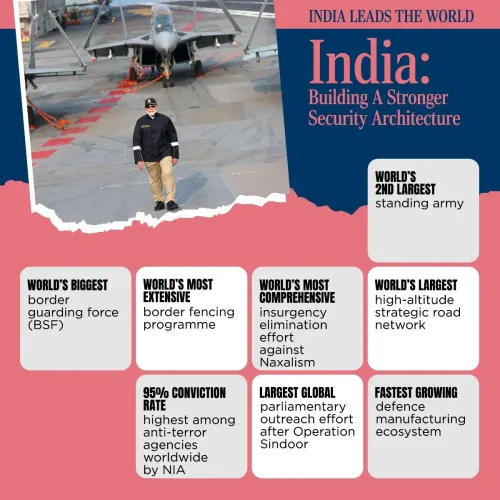
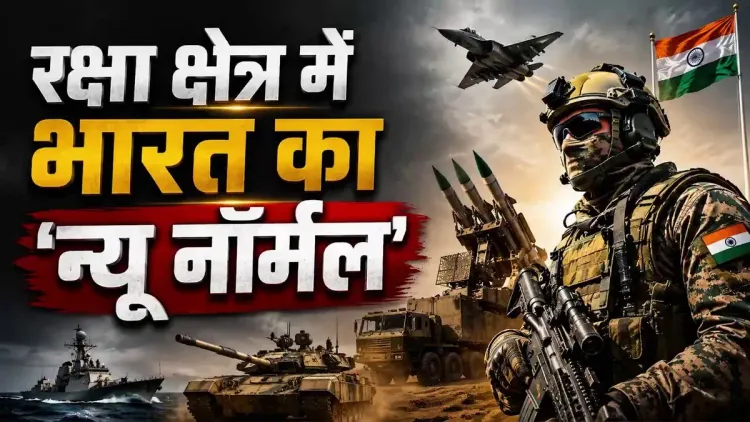
The Chief Minister's Office of Gujarat marked 12 years of PM Modi's leadership on 17 June 2026 by crediting his government with strengthening India's armed forces and making borders more secure, tying defence modernisation to the Atmanirbhar Bharat self-reliance campaign.
Key Takeaways
The Chief Minister's Office of Gujarat posted on 17 June 2026 crediting PM Narendra Modi's 12-year tenure with strengthening India's armed forces and securing borders.
The post was hashtagged #12YearsOfSurakshitBharat and accompanied by a video, indicating a coordinated multimedia campaign.
India's share of indigenous defence procurement has grown from roughly 40 per cent to over 60 per cent since 2014 through revised procurement procedures and negative import lists.
The Ministry of Defence committed in August 2020 to domestic production of 460 defence items by 2025 under the Atmanirbhar Bharat framework.
The Agnipath scheme (announced June 2022 ) and theatre-command restructuring are among the structural reforms cited in the broader defence modernisation narrative.
Upcoming defence budget allocations for 2026-27 and further iDEX contracts will be key indicators of whether indigenisation targets have been met.
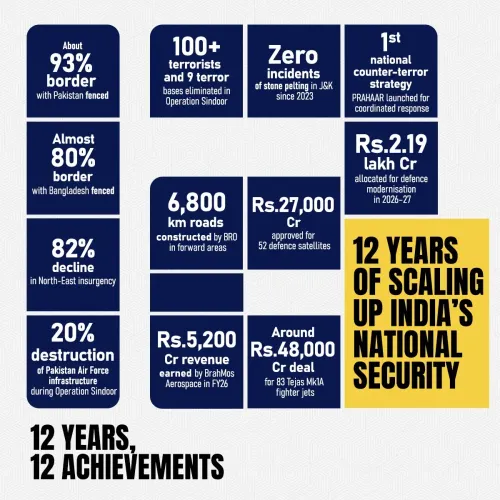
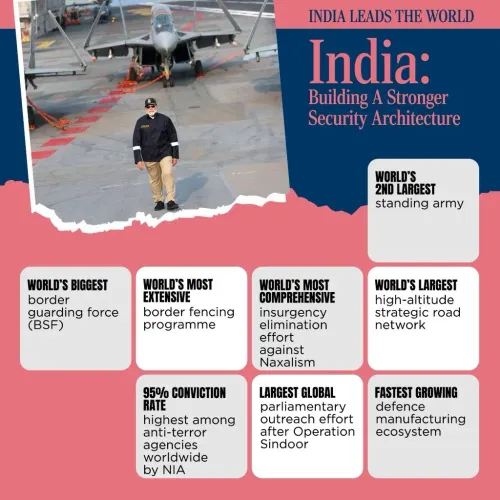
The Chief Minister's Office of Gujarat on Wednesday, 17 June 2026 credited Prime Minister Narendra Modi's 12-year tenure with making India's armed forces more capable and its borders more secure, framing the country's growing defence self-reliance as a defining achievement under the Atmanirbhar Bharat initiative.
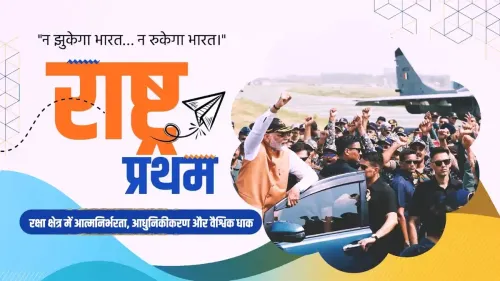
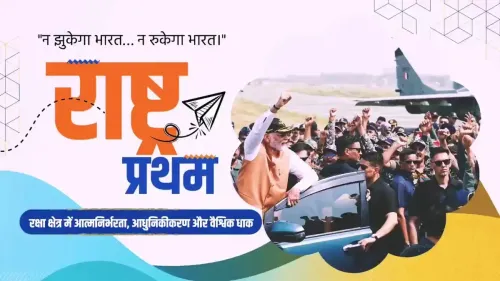
The post, shared under the hashtag #12YearsOfSurakshitBharat, states in Gujarati: 'Maananiya Vadapradhan Shri Narendrabhai Modina netrutvama chhella 12 varshmaa deshni sena vadhu sashakt ane simao vadhu surakshit bani chhe' — 'Under the leadership of honourable Prime Minister Shri Narendrabhai Modi, in the last 12 years the country's armed forces have become stronger and the borders more secure.' It further declares that the nation's defence capability, 'with valour, strength and self-respect, has become the identity of an Atmanirbhar Bharat.'
Context
June 2026 marks roughly 12 years since Narendra Modi was first sworn in as Prime Minister in May 2014. State governments and party-affiliated offices have used the milestone to highlight what they describe as a transformation in India's security posture. The Gujarat CMO's post is part of that coordinated national narrative, anchoring defence modernisation to the broader Atmanirbhar Bharat campaign launched in May 2020.
The post accompanies a video, signalling a multimedia push to reach Gujarati-language audiences on social media with the government's defence-achievement messaging.
Policy Backdrop
Since 2014, the central government has progressively restructured defence procurement to favour domestic sources. The Defence Procurement Procedure was revised in 2016 to elevate 'Make in India' categories, and again in 2020 with a negative list banning imports of certain items. In August 2020, the Ministry of Defence notified indigenisation lists committing to domestic production of 460 defence items by 2025.
The share of indigenous defence procurement has risen from roughly 40 per cent to over 60 per cent over this period, supported by technology-transfer mandates and public-private partnerships. The Agnipath short-service recruitment scheme, announced in June 2022, was positioned as a structural reform to free capital for modernisation.
Stakeholders and Impact
The primary beneficiaries of the indigenisation push are India's armed forces — the Army, Navy, and Air Force — which have inducted locally developed platforms and systems under the self-reliance drive. Domestic defence manufacturers, both public-sector undertakings and private firms, have gained from expanded orders and technology-transfer arrangements.
For Gujarat specifically, the state has positioned itself as a hub for defence and aerospace manufacturing, with industrial corridors and dedicated defence parks attracting investment aligned with the national policy direction.
What's Next
Attention will now turn to defence budget allocations for 2026-27 and any further negative import lists or contracts under the iDEX (Innovations for Defence Excellence) programme expected in the coming months. These decisions will test whether the indigenisation targets set through 2025 have been met and what the next phase of the self-reliance roadmap looks like.
The Gujarat CMO's messaging suggests the ruling dispensation intends to keep defence self-reliance central to its political communication as India's 12-year milestone under the current central government is marked across states.
Point of View
Converting defence-policy data points into electoral messaging ahead of future cycles. By anchoring the narrative to 'valour, strength and self-respect' alongside Atmanirbhar Bharat, the communication fuses security nationalism with economic self-reliance — two pillars that have consistently polled well for the ruling dispensation. The 12-year framing also serves a subtle contrast function, implicitly benchmarking the current era against the pre-2014 period without naming it. Whether the indigenisation targets actually translate into operational readiness improvements remains a question that policy analysts will scrutinise as budget and procurement data for 2026-27 emerges.
NationPress
22 Sept 2026
Frequently Asked Questions
What is the #12YearsOfSurakshitBharat hashtag about?
#12YearsOfSurakshitBharat marks 12 years of PM Narendra Modi's government since May 2014, with government accounts highlighting achievements in defence, border security, and the Atmanirbhar Bharat self-reliance initiative.
What is Atmanirbhar Bharat in defence?
Atmanirbhar Bharat in defence is a national self-reliance campaign launched in May 2020 that includes negative import lists banning procurement of certain items from abroad, indigenisation targets for 460 defence items by 2025, and incentives for domestic manufacturers.
How has India's defence indigenisation changed in the last 12 years?
India's share of indigenous defence procurement rose from roughly 40 per cent to over 60 per cent between 2014 and 2026, driven by revised procurement procedures, technology-transfer mandates, and public-private partnerships under the Make in India and Atmanirbhar Bharat programmes.
What did the Gujarat CMO post say about India's armed forces?
The Gujarat CMO posted in Gujarati that under PM Modi's leadership over the last 12 years, India's armed forces have become stronger and the borders more secure, and that the country's defence capability has become the identity of an Atmanirbhar Bharat.
What is the iDEX programme mentioned in India's defence policy?
iDEX, or Innovations for Defence Excellence, is a government initiative that funds startups and small enterprises to develop innovative defence and aerospace technologies, forming part of India's broader push to reduce import dependence.