CM Majhi lays foundation for 630 new primary schools in Odisha
Synopsis
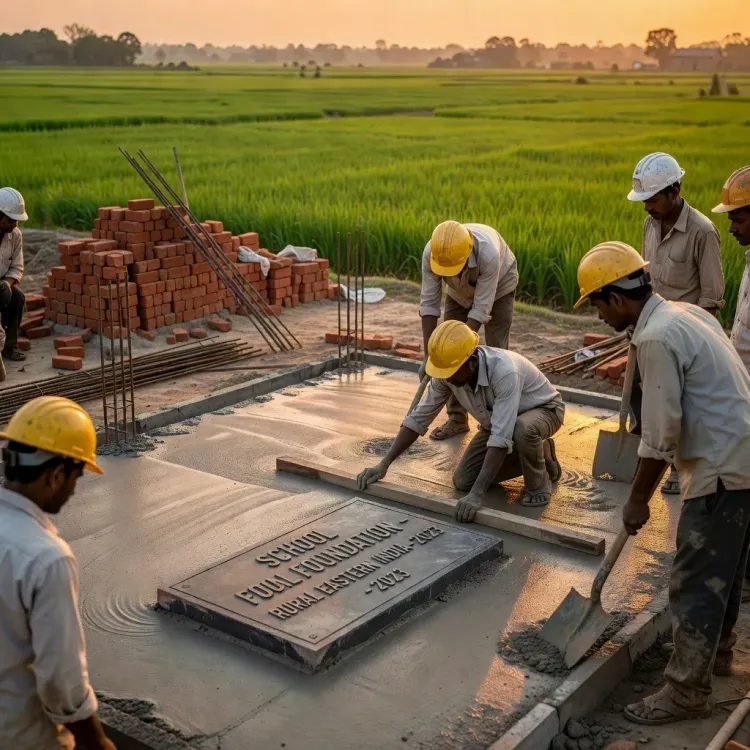
Odisha CM Mohan Charan Majhi has announced the laying of foundation stones for 630 new primary schools under Phase 3 of the Godabarish Mishra Adarsha Prathamika Vidyalaya Yojana, deepening the BJP government's push to upgrade elementary education infrastructure across the state.
Key Takeaways
630 primary school foundation stones laid under Phase 3 of the Godabarish Mishra Adarsha Prathamika Vidyalaya Yojana.
The scheme is named after Godabarish Mishra , a celebrated Odia educationist, writer, and independence activist.
CM Mohan Charan Majhi framed quality education as the 'cornerstone of a developed Odisha.' The phased rollout complements the central government's Samagra Shiksha Abhiyan framework.
Primary beneficiaries are children and rural households in underserved localities across Odisha.
Construction timelines, teacher deployment, and learning outcomes will determine the scheme's real-world impact.
Six hundred and thirty foundation stones. That is the scale of the latest push by Odisha Chief Minister Mohan Charan Majhi to rewire the state's elementary education landscape — all under a single scheme bearing the name of an Odia educationist who fought for learning long before independence.
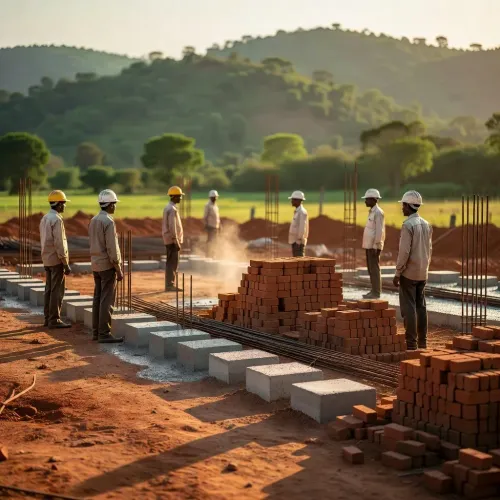
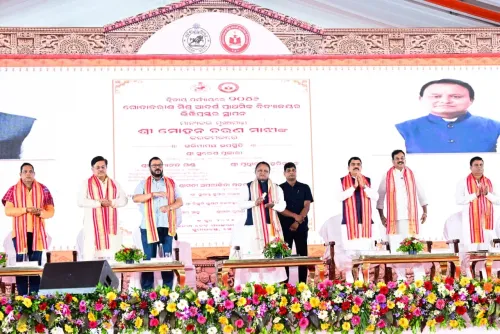
Posting on 6 November 2026, CM Majhi announced that Phase 3 of the Godabarish Mishra Adarsha Prathamika Vidyalaya Yojana has seen foundation stones laid for 630 additional primary schools across Odisha. The scheme is designed to equip each school with modern infrastructure and an enriched learning environment. In his own words: 'Quality education is the cornerstone of a developed Odisha.'
Who was Godabarish Mishra — and why the name matters
Godabarish Mishra was an Odia educationist, writer, and independence activist whose life's work centred on making knowledge accessible. Naming a flagship school-infrastructure programme after him is a deliberate signal — linking brick-and-mortar expansion to a tradition of educational idealism rooted in Odia identity. The 'Adarsha' (model) tag in the scheme's name sets a quality benchmark, not merely a construction target.
Phase 3 and the phased rollout strategy
The BJP-led administration that took office in June 2024 has treated school infrastructure as a headline development priority. The phased structure of the scheme allows the government to scale construction systematically while managing quality and procurement, with each phase adding to a cumulative network of model schools. The 630 schools greenlit in Phase 3 represent the latest increment in that build-out.
These efforts run alongside the central government's Samagra Shiksha Abhiyan, the umbrella programme for school education from pre-primary through senior secondary. State-level schemes that layer on top of central funding typically accelerate infrastructure delivery in rural and semi-urban pockets — exactly the communities where Odisha's primary school deficit has historically been sharpest.
What the classrooms will mean on the ground
The immediate beneficiaries are primary school children and rural households in localities where existing government schools often lack functioning toilets, boundary walls, or adequate classrooms. Modern infrastructure at the foundation level — proper lighting, clean water, smart teaching aids — directly influences enrolment rates, especially for girls. The real test, as education researchers consistently note, comes after the ribbon-cutting: whether construction timelines are met, teachers are deployed, and learning outcomes actually improve once the new schools are operational.
Point of View
Geographically distributed, and politically legible to voters in rural constituencies. Naming the scheme after Godabarish Mishra anchors it in an Odia cultural idiom, a soft-power choice that differentiates state-level branding from generic central schemes. The phased architecture also gives the government a recurring news cycle: each phase is a fresh announcement, sustaining a narrative of momentum. The harder governance challenge — ensuring that new buildings translate into better learning outcomes — remains open, and that gap will define how this push is ultimately judged.
NationPress
6 Nov 2026
Frequently Asked Questions
What is the Godabarish Mishra Adarsha Prathamika Vidyalaya Yojana?
It is an Odisha government scheme to build model primary schools equipped with modern infrastructure, improved classrooms, and enriched learning environments across the state. The scheme is named after Godabarish Mishra , a renowned Odia educationist, writer, and independence activist.
How many schools are being built in Phase 3 of the scheme?
Foundation stones have been laid for 630 new primary schools under Phase 3 of the Godabarish Mishra Adarsha Prathamika Vidyalaya Yojana, as announced by CM Mohan Charan Majhi on 6 November 2026 .
Who is Mohan Charan Majhi?
Mohan Charan Majhi is the Chief Minister of Odisha and a BJP leader who took office in June 2024 after the party's victory in the Odisha assembly elections.
Who was Godabarish Mishra?
Godabarish Mishra was an Odia educationist, writer, and freedom fighter who dedicated his life to promoting education in Odisha. His legacy is honoured through this flagship primary school scheme.
How does Odisha's school scheme relate to the central government's education programmes?
The Godabarish Mishra Adarsha Prathamika Vidyalaya Yojana operates alongside the central government's Samagra Shiksha Abhiyan , with the state-level scheme adding a layer of infrastructure investment targeted at primary school expansion and modernisation in Odisha.