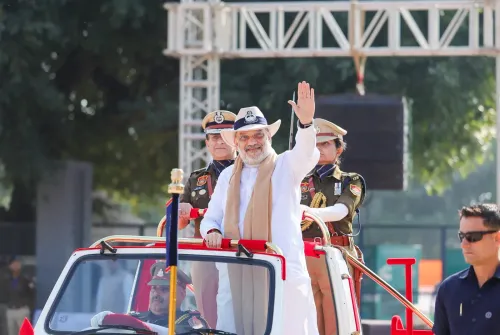
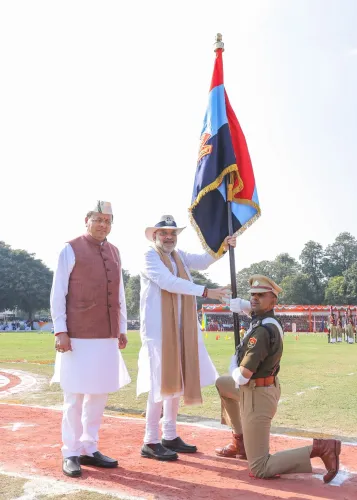
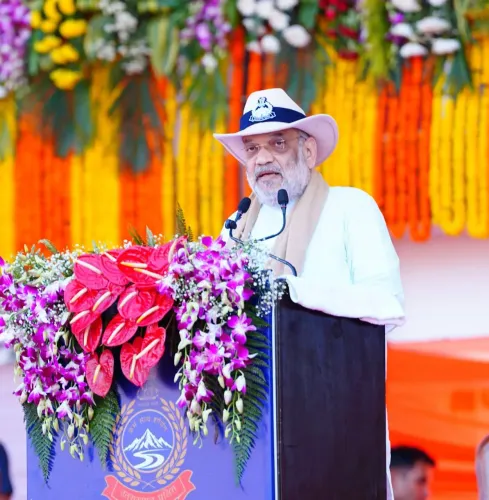
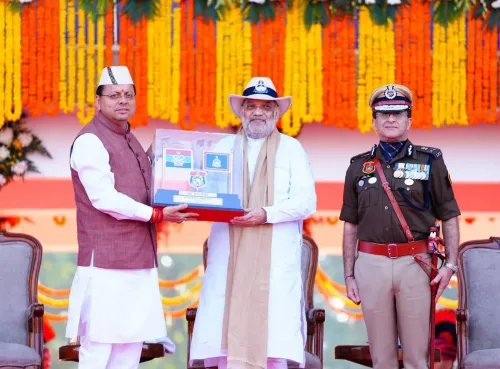
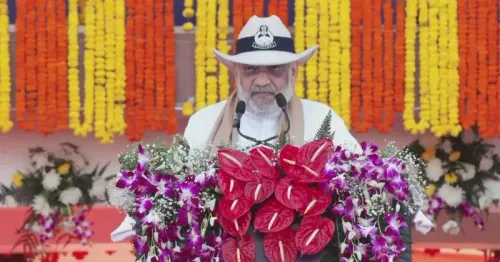
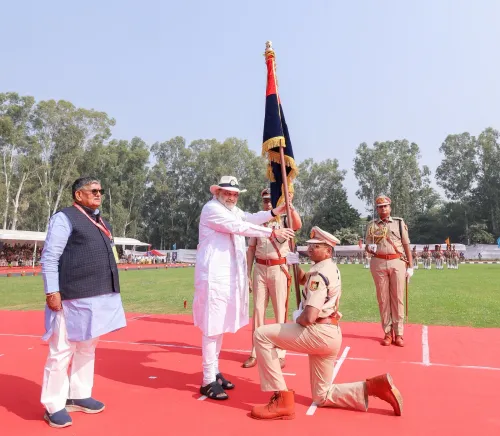
Amit Shah awards President's Colour to Uttarakhand Police in Dehradun
Synopsis
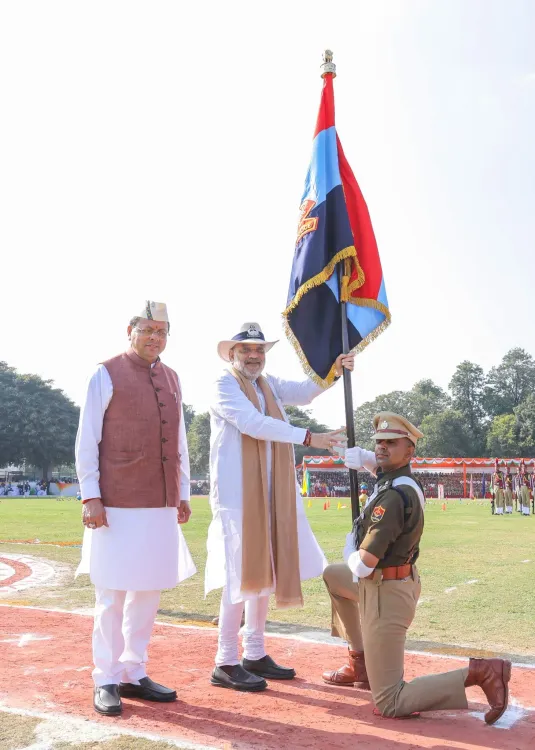
Union Home Minister Amit Shah conferred the President's Colour on Uttarakhand Police in Dehradun on 6 November 2026, honouring 26 years of service in disaster relief, Char Dham pilgrimage security, Vibrant Village Programme implementation, and rollout of India's new criminal codes.
Key Takeaways
Uttarakhand Police was awarded the President's Colour — India's highest honour for a police or military unit — by Union Home Minister Amit Shah in Dehradun on 6 November 2026 .
The force was established after Uttarakhand became a state on 9 November 2000 , making this recognition a 26-year institutional milestone.
Shah credited the force for rapid disaster relief, securing the Char Dham pilgrimage circuit, and implementing the Vibrant Village Programme in border villages along the India-China frontier .
The Vibrant Village Programme , approved in the 2022-23 Union Budget , aims to develop infrastructure and security presence in Himalayan border villages.
Uttarakhand Police was specifically cited for ground-level rollout of the three new criminal codes — Bharatiya Nyaya Sanhita, Bharatiya Nagarik Suraksha Sanhita , and Bharatiya Sakshya Adhiniyam — effective from 1 July 2024 .
The award reflects the Union Home Ministry's strategic emphasis on recognising state forces in sensitive Himalayan and border territories.
Twenty-six years after a new Himalayan state was carved out of Uttar Pradesh, its police force has earned independent India's most coveted ceremonial honour. Union Home Minister Amit Shah conferred the President's Colour on Uttarakhand Police at a ceremony in Dehradun on Friday, 6 November 2026, recognising a force that has had to master disaster response, pilgrimage security, border development, and criminal-law reform — often simultaneously.
What the President's Colour means — and why it matters
The President's Colour is the highest honour the President of India can bestow on a military or police unit, awarded for exceptional service and institutional discipline. For Uttarakhand Police, the recognition carries particular weight: the force was built from scratch after the state's formation on 9 November 2000, inheriting challenging terrain, a long and sensitive border with China, and a tourism-heavy economy revolving around the Char Dham pilgrimage circuit. To earn the Colour within 26 years is a marker of institutional maturity that few young state forces have achieved.
Disaster relief, Char Dham security, and the border frontier
Shah's post highlights four distinct operational pillars. First, rapid relief during natural disasters — Uttarakhand is one of India's most disaster-prone states, battered by cloudbursts, glacial floods, and landslides with grim regularity. Second, facilitating safe pilgrimage for the millions who travel annually to Kedarnath, Badrinath, Gangotri, and Yamunotri. Third, implementation of the Vibrant Village Programme — a central scheme approved in the 2022-23 Union Budget to develop infrastructure, tourism, and security presence in border villages along the India-China frontier, covering Uttarakhand alongside Arunachal Pradesh and other Himalayan states. The programme is as much a soft-power instrument as a development one, designed to anchor remote communities to the Indian state.
Fourth — and perhaps the most consequential in the long run — is the ground-level rollout of the three new criminal codes: the Bharatiya Nyaya Sanhita, the Bharatiya Nagarik Suraksha Sanhita, and the Bharatiya Sakshya Adhiniyam. These laws received presidential assent in December 2023 and came into nationwide force from 1 July 2024, replacing the colonial-era IPC, CrPC, and Evidence Act. Training police personnel to work under a wholly new procedural framework while maintaining day-to-day law and order is no small task; Shah's specific mention signals that Uttarakhand Police's performance here is being held up as a model.
The Home Ministry's pattern of recognition
This award fits a broader strategic communication from the Union Home Ministry: consistently spotlighting state forces that embrace central schemes and reforms, particularly in strategically sensitive Himalayan and border territories. For Uttarakhand — a state that shares a border with both China and Nepal and hosts critical defence infrastructure — the visibility that comes with the President's Colour is not merely ceremonial. It signals Delhi's confidence in the force and can translate into enhanced funding and central cooperation going forward.
For the men and women of Uttarakhand Police, the moment in Dehradun today is a rare convergence of institutional recognition and operational pride — a force still young enough to remember its founding, old enough to have earned the nation's highest honour.
Point of View
Shah is effectively grading Uttarakhand Police on a central-government scorecard, not just a state one. This framing reinforces Delhi's strategic interest in a Himalayan state that borders both China and Nepal, where civilian governance and police credibility are themselves instruments of national security. The recognition is ceremonial in form but deeply political in signal.
NationPress
7 Nov 2026
Frequently Asked Questions
What is the President's Colour award for police?
The President's Colour is the highest ceremonial honour the President of India can bestow on a police force or military unit, recognising exemplary service, discipline, and institutional excellence over a sustained period.
When was Uttarakhand Police established?
Uttarakhand Police was formed after the state of Uttarakhand was carved out of Uttar Pradesh on 9 November 2000 , necessitating a dedicated state police force for the new Himalayan state.
What is the Vibrant Village Programme and how does it relate to Uttarakhand?
The Vibrant Village Programme is a central government scheme approved in the 2022-23 Union Budget to develop infrastructure, tourism, and security in border villages along the India-China frontier, covering Uttarakhand, Arunachal Pradesh, and other Himalayan states.
What are the new criminal laws implemented by Uttarakhand Police?
The three new laws are the Bharatiya Nyaya Sanhita, Bharatiya Nagarik Suraksha Sanhita , and Bharatiya Sakshya Adhiniyam , which replaced the IPC, CrPC, and Evidence Act respectively and came into force on 1 July 2024 .
Why did Amit Shah honour Uttarakhand Police in Dehradun in November 2026?
Union Home Minister Amit Shah conferred the President's Colour on Uttarakhand Police at a ceremony in Dehradun on 6 November 2026 , marking 26 years of the force's service in disaster relief, pilgrimage security, border development, and criminal-law reform implementation.