Amit Shah sets 2029 deadline to make Uttarakhand drug-free
Synopsis
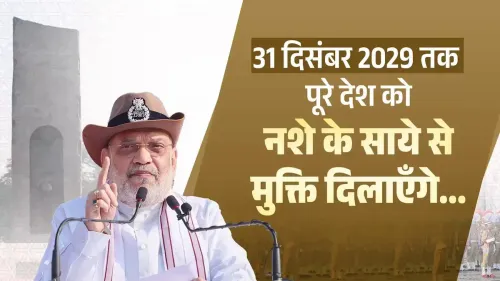
Union Home Minister Amit Shah has set a firm deadline of 31 December 2029 to make Uttarakhand drug-free, citing cooperation with the Uttarakhand Police. The pledge extends the Nasha Mukt Bharat framework to the Himalayan state with a specific, time-bound target.
Key Takeaways
Union Home Minister Amit Shah announced on 6 November 2026 that Uttarakhand will be drug-free before 31 December 2029 .
The pledge specifically names the Uttarakhand Police as the execution partner for the anti-narcotics drive.
Uttarakhand, known as Devbhoomi , has featured in national narcotics discussions due to its challenging terrain and border proximity.
The announcement aligns with the Nasha Mukt Bharat Abhiyan launched in 2020 , which set a national demand-and-supply-side framework against drug abuse.
The Ministry of Home Affairs oversees central narcotics coordination; follow-up operational plans and budget allocations are yet to be announced.
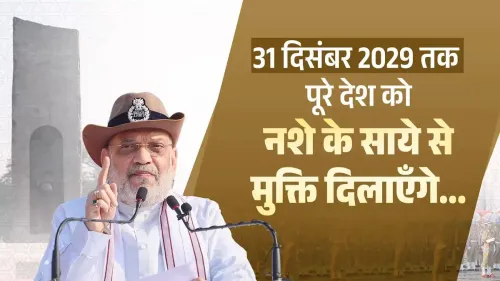
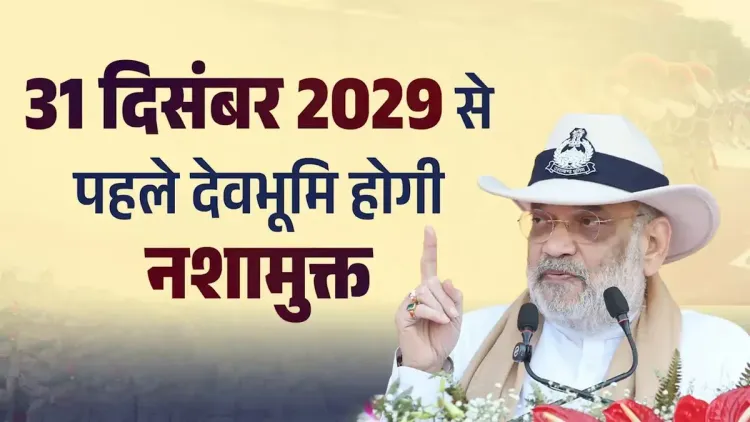
A deadline has been drawn in the Himalayas. Union Home Minister Amit Shah declared on Friday, 6 November 2026 that Devbhoomi — the sacred land of Uttarakhand — will be rid of narcotics before 31 December 2029, with the full cooperation of the Uttarakhand Police. The pledge sets a three-year clock on one of the state's most persistent governance challenges.
The 2029 deadline and what it demands from Uttarakhand Police
Shah's post, in Hindi, is direct: '31 दिसंबर 2029 से पहले उत्तराखंड पुलिस के सहयोग से देवभूमि नशामुक्त होगी' — 'Before 31 December 2029, Devbhoomi will become drug-free with the cooperation of Uttarakhand Police.' The framing is significant: it places the Uttarakhand Police at the centre of delivery, signalling that central political will must translate into state-level operational action.
Uttarakhand's terrain — high-altitude passes, dense forests, and a long border with Nepal and proximity to the broader northern narcotics corridor — has made it a recurring point of concern in national anti-narcotics discussions. Law enforcement in the state faces the twin challenge of accessibility and cross-border supply chains that feed into local demand.
Nasha Mukt Bharat and the pattern of state-level pledges
The announcement fits within a broader national architecture. The Nasha Mukt Bharat Abhiyan, launched in 2020 by the Ministry of Social Justice and Empowerment, set the template: a demand-and-supply-side squeeze, driven by state police forces coordinating with central agencies. Uttarakhand is now explicitly named within that arc, with a hard calendar target attached.
The Ministry of Home Affairs, which Shah heads, oversees narcotics coordination and internal security architecture. Similar multi-year, state-specific drug-free pledges have been made under the same ministry's watch for other states, suggesting a systematic rollout of accountability-framed targets rather than a one-off announcement.
Youth at the centre of the stakes
The human cost behind such pledges is Uttarakhand's youth — the demographic most exposed to substance abuse in hill districts where economic migration has thinned family structures and left young people vulnerable. Any operational plan that follows this announcement will be watched for specific allocations: de-addiction infrastructure, police capacity, and inter-agency coordination mechanisms between the state and the Narcotics Control Bureau.
A political deadline without a funded operational roadmap is a promise. What converts it into a programme is what observers — and Uttarakhand's families — will now be watching for.
Point of View
State-specific milestones. For Uttarakhand, naming the police force as the instrument of delivery is a deliberate political signal: the central government is watching, and the state apparatus is on the clock. The challenge, as with similar pledges for other states, is the gap between a minister's public commitment and the operational infrastructure — de-addiction centres, trained personnel, border surveillance — required to actually deliver it. The 2029 horizon gives three years, but the credibility of the target depends entirely on what gets announced and funded in the months immediately following.
NationPress
7 Nov 2026
Frequently Asked Questions
What did Amit Shah say about Uttarakhand becoming drug-free?
Union Home Minister Amit Shah announced that Uttarakhand will become drug-free before 31 December 2029, with the cooperation of the Uttarakhand Police.
What is the Nasha Mukt Bharat Abhiyan?
The Nasha Mukt Bharat Abhiyan is a national anti-drug campaign launched in 2020 by the Ministry of Social Justice and Empowerment to reduce both the demand and supply of narcotics across India.
Why is Uttarakhand a focus for anti-narcotics efforts?
Uttarakhand's high-altitude terrain, dense forests, and proximity to the Nepal border make it vulnerable to drug trafficking and supply-chain activity, placing it regularly in national anti-narcotics discussions.
Which agency will lead the drug-free Uttarakhand drive?
According to Amit Shah's announcement, the Uttarakhand Police will be the primary implementing agency, coordinating with central bodies under the Ministry of Home Affairs.
By when does Amit Shah want Uttarakhand to be nasha mukt?
Shah has set a deadline of 31 December 2029 for Uttarakhand to achieve drug-free status.