CM Dhami pledges drug-free Uttarakhand on Anti-Drug Day
Synopsis
On International Day Against Drug Abuse, Uttarakhand CM Pushkar Singh Dhami vowed to free 'Devbhoomi' from addiction, urging citizens to spread awareness and build a prosperous future through empowered, drug-free youth.
Key Takeaways
CM Pushkar Singh Dhami posted on 26 June 2026 , marking the International Day Against Drug Abuse and Illicit Trafficking .
He described addiction as a barrier not only to individual health but to the progress of families, society, and the state.
His stated goal is a drug-free Devbhoomi Uttarakhand built on healthy, aware, and empowered youth.
The post aligns with India's national Nasha Mukt Bharat Abhiyan , launched in 2020 by the Ministry of Social Justice and Empowerment.
The UN-designated observance has been held annually on 26 June since 1987 , providing a global platform for anti-narcotics messaging.
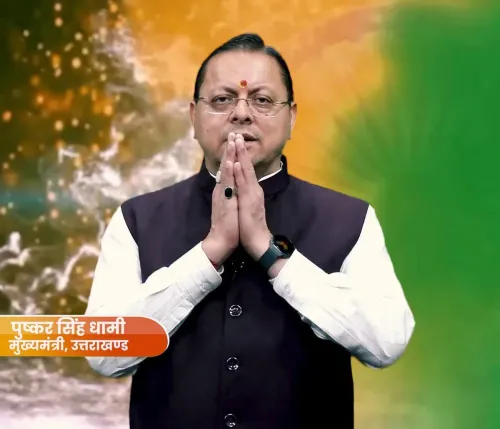
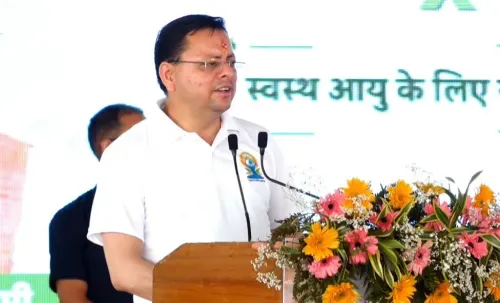
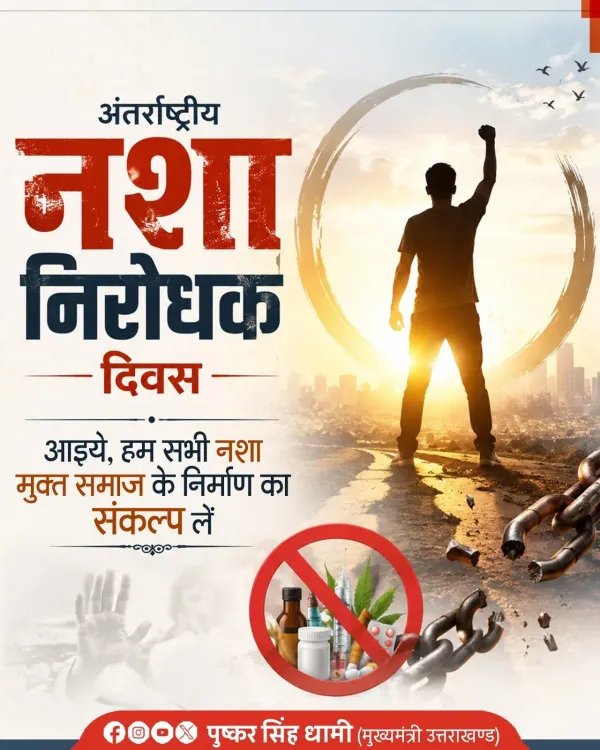
Uttarakhand Chief Minister Pushkar Singh Dhami on Friday, 26 June 2026, called for a society-wide pledge to eliminate drug abuse from the state, marking the International Day Against Drug Abuse and Illicit Trafficking with a message on X that framed addiction as a barrier to the progress of individuals, families, and Uttarakhand as a whole.
Context
In his post, CM Dhami wrote — translated from Hindi — that 'nasha' (addiction) 'does not merely affect an individual's physical and mental health, but also creates a serious obstacle in the advancement of families, society, and the state.' He called on citizens to spread 'wide public awareness about the ill-effects of addiction and to inspire people towards a healthy lifestyle' on the occasion of the international observance.
His stated resolve was to build 'a prosperous future through healthy, aware, and empowered youth power' by freeing Devbhoomi Uttarakhand — a reverent reference to the state's identity as the 'Land of the Gods' — from what he called the 'curse of addiction.'
Policy Backdrop
The United Nations General Assembly designated 26 June as the International Day Against Drug Abuse and Illicit Trafficking in 1987, making it an annual platform for governments worldwide to reinforce anti-narcotics messaging. India's foundational legislative response, the Narcotic Drugs and Psychotropic Substances (NDPS) Act, was enacted in 1985 to regulate trafficking and substance abuse.
At the national level, the Ministry of Social Justice and Empowerment launched the Nasha Mukt Bharat Abhiyan in 2020 as a targeted de-addiction and awareness drive. The campaign has been progressively rolled out across states, with BJP-governed states including Uttarakhand framing their participation around youth empowerment and community health.
Stakeholders and Impact
The primary stakeholders in Dhami's message are Uttarakhand's youth and families affected by addiction. The state's Himalayan geography and religious significance attract large numbers of visitors, while its young demographic makes it a focus for both social welfare schemes and anti-narcotics outreach.
Substance abuse carries documented costs beyond individual health — disrupting household incomes, burdening public health infrastructure, and eroding community cohesion. By tying de-addiction to the broader goal of a 'prosperous future,' Dhami's statement aligns state social policy with the central government's Nasha Mukt Bharat Abhiyan framework.
What's Next
The 26 June observance typically precedes announcements of state-level awareness programmes, community outreach drives, and coordination with central rehabilitation schemes in the months that follow. Watchers of Uttarakhand's social policy will look for any new allocations toward de-addiction centres or expanded coverage under the Nasha Mukt Bharat Abhiyan in the state's upcoming budgetary and administrative calendar.
If the state translates Dhami's public pledge into concrete programme expansions or budget commitments, it would mark a measurable step toward the drug-free Devbhoomi he has articulated as a governance goal.
Point of View
Lending it moral weight with the state's electorate. The pledge, however, remains aspirational until backed by measurable programme rollouts or budget lines — a gap opposition voices are likely to highlight. The real test will be whether the 26 June messaging translates into verifiable expansion of de-addiction infrastructure before the next electoral cycle.
NationPress
24 Sept 2026
Frequently Asked Questions
What did Uttarakhand CM Pushkar Singh Dhami say on Anti-Drug Day 2026?
CM Dhami posted on 26 June 2026 that addiction harms not just individual health but families and the state's progress, and pledged to make Uttarakhand drug-free through empowered youth.
When is International Day Against Drug Abuse observed?
The International Day Against Drug Abuse and Illicit Trafficking is observed every year on 26 June, a date designated by the UN General Assembly in 1987.
What is Nasha Mukt Bharat Abhiyan?
Nasha Mukt Bharat Abhiyan is a national de-addiction and awareness campaign launched in 2020 by India's Ministry of Social Justice and Empowerment to combat drug abuse across the country.
Why does CM Dhami call Uttarakhand 'Devbhoomi'?
'Devbhoomi' means 'Land of the Gods' in Hindi and is a widely used reverent name for Uttarakhand, reflecting its religious and cultural significance as home to major Hindu pilgrimage sites.
What law governs drug abuse and trafficking in India?
The Narcotic Drugs and Psychotropic Substances (NDPS) Act, enacted in 1985, is India's primary legislation regulating drug trafficking and substance abuse.