Amit Shah Marks Anti-Drug Day, Backs Modi's Narco Fight
Synopsis
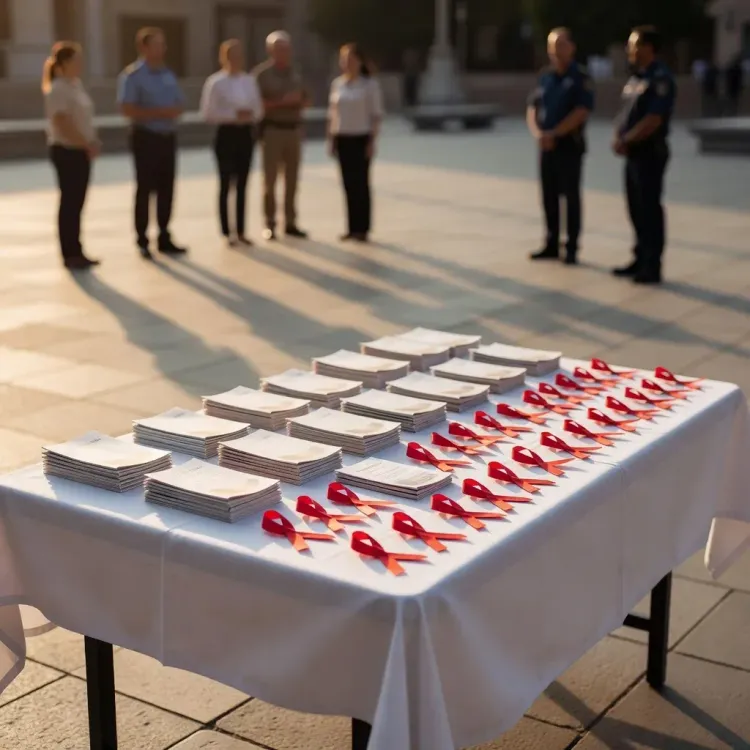
On International Day Against Drug Abuse, Union Home Minister Amit Shah praised India's anti-narcotics drive under PM Modi, citing ruthless action against narco-cartels and empathetic rehabilitation of affected individuals, reaffirming the #NashaMuktBharat commitment to protect India's youth.
Key Takeaways
Union Home Minister Amit Shah posted on 26 June 2026 , the UN-observed International Day Against Drug Abuse and Illicit Trafficking .
Shah credited PM Narendra Modi's leadership for what he called India's strongest-ever fight against drug abuse, including dismantling narco-cartels.
The post reinforced the Nasha Mukt Bharat Abhiyan , launched on 15 August 2020 , targeting 27.2 crore aware citizens through district-level action plans.
India faces drug trafficking pressure from both the Golden Crescent and Golden Triangle corridors, making border interdiction a key security concern.
The NCB's annual seizure report and potential NDPS Act amendments are the next key policy milestones to watch.
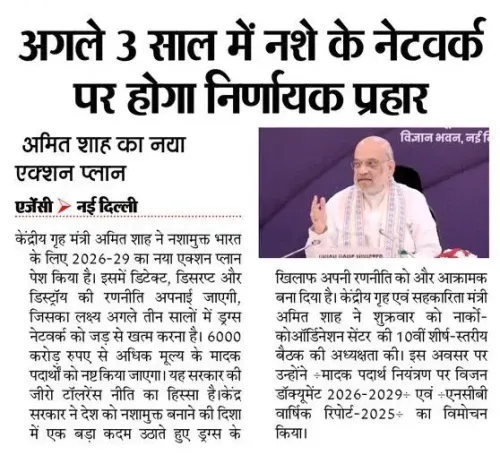
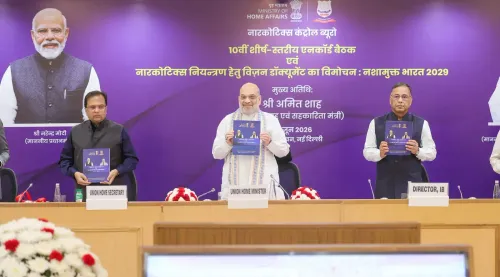
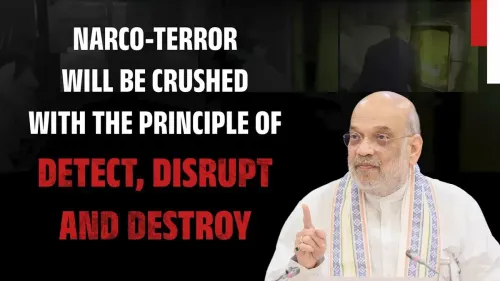
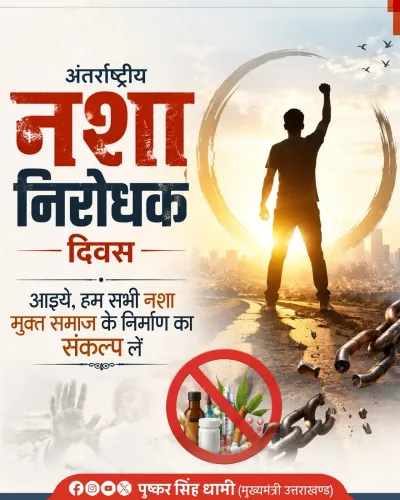
Union Home Minister Amit Shah on Friday, 26 June 2026 — International Day Against Drug Abuse and Illicit Trafficking — extended greetings to those working on India's anti-narcotics front, asserting that the country under Prime Minister Narendra Modi has mounted its strongest-ever campaign against drug abuse by dismantling narco-cartels and supporting rehabilitation of affected individuals.
Context
Shah's post, shared on the UN-observed annual date of 26 June, saluted what he called 'warriors in our national battle against drugs,' linking the day's observance to the government's broader #NashaMuktBharat agenda. He stated that India has been 'eliminating narco-cartels ruthlessly and healing the affected individuals with the care and empathy they deserve.' The message closed with an appeal to 'shield our young generation from drugs.'
As Union Home Minister, Shah oversees the Narcotics Control Bureau (NCB), the nodal agency for drug law enforcement in India, as well as border security forces that intercept trafficking routes.
Policy Backdrop
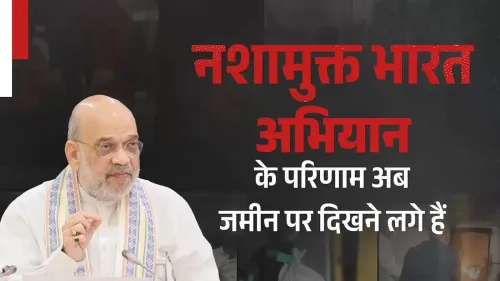
The post aligns with the Nasha Mukt Bharat Abhiyan, a national campaign launched on 15 August 2020 aimed at creating 27.2 crore (272 million) aware citizens and establishing district-level action plans to combat drug abuse. The scheme blends enforcement with community outreach and rehabilitation, targeting vulnerable youth populations across the country.
India sits at the intersection of two of the world's most active drug-trafficking corridors — the Golden Crescent (Afghanistan-Pakistan-Iran) to its north-west and the Golden Triangle (Myanmar-Laos-Thailand) to its north-east — making border interdiction a persistent security and public-health challenge. The Narcotic Drugs and Psychotropic Substances (NDPS) Act remains the primary legal instrument governing enforcement, and parliamentary debate over proposed amendments to the Act continues to draw attention.
Stakeholders and Impact
The campaign's primary beneficiaries are India's youth, who are identified by policymakers as the demographic most vulnerable to substance abuse. Law enforcement agencies at the central and state levels, including the NCB, the Border Security Force, and state police narcotics cells, are the operational arms of this effort.
Rehabilitation and de-addiction centres supported under the Abhiyan serve individuals already affected by drug dependence, reflecting the dual enforcement-and-care approach Shah referenced in his message. Civil society organisations and community volunteers have also been mobilised under district-level plans as part of the awareness component.
What's Next
Observers will watch for the release of the NCB's annual report on narcotics seizures, which typically provides a data-driven account of interdiction outcomes. Any movement on proposed amendments to the NDPS Act in Parliament will also signal the legislative direction of the government's anti-drug strategy. Shah's message on this symbolic date reinforces the administration's stated commitment to making drug-free India a demographic and security priority in the years ahead.
Point of View
The statement also serves to consolidate the BJP's ownership of the anti-drug narrative ahead of any legislative or electoral cycle. The dual emphasis on 'ruthless' cartel elimination and 'empathetic' rehabilitation is a deliberate rhetorical balance, reflecting the administration's attempt to occupy both the tough-on-crime and welfare-state positions simultaneously. Whether operational outcomes match the political messaging will depend on forthcoming NCB data and the pace of NDPS Act reform.
NationPress
24 Sept 2026
Frequently Asked Questions
What is International Day Against Drug Abuse?
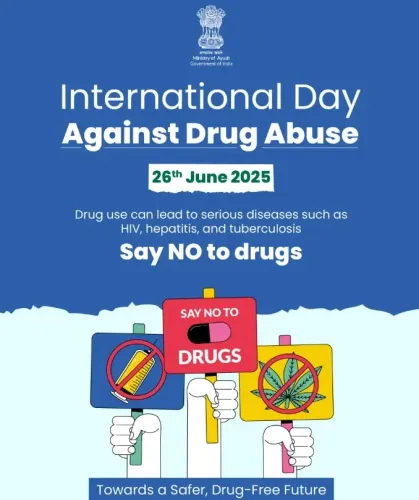
International Day Against Drug Abuse and Illicit Trafficking is observed every year on 26 June under the United Nations framework to raise awareness about the global drug problem and reinforce political commitment to action against narcotics.
What is the Nasha Mukt Bharat Abhiyan?
The Nasha Mukt Bharat Abhiyan is a national campaign launched on 15 August 2020 by the Indian government, aimed at creating 27.2 crore (272 million) drug-aware citizens and establishing district-level plans for prevention and rehabilitation.
What did Amit Shah say on Anti-Drug Day 2026?
Amit Shah extended greetings to anti-drug 'warriors,' said India under PM Modi has mounted its strongest fight against drug abuse by eliminating narco-cartels and rehabilitating affected individuals, and called for protecting the young generation from drugs under the #NashaMuktBharat banner.
Which drug trafficking routes threaten India?
India is flanked by the Golden Crescent (Afghanistan, Pakistan, Iran) to its north-west and the Golden Triangle (Myanmar, Laos, Thailand) to its north-east, both of which are major global drug-production and trafficking zones that pose persistent security challenges.
What is the NDPS Act?
The Narcotic Drugs and Psychotropic Substances (NDPS) Act is India's principal law governing the control and regulation of narcotic drugs and psychotropic substances, under which the Narcotics Control Bureau and state agencies conduct enforcement operations.