Sitharaman: UPI's Free Merchant Transactions Here to Stay
Synopsis
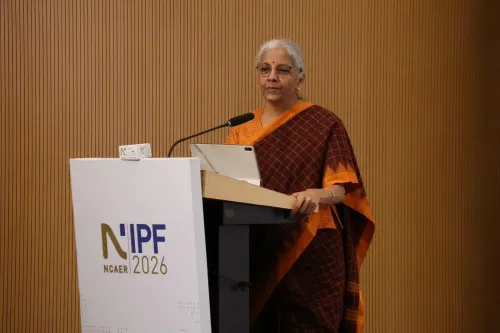
Finance Minister Nirmala Sitharaman assured the Rajya Sabha on August 10, 2026, that ordinary low-value UPI merchant transactions will stay free. Any future Merchant Discount Rate will apply only above a prescribed threshold, protecting small merchants at the core of India's digital payments ecosystem.
Key Takeaways
Union Finance Minister Nirmala Sitharaman made the statement in the Rajya Sabha on August 10, 2026 .
The vast majority of UPI merchant transactions — low-value, everyday commerce — will remain free under the government's policy.
Any future Merchant Discount Rate (MDR) will apply only to a limited category of transactions above a prescribed threshold .
The government waived MDR on UPI and RuPay transactions in December 2019 to accelerate merchant adoption.
The exact threshold and regulatory mechanism — via RBI or Finance Bill — are yet to be announced and will be the critical detail to watch.
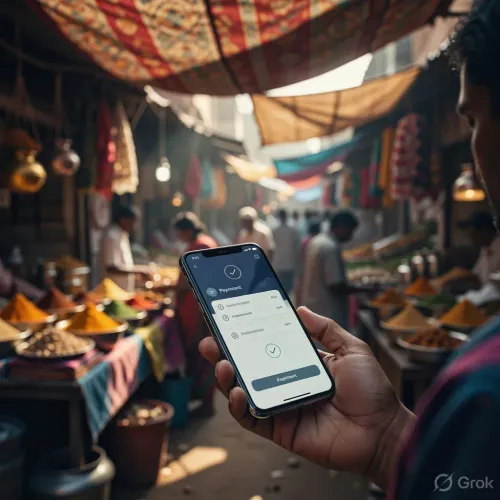
India's 200-million-plus merchant UPI ecosystem just got a clear signal from the top: the government is not about to let fees creep into everyday commerce. Union Finance Minister Nirmala Sitharaman told the Rajya Sabha on Monday, August 10, 2026, that the overwhelming majority of merchant UPI transactions — the small, ordinary, low-value kind that define street-level digital India — will remain free, even as a future Merchant Discount Rate framework is being considered.
What Sitharaman actually said about MDR
The Finance Minister was unambiguous. 'Small merchants remain central to the Government's commitment to financial inclusion and UPI's inclusive growth,' she stated. Any future MDR, she clarified, would apply only to a limited category of merchant transactions above a yet-to-be-prescribed threshold — not to the bread-and-butter, low-value transactions that form the spine of UPI's mass adoption.
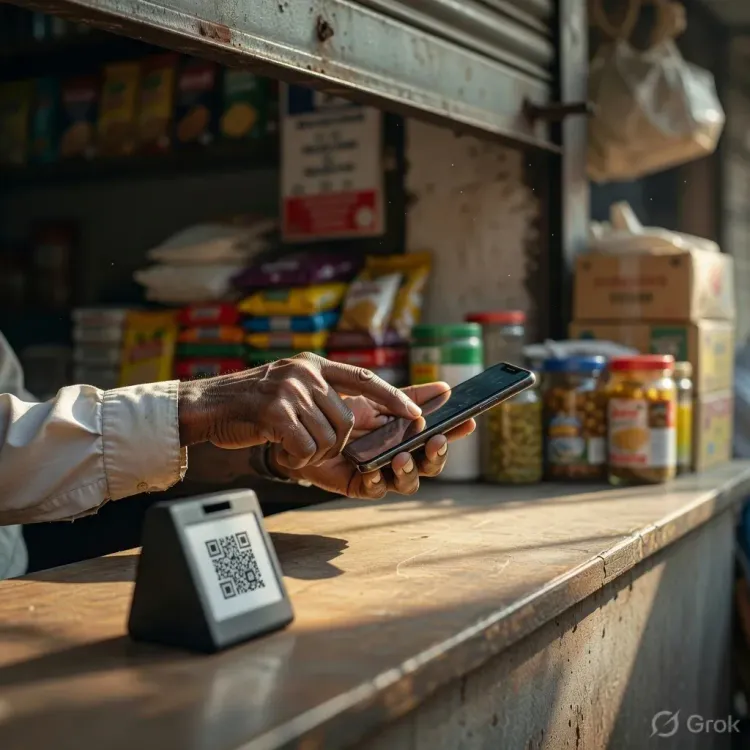
The distinction matters enormously. An MDR applied broadly would effectively tax the kirana store owner, the auto-rickshaw driver, and the street vendor — the very merchants who drove UPI's penetration deep into Tier-2 and Tier-3 India. A threshold-based, limited MDR leaves that ecosystem untouched.
The 2019 waiver and why it cannot simply be reversed
This statement lands against a specific policy backdrop. In December 2019, the government waived the Merchant Discount Rate on UPI and RuPay transactions outright — a decisive push to accelerate merchant adoption at a time when digital payments were still fighting cash. It worked. UPI has since become the dominant retail payment rail in India, processing billions of transactions monthly.
Rolling that waiver back across the board would risk unwinding years of behavioural change among small merchants who adopted UPI precisely because it cost them nothing. Sitharaman's framing in the Rajya Sabha signals that the government understands this calculus — and is not prepared to sacrifice inclusion at the altar of revenue recovery.
What the threshold will actually look like
The exact transaction threshold and the regulatory mechanism — whether through an RBI notification or a Finance Bill provision — remain to be detailed. That is the live variable to watch. A high threshold would mean MDR applies only to large-ticket merchant transactions, leaving the vast majority of UPI's volume untouched. A low one would be a different story. The government has committed to the principle; the number will be the test.
India built the world's most ambitious real-time payment network on a promise of zero cost to the small merchant. The Finance Minister has now put that promise on the record in Parliament — the threshold announcement will show whether the architecture holds.
Point of View
The BJP insulates itself from the political cost of being seen as taxing the informal economy's digital adoption. The real test will be the threshold: a high ceiling preserves the spirit of the 2019 waiver, while a low one would invite the very backlash the statement is designed to pre-empt. This is also a reminder that UPI's scale — built on zero-cost access — is now a policy constraint, not just an achievement.
NationPress
25 Sept 2026
Frequently Asked Questions
Will UPI transactions become chargeable for small merchants in India?
No. Finance Minister Nirmala Sitharaman clarified in the Rajya Sabha on August 10, 2026, that ordinary low-value UPI merchant transactions will continue to remain free. Any future MDR will apply only above a prescribed threshold and to a limited category of transactions.
What is MDR and why does it matter for UPI?
MDR, or Merchant Discount Rate, is a fee charged to merchants for processing digital payments. The government waived MDR on UPI and RuPay transactions in December 2019 to boost adoption. Reintroducing it broadly could discourage small merchants from accepting digital payments.
Which UPI transactions could attract MDR in the future?
According to Sitharaman's statement, only a limited category of merchant transactions above a government-prescribed threshold would be subject to any future MDR. The exact threshold has not yet been announced.
When did the government waive MDR on UPI transactions?
The government waived the Merchant Discount Rate on UPI and RuPay transactions in December 2019 to accelerate merchant adoption and push India's economy toward digital payments.
What should small merchants watch for regarding UPI fees?
Small merchants should watch for RBI notifications or Finance Bill provisions that will detail the exact transaction threshold above which any future MDR applies. Until that threshold is announced, no changes affect ordinary low-value transactions.