Sitharaman: UPI MDR Bill Is Enabling, Not a New Charge
Synopsis
Finance Minister Nirmala Sitharaman clarified in Rajya Sabha on August 10, 2026 that the Taxation and Other Laws (Amendment) Bill, 2026 only enables the government to notify protected payment modes — it imposes no new charge on UPI users. Any MDR decision rests with NPCI's UPI Steering Committee.
Key Takeaways
The Taxation and Other Laws (Amendment) Bill, 2026 amends Section 10A of the Payment and Settlement Systems Act, 2007 — it is an enabling provision, not a tax or fee.
No MDR has been imposed or finalised on UPI transactions under this Bill.
The amendment allows the government to notify, via a future order, which electronic payment modes retain statutory protection against charges.
The UPI and Services Steering Committee , headed by NPCI , will decide if any MDR is introduced and what its scope would be — only after Parliament passes the Bill.
India's zero-MDR policy on UPI dates to December 2019 , when the government absorbed merchant discount costs to accelerate digital adoption.
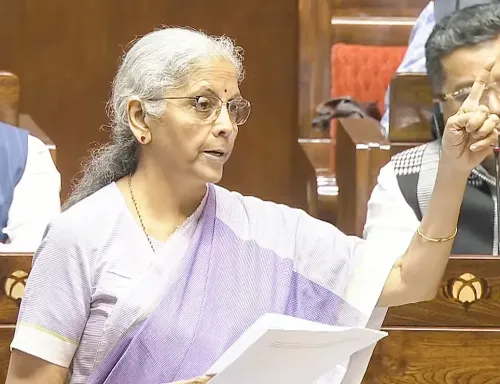
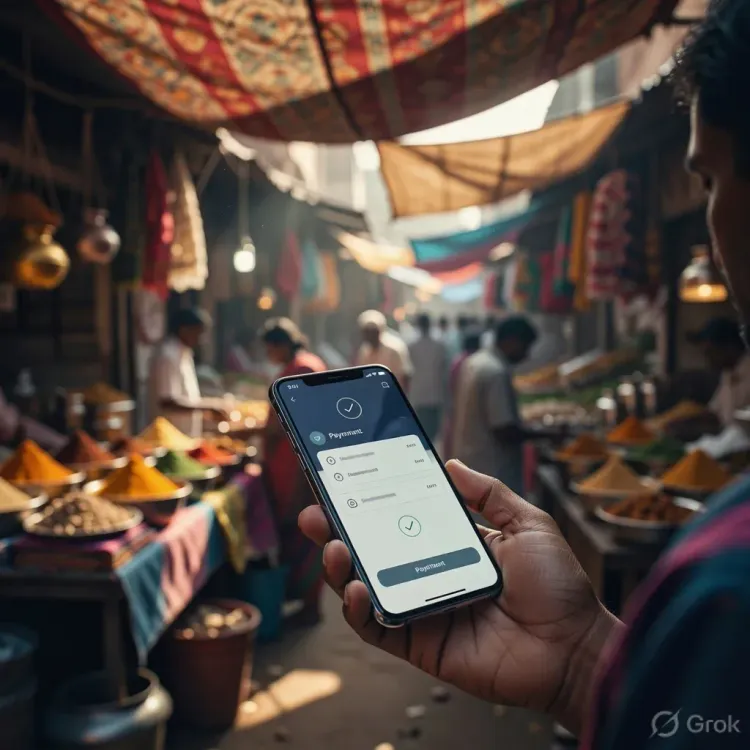
A clarification that could affect 600 million UPI users landed in Rajya Sabha on Monday, August 10, 2026 — and Union Finance Minister Nirmala Sitharaman made one thing unmistakably clear: the proposed amendment does not impose any new tax or transaction charge on anyone who pays via UPI.
Addressing the upper house, Sitharaman stated that the Taxation and Other Laws (Amendment) Bill, 2026 proposes to amend Section 10A of the Payment and Settlement Systems Act, 2007 — and that the provision is strictly 'enabling' in nature. 'It does not impose any tax or transaction charge on UPI users,' she said. What it does is give the government the legal authority to specify, through a future notification, which electronic payment modes will continue to receive statutory protection against charges.
What the 2007 Act's Section 10A actually does
The Payment and Settlement Systems Act, 2007 was India's foundational legislation for regulating payment infrastructure. Section 10A embedded a consumer-protection layer — a statutory shield against transaction fees on specified electronic modes. Successive governments have leaned on this clause to keep low-value digital payments free, most visibly when the central government in December 2019 announced it would absorb Merchant Discount Rate (MDR) costs on UPI and RuPay debit-card transactions for two years to turbocharge digital adoption. The 2026 amendment continues that tradition of flexible, enabling regulation rather than hard-coded mandates.NPCI's Steering Committee holds the MDR decision
Here is where the story gets consequential. Sitharaman was explicit: once Parliament passes the Bill, it is the UPI and Services Steering Committee — headed by the National Payments Corporation of India (NPCI) — that will 'consider and decide whether any MDR should be introduced and, if so, its scope and structure.' In plain terms, Parliament is not setting a fee. It is handing a carefully bounded decision to a specialist body. 'No MDR framework has yet been finalised,' she said — a sentence worth reading twice before the alarm bells ring. NPCI is the non-profit backbone of India's retail payments stack, operating UPI and a clutch of other systems. Its Steering Committee is the body best positioned to weigh merchant viability, bank economics, and consumer protection in one room. Whether it ultimately recommends any MDR — and at what threshold — is an open question the amendment deliberately leaves unanswered.Why the distinction between 'enabling' and 'imposing' matters
The Finance Minister's careful language in Rajya Sabha is not semantic hair-splitting. An enabling provision creates a legal pathway; it does not walk down it. The government cannot levy a charge on UPI transactions the moment this Bill passes — it would still need to issue a notification naming the modes to be protected or modified, and NPCI's committee would need to act. That is at least two further steps, each publicly visible and subject to scrutiny. For merchants, banks, and payment service providers who have built business models around zero-MDR UPI, the message is: nothing changes today. The architecture of protection remains intact. What changes is that the legal framework becomes explicitly flexible — and that flexibility, in the hands of NPCI's committee, could one day reshape how India's digital-payments economy is funded. The next milestone to watch: parliamentary passage of the Bill, followed by any government notification or Steering Committee announcement on MDR scope. Until then, every UPI transaction stays exactly as free as the last one.Point of View
Operationalise later through subordinate instruments. By vesting the MDR decision in NPCI's Steering Committee rather than Parliament, the government insulates itself from political blowback while preserving policy room to eventually monetise UPI's infrastructure. The move signals that the zero-MDR era is not being dismantled today — but its permanence is no longer assumed. For the opposition, the enabling architecture is precisely the pressure point: the charge may not exist yet, but the legal door is now open.
NationPress
25 Sept 2026
Frequently Asked Questions
Will UPI transactions become chargeable after the 2026 amendment?
Not immediately. The amendment is an enabling provision that does not impose any charge. A future MDR can only be introduced after NPCI's UPI and Services Steering Committee decides on its scope and structure.
What is MDR on UPI and why does it matter?
MDR, or Merchant Discount Rate, is a fee that payment processors can charge merchants for handling digital transactions. Since December 2019, the Indian government has kept MDR on UPI at zero to encourage adoption. The 2026 Bill opens a legal pathway to revisit this, but no fee has been set.
What is Section 10A of the Payment and Settlement Systems Act, 2007?
Section 10A is a consumer-protection provision that grants statutory protection against transaction charges on specified electronic payment modes. The 2026 amendment seeks to make this list of protected modes flexible and government-notifiable.
Who will decide if UPI gets an MDR?
The UPI and Services Steering Committee, headed by the National Payments Corporation of India (NPCI), will consider and decide whether any MDR should be introduced — and if so, its scope — once the Bill is passed by Parliament.
What did Nirmala Sitharaman say in Rajya Sabha about the UPI Bill?
Sitharaman stated that the Bill does not impose any tax or transaction charge on UPI users. She said it only enables the government to notify which payment modes will retain statutory charge protection, and confirmed no MDR framework has been finalised.