Sitharaman Slams Left on MDR, Cites Electoral Wipeout
Synopsis
Union Finance Minister Nirmala Sitharaman, speaking in the Rajya Sabha, accused Communist lawmakers of misrepresenting the government's No-MDR digital payments policy and highlighted that no Communist party currently governs any Indian state.
Key Takeaways
Nirmala Sitharaman rebuked Communist MPs in the Rajya Sabha on August 10, 2026 for allegedly spreading falsehoods about the 'No MDR' policy.
MDR (Merchant Discount Rate) on RuPay debit cards and UPI transactions was eliminated in December 2019 , with costs borne by the central government and RBI.
Sitharaman stated flatly that 'No State has a Communist government,' pointing to successive electoral defeats of Left parties.
The BJP has consistently used the Left's electoral decline as a political counterpoint in parliamentary debates.
India's zero-MDR framework, in place since 2016-17 , underpins the country's push to formalise the economy through digital payments.
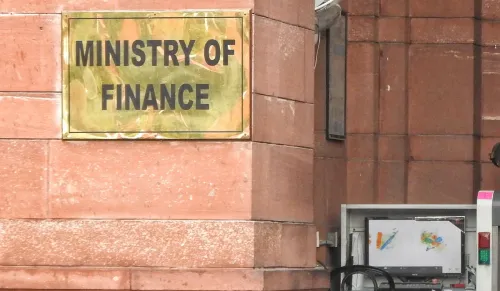
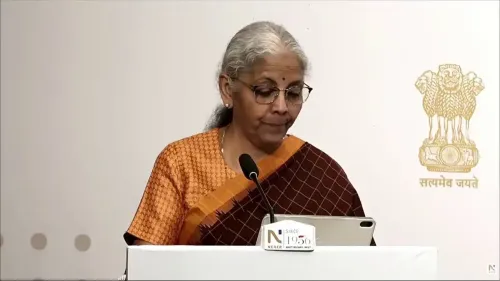
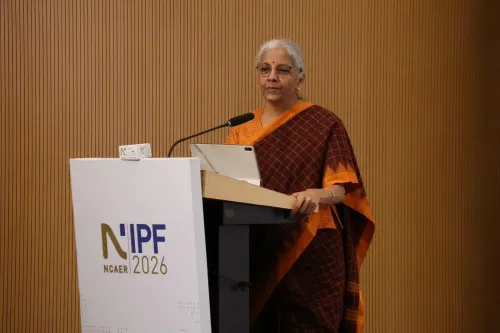
A parliamentary debate on digital payments turned sharply combative on Monday, August 10, 2026, when Union Finance Minister Nirmala Sitharaman took aim at Communist lawmakers in the Rajya Sabha, accusing them of spreading falsehoods about the government's 'No MDR' policy even as she delivered a technical rebuttal from the treasury benches.
The 'Sweet Song' Jab and What MDR Actually Means
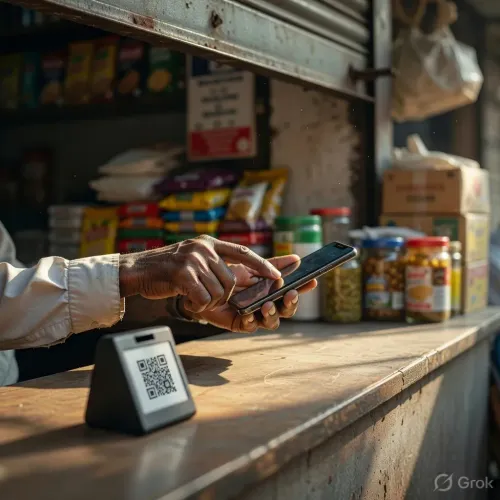
MDR — Merchant Discount Rate — is the fee that merchants pay banks for processing digital transactions. Back in December 2019, the government eliminated MDR on RuPay debit card and UPI transactions, absorbing the cost through the central government and the Reserve Bank of India. For small traders and shopkeepers, it was a genuine relief — no cut taken out of every digital sale.
Sitharaman's remark that 'No MDR is a sweet song for our Communist friends' was a pointed double-edged thrust: she acknowledged the Left's ideological sympathy for the policy while simultaneously accusing them of misrepresenting it. 'When we give answers in Parliament, they shouldn't go out and spread untruths across the nation,' she said from the floor.
Zero State Governments: The Electoral Cudgel
The Finance Minister did not stop at policy. She pivoted swiftly to electoral arithmetic — the kind of number that lands hardest in a parliamentary chamber. 'No State has a Communist government,' she said flatly, framing the Left's habit of what she called 'spreading untruths' as a direct cause of their political collapse.
The charge carries statistical weight. Parties such as CPI(M) and CPI, once dominant in West Bengal, Kerala, and Tripura, have seen their footprint shrink dramatically over successive election cycles. The BJP has made the Left's electoral decline a recurring motif in its national political narrative, and Sitharaman deployed it here with precision — turning a debate about payment infrastructure into a referendum on the Opposition's credibility.
Digital Payments, Formalisation, and the Bigger Stakes
Beneath the partisan fire lies a genuinely consequential policy story. India's zero-MDR framework, in place since the post-demonetisation push of 2016-17, has been a cornerstone of efforts to formalise the economy and bring small merchants into the digital fold. UPI now processes billions of transactions monthly, and the cost of that ecosystem — borne partly by the exchequer — is a live budget question that Parliament has every reason to scrutinise.
That scrutiny, Sitharaman argued, must be honest. The implication: the Left is using a legitimate policy debate as cover for political mischief rather than genuine legislative oversight.
Whether the Opposition files a formal clarification or the RBI issues updated circulars on digital-payment charges in the coming session will signal how far this particular exchange travels beyond the chamber floor.
Point of View
The underlying MDR policy is a real and consequential fiscal question — the exchequer's cost of subsidising zero-MDR digital transactions grows with every UPI milestone — and Opposition scrutiny, however partisan in delivery, serves a legitimate oversight function. The exchange underscores a persistent pattern in Indian parliamentary economics: the most important fiscal debates are often the ones most quickly consumed by political theatre.
NationPress
25 Sept 2026
Frequently Asked Questions
What is MDR and why did Sitharaman mention it in Parliament?
MDR, or Merchant Discount Rate, is the fee merchants pay banks for processing digital transactions. Sitharaman mentioned it while defending the government's policy of waiving MDR on UPI and RuPay transactions, accusing Communist MPs of misrepresenting the policy to the public.
When was MDR removed on UPI and RuPay transactions in India?
The government announced the removal of MDR on RuPay debit card and UPI transactions in December 2019 , with the cost absorbed by the central government and the Reserve Bank of India.
What did Sitharaman say about Communist parties in the Rajya Sabha?
She said Communist parties have a 'habit' of spreading untruths and pointed out that no Communist party currently governs any Indian state, attributing their electoral wipeout partly to this behaviour.
Which Communist parties is Sitharaman referring to?
The remarks are directed at Left-wing parties such as CPI(M) and CPI, which were once dominant in West Bengal, Kerala, and Tripura but have seen their electoral presence shrink significantly over the past decade.
What is the significance of India's zero-MDR policy for merchants?
Zero-MDR means small traders and shopkeepers pay no fee when customers use UPI or RuPay debit cards, encouraging digital adoption. The government bears this cost, making it a recurring budget consideration and a subject of parliamentary debate.