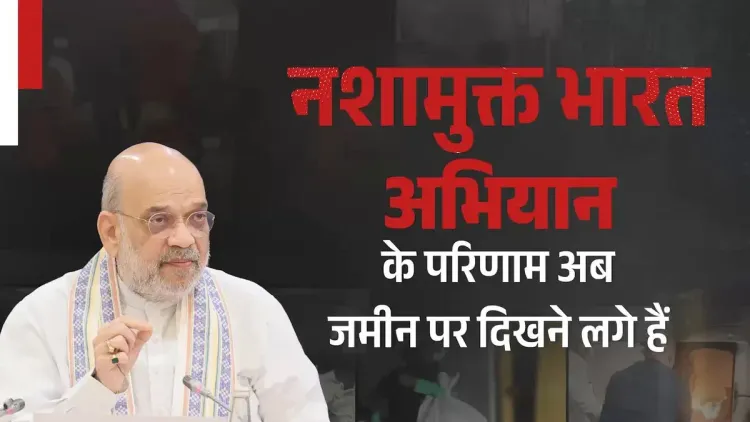
Amit Shah says Nasha Mukt Bharat Abhiyan showing results
Synopsis
Union Home Minister Amit Shah on 26 June 2026 declared that the Nasha Mukt Bharat Abhiyan, launched under PM Modi in 2020 across 272 districts, is now producing concrete, positive results on the ground — marking a significant milestone for India's flagship anti-drug campaign.
Key Takeaways
Amit Shah posted on 26 June 2026 — the UN's International Day Against Drug Abuse — that the Nasha Mukt Bharat Abhiyan is delivering visible ground-level results.
The Abhiyan was launched on 15 August 2020 as a pilot in 272 high-vulnerability districts before nationwide expansion.
The campaign is implemented by the Ministry of Social Justice and Empowerment and focuses on awareness, demand reduction, and rehabilitation.
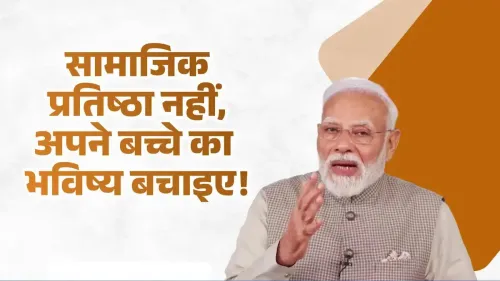
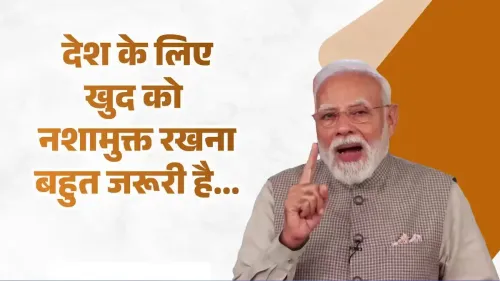
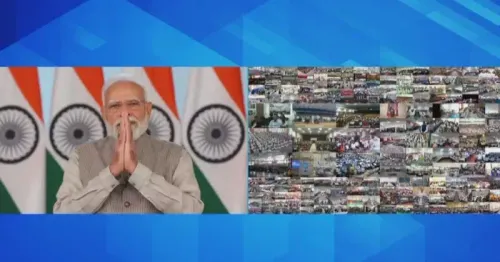
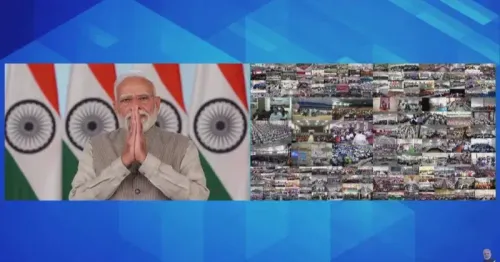
Shah's post was accompanied by a video , suggesting an intent to present on-ground evidence of the programme's reach.
The NDPS Act provides the legal enforcement backbone, while the Abhiyan addresses the demand-reduction side of narcotics control.
The next formal progress assessment is expected in the ministry's annual report and the 2026-27 budget cycle .
Union Home Minister Amit Shah on Friday, 26 June 2026 said that the Nasha Mukt Bharat Abhiyan, being run under the leadership of Prime Minister Narendra Modi, is now delivering concrete and positive results on the ground. Shah made the assertion in a post on X, underlining the campaign's visible impact in communities across the country.
Context
In his post, Shah wrote in Hindi: 'Nasha Mukt Bharat Abhiyan ke thos aur sakaratmak parinam ab zameen par dikhai dene lage hain' — meaning, 'The solid and positive results of the Nasha Mukt Bharat Abhiyan are now beginning to show on the ground.' The statement was accompanied by a video, signalling an effort to present evidence of the campaign's reach and effectiveness to a wider public audience.
The post was framed as a progress update on one of the central government's flagship social-sector programmes, timed around 26 June — the International Day Against Drug Abuse and Illicit Trafficking, observed annually by the United Nations.
Policy Backdrop
The Nasha Mukt Bharat Abhiyan was formally launched on 15 August 2020 as a targeted pilot covering 272 districts identified as highly vulnerable to substance abuse, before being expanded nationwide. The campaign is implemented by the Ministry of Social Justice and Empowerment and combines three pillars: awareness generation, demand reduction, and rehabilitation of affected individuals.
The broader legal framework for narcotics control in India rests on the Narcotic Drugs and Psychotropic Substances (NDPS) Act, which governs enforcement. The Abhiyan operates on the demand-reduction side of that architecture, targeting youth and drug-affected communities through outreach programmes, de-addiction camps, and community mobilisation drives.
Periodic public messaging by senior ministers on scheme outcomes is consistent with the government's practice of sustaining visibility for social-sector initiatives and reinforcing public support for long-running programmes.
Stakeholders and Impact
The primary beneficiaries of the Abhiyan are youth and communities in districts with historically high substance-abuse prevalence. The programme involves coordination between central ministries, state governments, local bodies, and civil-society organisations to deliver ground-level interventions.
Shah's emphasis on results 'now showing on the ground' is directed at multiple audiences: communities living with the consequences of drug abuse, state governments implementing the scheme, and the broader electorate that tracks social-welfare delivery. The video accompanying the post is likely intended to provide visual evidence of the campaign's reach, though specific outcome statistics from June 2026 have not been independently verified.
What's Next
The next formal measure of the Abhiyan's progress is expected in the annual report from the Ministry of Social Justice and Empowerment, which typically documents district-level data on awareness coverage, de-addiction centre enrolments, and community outreach numbers. Any further expansion of the programme or fresh funding allocation would likely be signalled during the 2026-27 budget cycle. Shah's post may also be a precursor to a broader government communication push around the international anti-drugs observance day, with more detailed data potentially to follow.
Point of View
The messaging reinforces the BJP's broader framing of social-sector delivery as a pillar of its governance record. The Abhiyan's combination of enforcement optics and community outreach gives the government a programme that appeals across constituencies — from law-and-order audiences to social-welfare advocates. Whether the claim of 'concrete results' is backed by fresh data will determine how much traction the communication cycle generates beyond the immediate news cycle.
NationPress
25 Sept 2026
Frequently Asked Questions
What is the Nasha Mukt Bharat Abhiyan?
The Nasha Mukt Bharat Abhiyan is a national campaign launched on 15 August 2020 by the central government to combat substance abuse through awareness, demand reduction, and rehabilitation, initially targeting 272 high-vulnerability districts before expanding nationwide.
What did Amit Shah say about the Nasha Mukt Bharat Abhiyan?
On 26 June 2026, Union Home Minister Amit Shah said that the Nasha Mukt Bharat Abhiyan, run under PM Modi's leadership, is now showing concrete and positive results on the ground, and shared a video to accompany his statement.
Which ministry implements the Nasha Mukt Bharat Abhiyan?
The Ministry of Social Justice and Empowerment is the nodal ministry responsible for implementing the Nasha Mukt Bharat Abhiyan at the central level, in coordination with state governments and civil-society organisations.
When was the Nasha Mukt Bharat Abhiyan launched?
The Nasha Mukt Bharat Abhiyan was formally launched on 15 August 2020, initially as a pilot programme covering 272 districts identified as particularly vulnerable to drug abuse.
Why did Amit Shah post about the drug-free India campaign on 26 June?
26 June is the United Nations' International Day Against Drug Abuse and Illicit Trafficking, making it a globally recognised occasion for governments to highlight anti-narcotics efforts and progress reports.