Rajasthan Minister Kirodi Lal Meena calls Meena-Gurjar duo 'Ram-Lakshman'
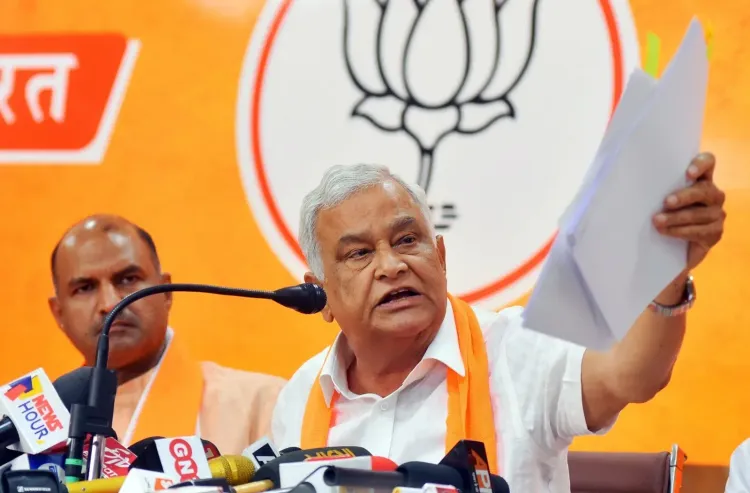
Synopsis
At a packed World Tribal Day rally in Dausa, Rajasthan Minister Kirodi Lal Meena framed the Meena-Gurjar relationship as Ram and Lakshman — inseparable and mutually destructive if divided. The remark, directed pointedly at Gurjar aspirations for a Chief Minister, doubles as a reminder of the Meena community's electoral clout in eastern Rajasthan.
Key Takeaways
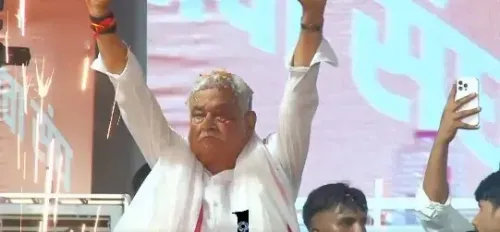
Rajasthan Cabinet Minister Kirodi Lal Meena addressed the World Tribal Day celebrations at the Panch-Athai complex , Nangal Pyarivas , Dausa , on 10 August .
Meena compared the Meena and Gurjar communities to Lord Ram and Lakshman, urging unity and warning that conflict would harm both groups.
He told the Gurjar community that any aspiration for a Chief Minister from their ranks requires the support of 'Ram' — a reference to the Meena community .
Meena invoked the legacy of Sachin Pilot and late father Rajesh Pilot , highlighting the Meena community's historical role in Dausa politics.
The minister reaffirmed loyalty to the BJP , stating the party gave him his political identity.
Idol installation at the Panch-Athai complex is scheduled for 9 August 2027 , coinciding with the next World Tribal Day.
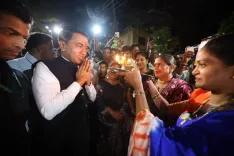
Rajasthan Cabinet Minister Kirodi Lal Meena drew a pointed political analogy at the World Tribal Day celebrations in Dausa district on 10 August, comparing the Meena and Gurjar communities to Lord Ram and Lakshman — inseparable, mutually dependent, and weakened by conflict. The remarks, made before thousands at the historic Panch-Athai complex in Nangal Pyarivas, carried unmistakable electoral undertones in one of Rajasthan's most politically contested regions.
Key Remarks at the Gathering
Addressing a massive assembly on the second and final day of the two-day event, Meena described the Meena and Gurjar communities as rooted in agriculture and bound by shared social and economic concerns. He appealed for inter-community harmony, cautioning that internal conflicts would damage the broader interests of both groups.
In a passage directed at the Gurjar community, Meena said that anyone aspiring to see a Gurjar leader become Chief Minister must also recognise the indispensable role of 'Ram' — his implicit reference to the Meena community's political weight. He added that reaching the offices of Chief Minister or Prime Minister ultimately depends on destiny and the collective will of the people, not on sacrificing social cohesion for political gain.
Pilot Family Reference and Political History
Meena invoked the legacy of former Deputy Chief Minister Sachin Pilot and his late father, former Union Minister Rajesh Pilot, recounting the political history of Dausa and the Meena community's role in supporting their rise. The reference underscored the deep entanglement of community identity and electoral arithmetic in the region.
Meena Reaffirms BJP Loyalty
The minister used the occasion to restate his commitment to the Bharatiya Janata Party (BJP). Recalling an exchange with supporters who had told him, 'The party is wrong; you are right,' Meena firmly rejected the framing. He said the party was right and credited the BJP with giving him his political identity and ideology — a pointed signal amid ongoing speculation about factional tensions within Rajasthan's ruling establishment.
Event Scale and Upcoming Milestone
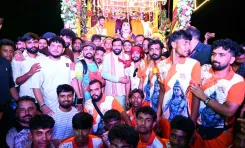
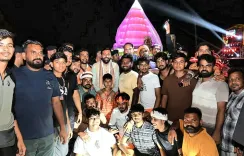
The celebration was held inside a massive dome erected across approximately 125 bighas at the Panch-Athai complex. The turnout exceeded the venue's capacity, with many attendees seated in open spaces outside. Cultural programmes featuring local artists and students added a ceremonial dimension to what was primarily a religious and community gathering.
Meena announced that the formal installation of idols of the principal deity and other gods and goddesses at the complex is scheduled for 9 August 2027, coinciding with the next World Tribal Day. Several political and social figures also addressed the crowd, including convener Lal Meena, local MLA Rambilas Meena, Rajendra Meena, Mahendrapal, and Mangilal.
Why Dausa Matters
The Dausa region sits at the intersection of Meena and Gurjar demographic influence in eastern Rajasthan, making it a perennial flashpoint and a prize constituency in state politics. Meena's remarks — simultaneously conciliatory and transactional — reflect a wider pattern of community consolidation ahead of future electoral cycles. This is not the first time the two communities have been the subject of political outreach from the ruling dispensation, but the Ram-Lakshman framing gives this iteration a cultural resonance designed to outlast the news cycle.
Point of View
Not mere cultural sentiment. By tying Gurjar Chief Ministerial ambitions to Meena community approval, he is asserting demographic leverage in a region where both communities have historically jostled for primacy. The reaffirmation of BJP loyalty, delivered in the same breath, signals that Meena is positioning himself as the indispensable bridge between community consolidation and the ruling party — a role that insulates him from factional pressure within Rajasthan's BJP. What mainstream coverage may miss is the implicit warning embedded in the harmony appeal: unity is on offer, but on Meena community terms.
NationPress
11 Aug 2026
Frequently Asked Questions
What did Kirodi Lal Meena say about the Meena and Gurjar communities?
Minister Kirodi Lal Meena compared the Meena and Gurjar communities to Lord Ram and Lakshman, describing them as complementary and mutually dependent. He warned that conflict between the two communities would harm both, and urged social harmony over political ambition.
Where and when did Kirodi Lal Meena make these remarks?
The remarks were made on 10 August at the World Tribal Day celebrations held at the Panch-Athai complex in Nangal Pyarivas, Dausa district, Rajasthan. The event was the second and final day of a two-day gathering.
What did Meena say about Gurjar aspirations for a Chief Minister?
Meena told the Gurjar community that if they aspired to see one of their leaders become Chief Minister, they must also recognise the importance of 'Ram' — a reference to the Meena community's support. He added that reaching such offices ultimately depends on destiny and the collective will of the people.
Why did Meena reference Sachin Pilot and Rajesh Pilot?
Meena invoked the political legacy of former Deputy Chief Minister Sachin Pilot and his late father, former Union Minister Rajesh Pilot, to highlight the Meena community's historical role in supporting their rise in Dausa — underscoring the link between community identity and electoral outcomes in the region.
What is the significance of the Panch-Athai complex announcement?
Meena announced that the formal installation of idols of the principal deity and other gods and goddesses at the Panch-Athai complex is scheduled for 9 August 2027, coinciding with the next World Tribal Day. The complex, which hosted the event across approximately 125 bighas, is a significant religious and cultural site for the Meena community.