CM Pema Khandu Slams Rahul Gandhi Over Parliament Walkout
Synopsis
Arunachal Pradesh CM Pema Khandu accused Rahul Gandhi and the Congress-led opposition of demanding answers on student issues in Parliament and then walking out before Home Minister Amit Shah could respond, calling for a 'serious Opposition' that listens with the same courage it questions.
Key Takeaways
Pema Khandu posted on 10 August 2026 accusing Rahul Gandhi of staging a Parliament walkout before hearing the government's reply.
The post used the Hindi hashtag #राहुल_भागना_नहीं ('Rahul, don't run away'), signalling a direct personal challenge.
Home Minister Amit Shah was named as ready to answer every question concerning students on the floor of Parliament.
Khandu framed the walkout as evasion, not protest — shifting the accountability burden onto the opposition.
The episode reflects a recurring pattern in Indian parliamentary sessions where treasury benches accuse opposition MPs of raising issues and leaving before replies are completed.
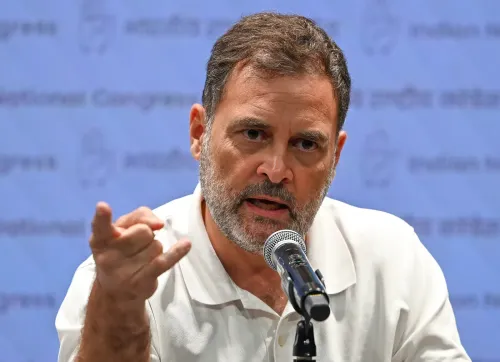
Ask the question — then stay for the answer. Arunachal Pradesh Chief Minister Pema Khandu fired a pointed broadside at the Congress leadership on Monday, 10 August 2026, accusing Rahul Gandhi and the opposition of demanding accountability in Parliament while refusing to hear the government's response.
Khandu's post, carrying the Hindi hashtag #राहुल_भागना_नहीं ('Rahul, don't run away'), left little room for ambiguity. 'You cannot demand answers and then disappear when the answers arrive,' he wrote, adding that Home Minister Amit Shah stood ready to address every question concerning students on the floor of the House.
The walkout charge and what it means in Parliament
The accusation of staged walkouts is a recurring flashpoint in Indian parliamentary politics. Treasury benches have repeatedly alleged that opposition MPs raise pointed questions during debate — on student welfare, internal security, law and order — and then vacate the chamber before the minister's reply is entered into the record. The tactic, critics argue, prioritises the optics of confrontation over the substance of accountability.
Khandu's post targets that very pattern. By naming Shah as willing and present, it frames the opposition's absence not as protest but as evasion — a subtle but significant rhetorical shift that places the burden of seriousness squarely on the Congress benches.
Khandu's national voice from Itanagar
As a BJP chief minister who has held office in Arunachal Pradesh since 2016, Khandu frequently weighs in on national political debates, amplifying the party's parliamentary messaging from the state level. His intervention here is part of a broader BJP effort to cast the opposition — and Rahul Gandhi specifically — as performing concern for students rather than genuinely engaging with government responses.
The post's closing line carries the sharpest sting: 'The country deserves a serious Opposition, one that can question with courage and listen with equal courage.' It is a challenge as much as a critique — and one the Congress will need to answer before the next sitting.
Point of View
The party positions itself as the side willing to engage, while casting Congress as performative. The move fits a broader BJP strategy of holding Rahul Gandhi personally responsible for opposition conduct, making him the face of institutional dysfunction rather than institutional challenge. If the Congress does not respond with a credible account of why members left the chamber, Khandu's framing is likely to dominate the news cycle on this episode.
NationPress
25 Sept 2026
Frequently Asked Questions
Why did Pema Khandu criticise Rahul Gandhi over Parliament?
Khandu accused Rahul Gandhi and the opposition of walking out of Parliament before Home Minister Amit Shah could answer their questions about students, calling it an act of evasion rather than legitimate protest.
What did Amit Shah say about student questions in Parliament?
According to Khandu's post, Amit Shah was ready to answer every question concerning students on the floor of Parliament; the specific content of his reply was not detailed in the post.
What does the hashtag #राहुल_भागना_नहीं mean?
The Hindi hashtag translates to 'Rahul, don't run away' — a direct taunt aimed at Rahul Gandhi over the alleged walkout from the parliamentary session.
Is opposition walkout during minister replies common in Indian Parliament?
Yes. Treasury benches have repeatedly accused opposition MPs across multiple sessions of raising questions and then leaving the chamber before the minister's reply is entered into the record, making it a long-standing point of friction.