Amit Shah vows to crush narco-terror with Detect, Disrupt, Destroy
Synopsis
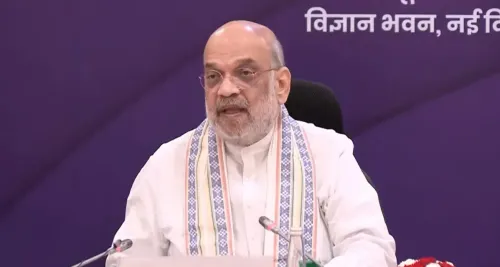
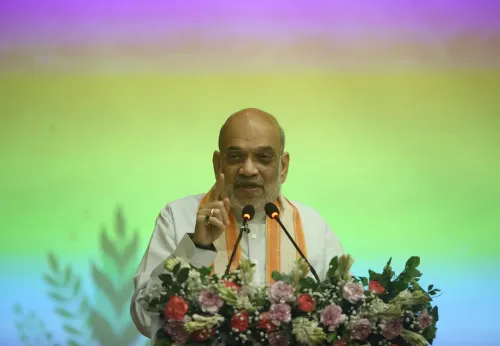
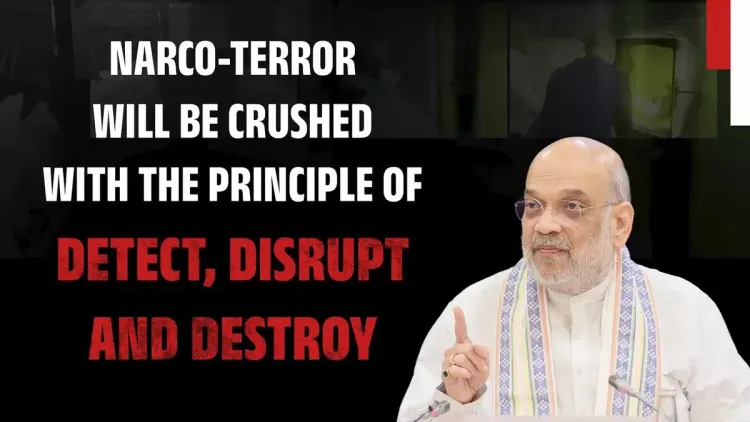
Union Home Minister Amit Shah on June 26, 2026 declared that narco-terror will be crushed through a 'Detect, Disrupt and Destroy' doctrine, reinforcing India's security-first approach to drug trafficking and its links to cross-border militancy networks.
Key Takeaways
Amit Shah invoked a three-pronged 'Detect, Disrupt and Destroy' doctrine against narco-terror on June 26, 2026 .
The statement was made on International Day Against Drug Abuse and Illicit Trafficking , amplifying its policy signal.
The Narco-Coordination Centre (NCORD) , established in 2019 , remains the institutional backbone for inter-agency drug enforcement.
The Golden Crescent region — Afghanistan, Pakistan, Iran — is the primary identified source of drugs entering India via the western frontier.
Punjab is the most acutely affected border state, with official reports linking smuggling networks to designated terrorist groups.
The next quarterly NCORD review and the Monsoon session of Parliament are the immediate policy milestones to watch.
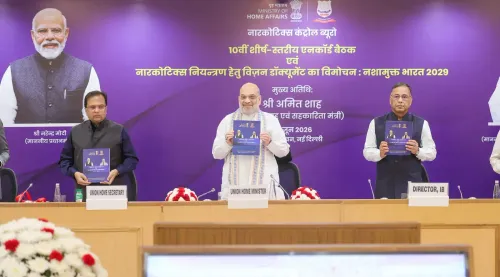
Union Home Minister Amit Shah on Friday, June 26, 2026 declared that narco-terror will be crushed through a three-pronged doctrine of 'Detect, Disrupt and Destroy,' signalling a hardened federal posture on drug-linked militancy ahead of a key policy review cycle.
Context
The statement arrives on International Day Against Drug Abuse and Illicit Trafficking, lending it both symbolic and operational weight. Shah, who oversees internal security as well as the Narcotics Control Bureau (NCB) under the Ministry of Home Affairs, has consistently framed drug trafficking as a national-security threat rather than a standalone criminal matter.
The 'Detect, Disrupt and Destroy' formulation echoes the language of counter-terrorism doctrine, deliberately blurring the line between narcotics enforcement and anti-militancy operations — a framing the BJP-led government has used since 2019 to justify integrated, intelligence-led crackdowns.
Policy Backdrop
The institutional architecture for this approach was laid in 2019 when the Ministry of Home Affairs established the Narco-Coordination Centre (NCORD), designed to synchronise intelligence and operations across the NCB, the Border Security Force (BSF), state police forces, and customs agencies. The centre holds quarterly review meetings that set enforcement priorities along India's vulnerable frontiers.
The Narcotic Drugs and Psychotropic Substances (NDPS) Act was amended in 2014 to introduce stricter penalties and asset-forfeiture provisions, giving enforcement agencies sharper tools against trafficking networks. The 'Drug-Free India' campaign launched in 2020 further linked interdiction drives with de-addiction infrastructure and border-fencing projects, broadening the policy lens beyond pure enforcement.
India's western frontier remains the primary pressure point. The Golden Crescent — the Afghanistan-Pakistan-Iran corridor — is the identified source of the bulk of heroin and synthetic drugs entering India, with Punjab bearing the sharpest impact from cross-border smuggling networks that official reports have linked to designated terrorist organisations.
Stakeholders and Impact
Border communities in Punjab and other frontier states stand to be most directly affected by any intensification of operations. State police forces, which handle ground-level interdiction, will need to align their protocols with the federal 'Detect, Disrupt and Destroy' framework if it translates into operational directives.
Advocacy groups working on drug de-addiction have previously called for enforcement to be balanced with rehabilitation spending, particularly for first-time users in high-prevalence districts. The Home Ministry's approach, however, has prioritised supply-side disruption and asset seizure as the primary levers.
What's Next
The next quarterly NCORD review meeting will be a key indicator of whether Shah's statement translates into fresh operational mandates or enhanced inter-agency resource allocation. The Monsoon session of Parliament may also see notifications on precursor-chemical controls, a long-pending regulatory gap that enforcement agencies have flagged as enabling synthetic-drug production networks.
With narco-terror framed as a top-tier security priority at the federal level, state governments — particularly those along the western and northern borders — are likely to face renewed pressure to share real-time intelligence and align enforcement calendars with central directives.
Point of View
Disrupt and Destroy' declaration is a deliberate securitisation of the drug-trafficking debate — framing narcotics not as a public-health crisis but as an existential security threat requiring military-style doctrine. This language is consistent with the BJP-led government's post-2019 pattern of collapsing the distinction between criminal networks and terrorist organisations to justify centralised, intelligence-led enforcement. The timing on International Anti-Drug Day gives the statement maximum symbolic reach domestically and signals resolve to international partners monitoring the Golden Crescent corridor. The real test will be whether the rhetoric is matched by fresh operational mandates at the next NCORD cycle and concrete legislative action in the Monsoon session.
NationPress
25 Sept 2026
Frequently Asked Questions
What does 'Detect, Disrupt and Destroy' mean in Amit Shah's narco-terror statement?
It is a three-stage enforcement doctrine: detecting drug networks through intelligence, disrupting their supply chains through interdiction, and destroying their organisational capacity through arrests, asset seizures and prosecution. Shah used the phrase to signal a zero-tolerance, security-first approach to drug trafficking linked to terrorism.
What is NCORD and how does it fight drug trafficking in India?
The Narco-Coordination Centre (NCORD) was established in 2019 under the Ministry of Home Affairs to integrate intelligence and operations across the NCB, BSF, state police forces and customs agencies. It holds quarterly review meetings to set enforcement priorities, particularly along India's western and northern borders.
Why is Punjab central to India's narco-terror problem?
Punjab shares a border with Pakistan and is the primary entry point for drugs originating in the Golden Crescent — the Afghanistan-Pakistan-Iran corridor. Official reports have repeatedly linked cross-border smuggling networks operating through Punjab to designated terrorist organisations, making it the frontline of India's narco-terror challenge.
What is the Golden Crescent and why does it matter for India?
The Golden Crescent refers to the Afghanistan-Pakistan-Iran region, which is the world's largest producer of illicit opiates. It is the primary source of heroin and synthetic drugs entering India, and enforcement agencies have documented links between trafficking networks in this corridor and groups involved in cross-border terrorism targeting India.
What policy changes could follow Amit Shah's narco-terror statement?
Analysts are watching the next quarterly NCORD review meeting for fresh operational directives and the Monsoon session of Parliament for potential notifications on precursor-chemical controls — a regulatory gap that enforcement agencies have flagged as enabling synthetic-drug manufacturing networks inside and outside India.