CM Dhami joins Walkathon for Drug-Free Uttarakhand in Dehradun
Synopsis
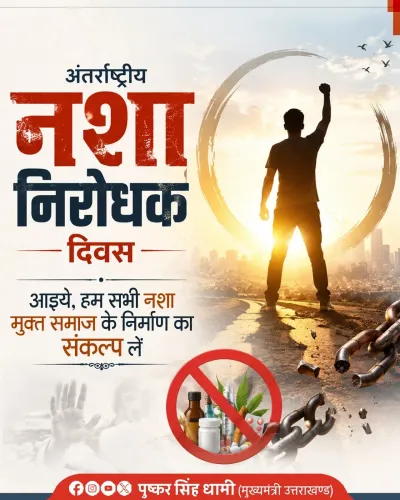
Uttarakhand CM Pushkar Singh Dhami participated in a 'Walkathon Drug Free Uttarakhand' in Dehradun on 23 October 2026, calling for a mass people's movement against substance abuse and tagging Union Home Minister Amit Shah in an appeal for national-level coordination.
Key Takeaways
CM Pushkar Singh Dhami participated in the 'Walkathon Drug Free Uttarakhand' in Dehradun on 23 October 2026 .
He stressed that drug abuse harms not just individuals but entire families and society.
Dhami tagged Union Home Minister Amit Shah and the Ministry of Home Affairs , signalling a push for central-state coordination on narcotics control.
The event aligns with the national Nasha Mukt Bharat Abhiyan , launched in August 2020 by the Ministry of Social Justice and Empowerment.
Dhami framed youth as both the state's primary at-risk group and its most powerful asset in building an anti-drug jan andolan (people's movement).
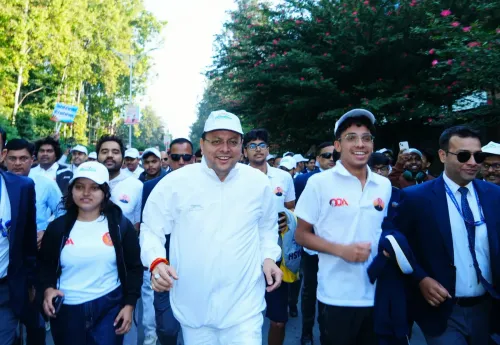
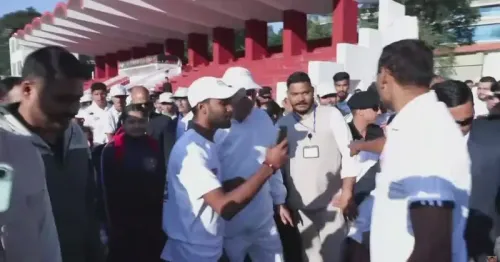
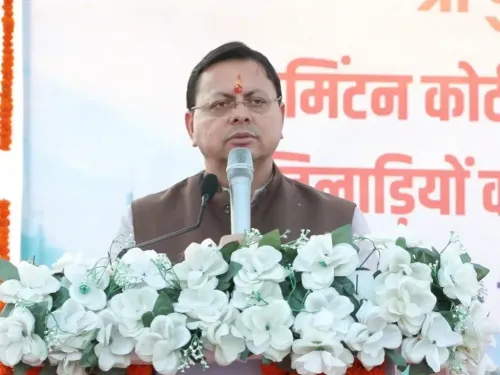
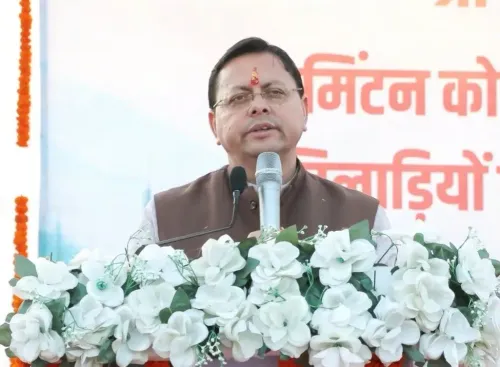
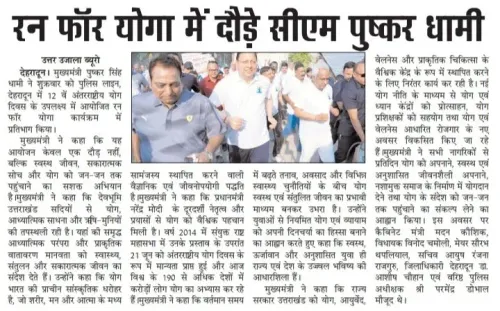
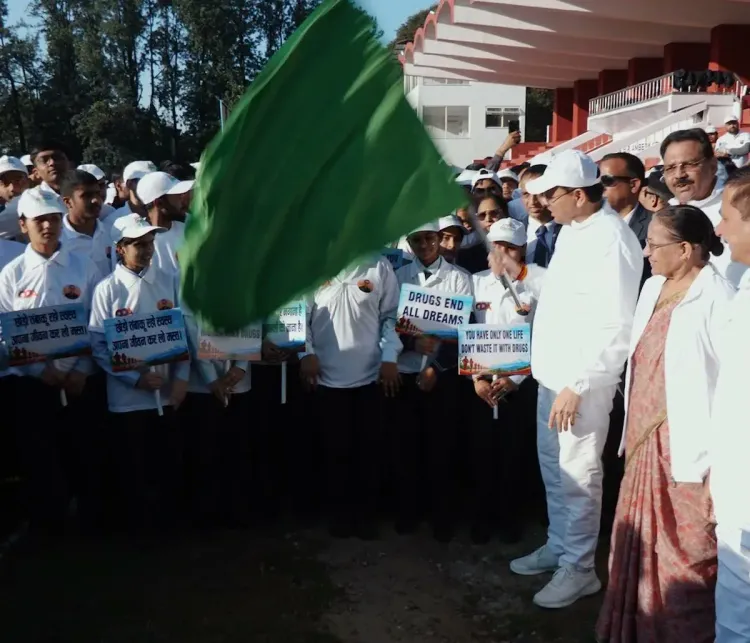
A walkathon wound through the streets of Dehradun on Friday, 23 October 2026, and Uttarakhand Chief Minister Pushkar Singh Dhami was in step with the youth who led it — turning a public march into a fresh declaration of intent against substance abuse in the hill state.
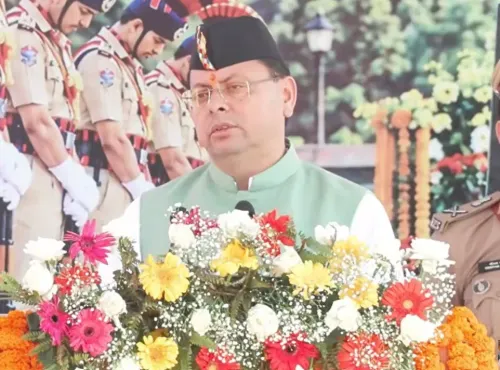
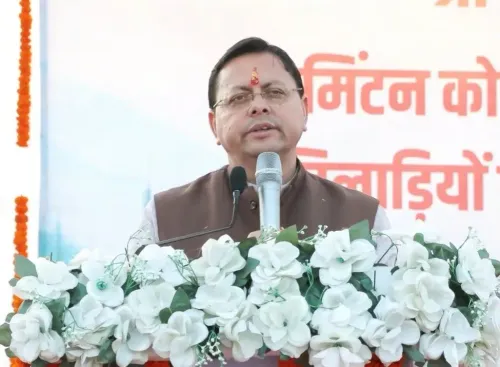
Participating in the 'Walkathon Drug Free Uttarakhand' alongside young residents, CM Dhami reinforced what he called an urgent societal compact. 'Nasha kewal vyakti ke jeevan ko hi nahin, balki poore parivaar aur samaaj ko prabhavit karta hai' — 'Drugs do not destroy only an individual's life, but the entire family and society,' he wrote, tagging Union Home Minister Amit Shah and the Ministry of Home Affairs in his post.
Why Dhami is looking to Delhi on drugs
The tags were deliberate. Narcotics control in India straddles state policing and central enforcement, and the Ministry of Home Affairs under Amit Shah has progressively tightened coordination with states on drug trafficking crackdowns. By looping in the Home Ministry publicly, Dhami signals that Uttarakhand's anti-drug push is not a standalone state event — it is a link in the national chain.
That chain has a formal spine: the Nasha Mukt Bharat Abhiyan, launched in August 2020 by the Ministry of Social Justice and Empowerment, which mobilises community-level awareness drives across Indian states. Uttarakhand's walkathon sits squarely within that framework, adding boots-on-ground visibility in the state capital.
Youth as the campaign's beating heart
Dhami's messaging placed the state's younger generation at the centre. 'Our youth power is the future of the state,' he wrote, arguing that channelling youthful energy in a 'positive direction' demands both mass public participation and a broad jan andolan — a people's movement — against narcotics.
The framing is consistent with a wider pattern among BJP-governed states, where social welfare campaigns are designed to build community ownership rather than present drug control purely as a law-enforcement problem. Walkathons, rallies, and pledge ceremonies create visible public moments that reinforce the messaging beyond policy circulars.
Uttarakhand's terrain and the stakes of the campaign
Uttarakhand, a state of roughly 11 million people tucked against the Himalayas, faces the dual challenge of remote border geography — making trafficking routes harder to monitor — and a young demographic that state leadership regards as both the most at risk and the most powerful agent of change. CM Dhami's appearance at the walkathon underscores that political attention at the top is now pairing with grassroots mobilisation on the ground.
The question going forward is whether the movement scales from a Dehradun walkathon into a state-wide structure — with measurable coordination between Uttarakhand Police, the Narcotics Control Bureau, and the Home Ministry framework Shah oversees.
Point of View
CM Dhami is doing something strategically precise: embedding Uttarakhand's anti-drug effort within the Union government's security and welfare architecture, which elevates its political visibility and signals a claim on central resources or coordination. The move also reflects a broader BJP playbook of aligning state campaigns with flagship national programmes like Nasha Mukt Bharat Abhiyan, creating a unified optics of governance from Dehradun to Delhi. Walkathons and public pledges are low-cost, high-visibility tools — but their durability depends on follow-through in enforcement and rehabilitation infrastructure, areas that remain harder to photograph. The real test of Dhami's 'people's movement' framing will come in whether it produces measurable policy outcomes or stays at the level of compelling street symbolism.
NationPress
23 Oct 2026
Frequently Asked Questions
What is the Walkathon Drug Free Uttarakhand?
It is a public awareness walkathon organised in Dehradun in which Uttarakhand Chief Minister Pushkar Singh Dhami participated on 23 October 2026 to reinforce the state's anti-drug campaign and mobilise youth against substance abuse.
Why did CM Dhami tag Amit Shah in his anti-drug post?
CM Dhami tagged Union Home Minister Amit Shah and the Ministry of Home Affairs to signal the need for central-state coordination on narcotics control, linking Uttarakhand's state-level effort to the broader national security and drug-enforcement framework.
What is the Nasha Mukt Bharat Abhiyan?
Nasha Mukt Bharat Abhiyan is a national campaign launched in August 2020 by India's Ministry of Social Justice and Empowerment to build community awareness and collective action against substance abuse across Indian states.
What is Uttarakhand's approach to tackling drug abuse among youth?
The Uttarakhand government under CM Dhami is focusing on community-level mobilisation — including public events like walkathons — to channel youth energy positively, while also seeking coordination with the Union Home Ministry on narcotics enforcement.
Where was the Drug Free Uttarakhand walkathon held?
The walkathon was held in Dehradun, the capital city of Uttarakhand, on 23 October 2026.