CM Dhami Launches Three-Tier Anti-Narcotics Task Force in Uttarakhand

Synopsis
Chief Minister Pushkar Singh Dhami announces a three-tier Anti Narcotics Task Force for Uttarakhand, targeting both street-level drug networks and digital trafficking channels under the state's 'Drugs Free Uttarakhand' pledge.
Key Takeaways
Uttarakhand has constituted a three-tier Anti Narcotics Task Force to combat drug trafficking at local, district, and state levels.
CM Pushkar Singh Dhami explicitly identified digital-world criminals as a primary target alongside traditional drug networks.
The overarching policy goal is branded 'Drugs Free Uttarakhand' , with the state police as the primary enforcement agency.
The initiative operates within the framework of the Narcotic Drugs and Psychotropic Substances (NDPS) Act, 1985 .
Uttarakhand's Himalayan terrain and tourism economy have historically made it a transit corridor for drug trafficking.
Coordination with the Narcotics Control Bureau (NCB) at the central level will be a key indicator of the task force's operational depth.
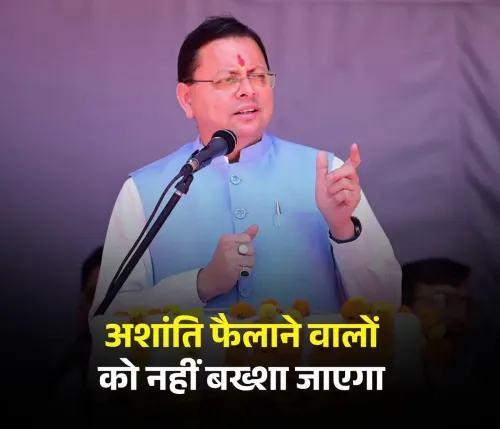
Drugs are hollowing out society — and Uttarakhand Chief Minister Pushkar Singh Dhami says the state is fighting back on two fronts at once: the streets and the screen. Speaking on Wednesday, October 21, 2026, the Chief Minister's Office of Uttarakhand shared remarks from CM Dhami declaring that a three-tier Anti Narcotics Task Force has been constituted across the state to pursue the 'Drugs Free Uttarakhand' (Drugs-Free Uttarakhand) mission.
In his words: 'Today our fight is against criminals hiding in the digital world and against drugs. Narcotics hollow out the entire society. To eradicate this menace, a three-tier Anti Narcotics Task Force has been formed in the state. Our police are continuously striving to realise the resolve of a Drugs-Free Uttarakhand.'
Why a Three-Tier Structure — and Why Now
Uttarakhand's terrain has long made it vulnerable to drug trafficking. Its Himalayan geography, dense forest corridors, and thriving tourism economy create pathways that traffickers have historically exploited. A layered, hierarchical task force — operating from the local level up to the state command — is designed to plug those gaps by ensuring no corridor goes unwatched. The model mirrors approaches adopted by other Indian states that have deployed coordinated, multi-level narcotics units.
What is newer — and pointed — is CM Dhami's explicit identification of the 'digital duniya' (digital world) as a battleground. Online drug networks, where orders are placed through encrypted platforms and deliveries made through unsuspecting courier chains, have emerged as a national enforcement headache. The Uttarakhand government's framing puts the state's task force on notice that cyber-enabled trafficking is as much a target as physical smuggling routes.
The Legal Spine: NDPS Act and State Enforcement
The constitutional and legal backbone for this effort remains the Narcotic Drugs and Psychotropic Substances (NDPS) Act, 1985 — India's central legislation governing drug control. State-level task forces operate within its powers, working alongside the Narcotics Control Bureau (NCB) at the central level. How closely the new three-tier body coordinates with the NCB will be one of the clearest signals of how serious the operational ambition really is.
The primary stakeholders in this push are Uttarakhand Police — who bear the operational load — and the state's youth, who are the most exposed to both the supply and the social damage of narcotics abuse.
What the 'Drugs Free Uttarakhand' Pledge Actually Demands
A pledge is only as durable as the infrastructure behind it. The 'Drugs Free Uttarakhand' goal now has an enforcement architecture to point to — but the real measure will come in seizure data, prosecutions, and rehabilitation reach in the months ahead. Drug eradication at the state level has defeated every government that treated it as a slogan alone.
For CM Dhami, the political calculus is straightforward: in a state where tourism, pilgrimage, and youth demographics all converge, a credible anti-narcotics record is both a governance necessity and an electoral asset. The task force is the instrument. The streets — and the servers — will be the verdict.
Point of View
Permanent institutional response — a shift other Indian states have attempted with mixed results. By singling out digital trafficking, the Dhami government is acknowledging a surveillance and jurisdictional challenge that no single state police force can solve in isolation, raising questions about central coordination. The 'Drugs Free Uttarakhand' branding also fits a broader BJP governance pattern of mission-mode framing for law-and-order priorities ahead of electoral cycles. Ultimately, the task force's credibility will rest on operational transparency — specifically, whether seizure data and prosecution rates are made public.
NationPress
21 Oct 2026
Frequently Asked Questions
What is the three-tier Anti Narcotics Task Force in Uttarakhand?
It is a multi-level enforcement body constituted by the Uttarakhand state government to combat drug trafficking and narcotics abuse, operating across local, district, and state tiers under the 'Drugs Free Uttarakhand' mission.
What is the 'Drugs Free Uttarakhand' scheme?
'Drugs Free Uttarakhand' is the stated policy goal of Chief Minister Pushkar Singh Dhami's government to eliminate narcotics use and trafficking in the state through enforcement, prevention, and the newly formed task force.
Why is Uttarakhand vulnerable to drug trafficking?
Uttarakhand's Himalayan terrain, forest corridors, and high tourist footfall have historically provided cover and transit routes for drug traffickers, making structured enforcement a persistent challenge.
What law governs anti-narcotics action in Indian states?
The Narcotic Drugs and Psychotropic Substances (NDPS) Act, 1985 is the central legal framework under which state police and task forces operate when combating drug trafficking and abuse across India.
What did CM Dhami say about digital drug trafficking?
CM Dhami stated that 'today our fight is against criminals hiding in the digital world and against drugs,' signalling that online drug networks are an explicit enforcement target alongside physical trafficking routes.