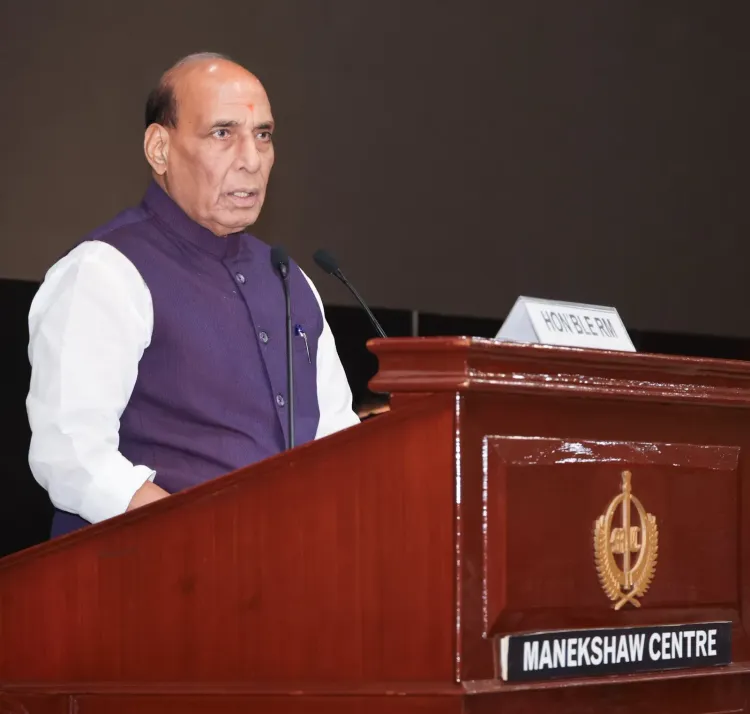
Rajnath Singh releases Land Warfare Doctrine at Army Commanders' Conference
Synopsis
Union Defence Minister Rajnath Singh released the Land Warfare Doctrine at the Army Commanders' Conference in New Delhi on October 23, 2026, calling for a 20-30 year strategic vision, dynamic adaptability, and recognising UN peacekeepers for their global service.
Key Takeaways
Land Warfare Doctrine released by Defence Minister Rajnath Singh at the Army Commanders' Conference in New Delhi on October 23, 2026 .
The doctrine provides an 'overarching framework' to prepare the Indian Army for evolving warfare and future conflicts .
Singh called for a long-term strategic vision spanning 20-30 years alongside readiness for immediate and emerging challenges.
Army strategies must remain 'dynamic and flexible' to enable timely adjustments to changing circumstances, per the Defence Minister.
Indian Army UN peacekeepers were felicitated for exemplary service, professionalism, and contribution to international peace and security.
India has been a major UN peacekeeping troop contributor since the 1950s , a tradition acknowledged on the same platform as the new doctrine.
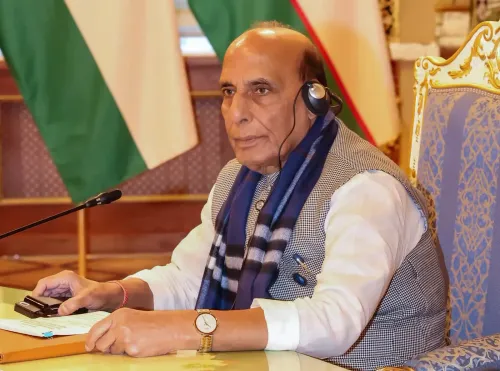
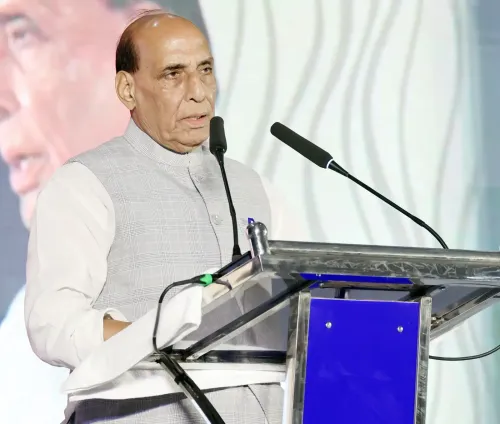
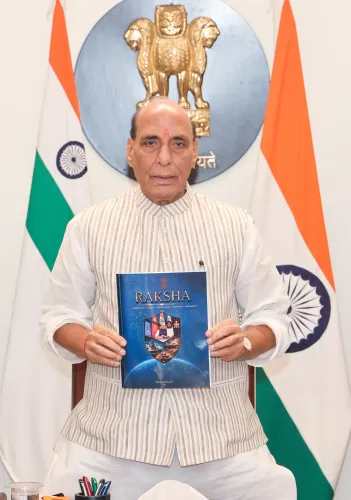
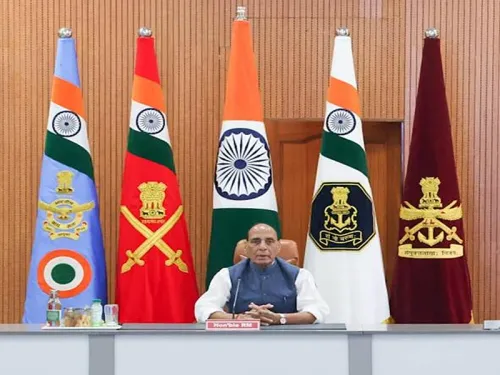
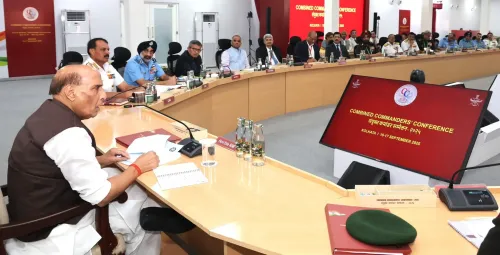
A new strategic framework for how India's land forces will fight future wars was unveiled in New Delhi on Friday, October 23, 2026, as Union Defence Minister Rajnath Singh addressed the Army Commanders' Conference and released the Land Warfare Doctrine — a document that lays down an overarching blueprint for the Indian Army to navigate the evolving character of warfare and future conflicts.
A doctrine born from shifting battlefields
The release of the Land Warfare Doctrine is not a routine administrative exercise. Doctrinal documents of this kind define how an army thinks about threat, manoeuvre, logistics, and integration across domains — and they tend to arrive when the strategic environment demands it. India's last major multi-domain doctrinal statement, the Joint Doctrine of 2017, addressed integrated theatre concepts at a time when hybrid threats were beginning to reshape conventional military thinking globally. The new Land Warfare Doctrine arrives against a backdrop of accelerating technological change in warfare — autonomous systems, electronic warfare, and the blurring of physical and cyber battlespaces.
Singh urged Army Commanders to ensure that the strategies they adopt remain 'dynamic and flexible, enabling timely adjustments to changing circumstances' — language that signals the doctrine is designed for agility, not rigidity.
The 20-30 year horizon Singh placed on the table
Beyond the doctrine itself, the Defence Minister drew the attention of India's senior military leadership to a longer arc. He 'emphasised the need for a long-term strategic vision spanning the next 20 to 30 years' while simultaneously calling on commanders to stay 'equally prepared to respond to immediate and emerging challenges.' That dual demand — simultaneous readiness for tomorrow's crisis and the next generation's threat environment — is the central tension any large standing army must resolve. Singh's framing made clear that the two are not in competition; they are parallel requirements.
The instruction to 'closely monitor geopolitical as well as regional developments' adds a layer of immediate operational awareness to what might otherwise sound like an abstract long-range planning exercise. India's neighbourhood, from the Line of Actual Control to the volatile western frontier, gives that instruction sharp, practical meaning.
UN peacekeepers recognised on the same stage
In a moment that broadened the conference's narrative well beyond border preparedness, Singh also felicitated Indian Army personnel who have served as United Nations peacekeepers, recognising their 'exemplary service, professionalism and contribution to international peace and security.' India has been one of the largest troop contributors to UN peacekeeping missions since the 1950s, a legacy that simultaneously projects soft power and gives Indian soldiers operational experience in complex, multilateral environments. Placing that recognition inside a warfighting-doctrine event was a deliberate signal: the Indian Army is built to defend, deter, and engage the world.
The Army Commanders' Conference is among the most senior military deliberations in the country, bringing together the top echelon of the Indian Army's leadership under one roof. What gets said — and what gets released — in that room sets the intellectual and operational direction of a force of over a million soldiers.
A new doctrine is only as consequential as its implementation. The coming months will reveal how the Land Warfare Doctrine's framework translates into training cycles, force structuring, and procurement priorities — and whether India's strategic vision for 2046-2056 begins to take visible shape.
Point of View
This represents a deliberate sequencing: joint vision first, service-specific land-power doctrine next. Recognising UN peacekeepers at the same event is also notable positioning — it frames India's Army as simultaneously a credible warfighting force and a responsible contributor to global order. For Rajnath Singh, the occasion reinforces his portfolio's consistent emphasis on modernisation and strategic self-reliance ahead of a complex regional security environment.
NationPress
23 Oct 2026
Frequently Asked Questions
What is the Land Warfare Doctrine released by Rajnath Singh?
The Land Warfare Doctrine is a framework document released by Union Defence Minister Rajnath Singh at the Army Commanders' Conference on October 23, 2026, providing overarching guidance to prepare the Indian Army for the evolving character of warfare and future conflicts.
What did Rajnath Singh say at the Army Commanders' Conference 2026?
Rajnath Singh urged Army Commanders to monitor geopolitical and regional developments, adopt dynamic and flexible strategies, develop a long-term strategic vision spanning 20-30 years, and remain prepared for both immediate and future challenges.
Why did Rajnath Singh felicitate Indian Army UN peacekeepers?
Singh recognised Indian Army personnel who have served as United Nations peacekeepers for their exemplary service, professionalism, and contribution to international peace and security, acknowledging India's long-standing role as a major UN peacekeeper troop contributor.
What is the Army Commanders' Conference in India?
The Army Commanders' Conference is one of India's most senior military deliberative forums, bringing together the top leadership of the Indian Army to set operational and strategic direction.
What was India's previous major military doctrine before the Land Warfare Doctrine?
India's previous major doctrinal document was the Joint Doctrine released in 2017, which addressed multi-domain operations and integrated theatre concepts for the Indian Armed Forces.