Rajnath Singh at Joint Commanders' Conference in Jaipur: Military AI, Space & Op Sindoor anniversary
Synopsis
On the first anniversary of Operation Sindoor, India's top defence leadership has gathered in Jaipur for the Joint Commanders' Conference — a signal that the tri-service strike of May 2025 is now being institutionalised as a doctrinal turning point. With AI, space, and cognitive warfare on the agenda, this is less a commemoration and more a blueprint session for the next phase of India's military modernisation.
Key Takeaways
Defence Minister Rajnath Singh and CDS General Anil Chauhan are attending the second Joint Commanders' Conference in Jaipur on 7 May 2026 .
The conference is themed "Military Capability in New Domains" , focusing on AI, unmanned systems, cyber, space , and cognitive warfare .
New doctrines on next-generation warfare and operational strategies are expected to be unveiled.
A major focus is accelerating Aatmanirbhar Bharat through indigenisation and civil-military collaboration in defence.
The event marks the first anniversary of Operation Sindoor , launched on 7 May 2025 — a tri-service strike on terror camps in Pakistan and PoK .
Rajasthan's strategic border location made Jaipur a symbolic choice for the anniversary conclave.
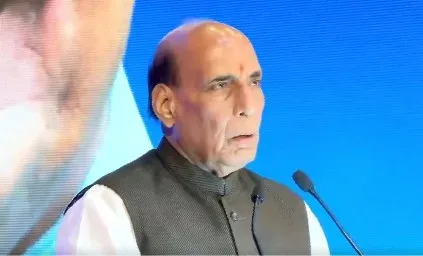
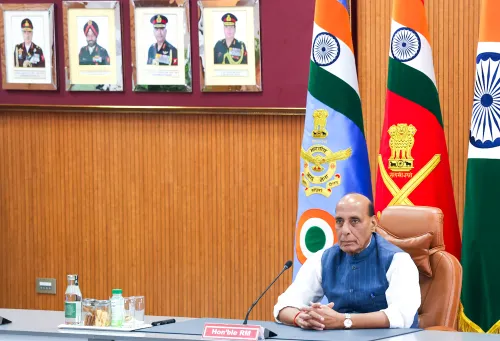
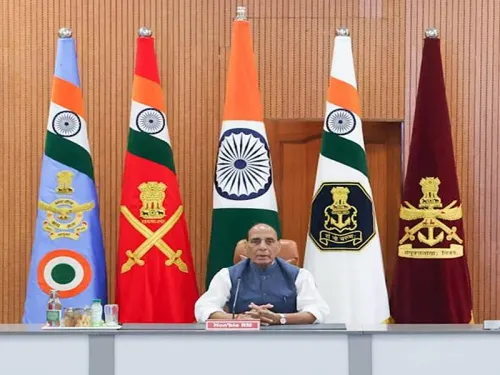
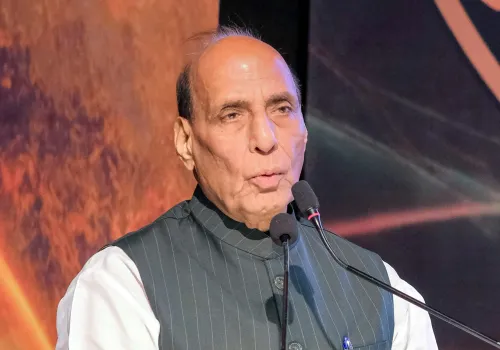
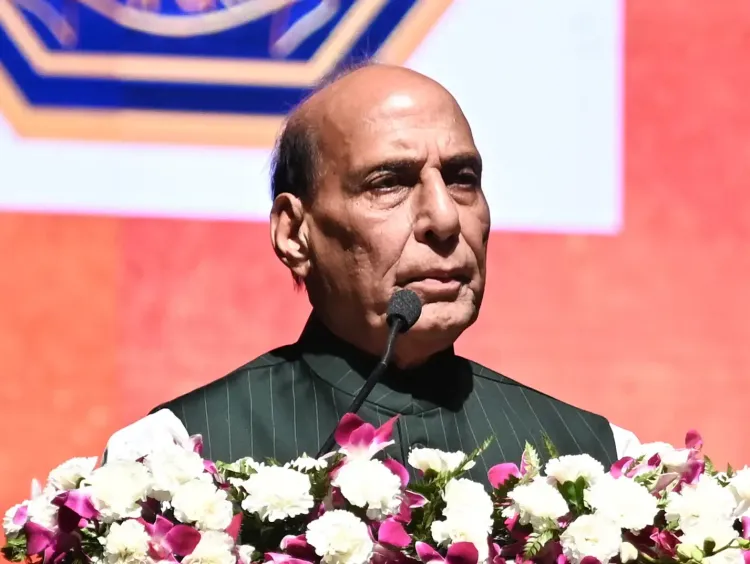
Defence Minister Rajnath Singh on Thursday, 7 May 2026 attended the second edition of the Joint Commanders' Conference in Jaipur, themed "Military Capability in New Domains". The high-level conclave, which also marks the first anniversary of Operation Sindoor, brings together the country's top military leadership to chart India's defence roadmap across cyber, space, and cognitive warfare domains.
Key Attendees and Agenda
Chief of Defence Staff General Anil Chauhan is also attending the conference alongside Rajnath Singh. Officials said the event will serve as a critical platform to assess emerging threats and lay out a roadmap for building a future-ready, resilient military with a decisive strategic edge. New doctrines related to next-generation warfare concepts and operational strategies are expected to be unveiled during the proceedings.
The conference will also feature live demonstrations of advanced technologies and futuristic applications developed by the armed forces, offering a glimpse into India's evolving military-technological capabilities.
Focus on AI, Unmanned Systems and New Warfare Domains
Modern warfare is rapidly shifting from conventional battlefields to technology-driven arenas, and the conference reflects that transition. A central focus is the growing role of artificial intelligence, unmanned systems, and emerging threats in cyber, space, and cognitive warfare. Officials indicated that the armed forces are actively preparing doctrines and capabilities to counter these evolving challenges.
This comes amid a broader global trend of militaries integrating AI-driven decision-making and autonomous systems into operational planning — an area where India is looking to rapidly close the gap with advanced defence powers.
Aatmanirbhar Bharat and Civil-Military Collaboration
A major thrust of the conference is accelerating indigenisation and strengthening the Aatmanirbhar Bharat initiative. Officials emphasised promoting innovation and deepening civil-military collaboration within India's domestic defence ecosystem. The push aligns with the government's broader strategy to reduce dependence on foreign arms imports and build a self-sustaining defence industrial base.
Notably, India has set an ambitious defence exports target and has been steadily expanding its list of items under the positive indigenisation list, banning their import in favour of domestic production.
Operation Sindoor: One Year On
Operation Sindoor was launched on 7 May 2025 as a landmark tri-service military campaign involving the Indian Army, the Indian Air Force, and the Indian Navy. The operation carried out precision strikes on terrorist hideouts in Pakistan and Pakistan-occupied Kashmir (PoK), and is regarded as one of India's biggest coordinated military actions against cross-border terror infrastructure in recent times.
Defence observers noted that the mission demonstrated growing coordination among the three forces in both planning and execution. The operation had triggered strong political and diplomatic reactions at the time of its launch. Rajasthan, given its strategic location as a border state, played a crucial role during the operation, making Jaipur a fitting venue for the anniversary event.
As its first anniversary is observed, Operation Sindoor remains a defining reference point in discussions around India's security strategy and its resolve to respond to cross-border terror threats.
What's Next
The outcomes of the Joint Commanders' Conference — including any new doctrines, technology demonstrations, and indigenisation targets — are expected to shape India's defence priorities for the coming year. The conclave's deliberations will likely feed into the Ministry of Defence's strategic planning cycle, with implementation timelines to be announced in the weeks ahead.
Point of View
Cognitive warfare, and space reflects an acknowledgement that the next conflict will be fought as much in algorithms and satellites as on borders. What remains to be seen is whether the doctrines unveiled here translate into procurement decisions and budget allocations, or remain aspirational frameworks. India's defence modernisation has historically suffered from a gap between conference-room ambition and on-ground capability delivery.
NationPress
22 Sept 2026
Frequently Asked Questions
What is the Joint Commanders' Conference in Jaipur?
The Joint Commanders' Conference is a high-level defence conclave bringing together India's top military leadership. The second edition, themed 'Military Capability in New Domains', is being held in Jaipur on 7 May 2026, attended by Defence Minister Rajnath Singh and Chief of Defence Staff General Anil Chauhan.
Why is the conference being held in Jaipur?
Jaipur was chosen because Rajasthan played a crucial strategic role during Operation Sindoor as a border state. The conference also marks the first anniversary of Operation Sindoor, launched on 7 May 2025, making Jaipur a symbolically significant venue.
What is Operation Sindoor?
Operation Sindoor was a landmark tri-service military campaign launched on 7 May 2025, involving the Indian Army, Indian Air Force, and Indian Navy. It carried out precision strikes on terrorist hideouts in Pakistan and Pakistan-occupied Kashmir (PoK) and is considered one of India's largest coordinated actions against cross-border terror infrastructure.
What are the key themes of the 2026 Joint Commanders' Conference?
The conference focuses on military capability in new domains including artificial intelligence, unmanned systems, cyber warfare, space, and cognitive warfare. It also emphasises indigenisation under the Aatmanirbhar Bharat initiative and is expected to unveil new doctrines on next-generation warfare.
What outcomes are expected from the Joint Commanders' Conference?
New military doctrines on next-generation warfare, demonstrations of advanced indigenous technologies, and a roadmap for civil-military collaboration in defence are expected. The deliberations will likely shape the Ministry of Defence's strategic planning priorities for the coming year.