How Did Op Sindoor Demonstrate India’s Swift, High-Impact Air Power?
Synopsis
In a compelling address, Defence Minister Rajnath Singh underscores the Indian Air Force's prowess demonstrated during Operation Sindoor. This article explores the implications of air power in modern warfare and the growing public trust in the Armed Forces, alongside the government's commitment to fortifying India's security framework.
Key Takeaways
Operation Sindoor demonstrated India's air power capabilities.
The IAF is now recognized as a technologically advanced and agile force.
Public confidence in the Armed Forces is rising.
Cyber warfare and technological adaptability are essential for modern defense.
Collaboration with the private sector is fostering innovation in defense.
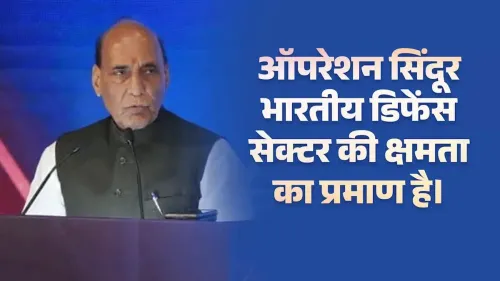
New Delhi, Dec 18 (NationPress) The Defence Minister, Rajnath Singh, stated on Thursday that India’s capability to execute rapid, high-impact, and short-duration military operations was vividly evidenced during Operation Sindoor. He emphasized that the Indian Air Force (IAF) has evolved into a technologically advanced, operationally agile, and strategically self-assured force.
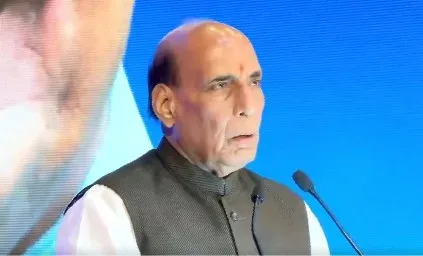
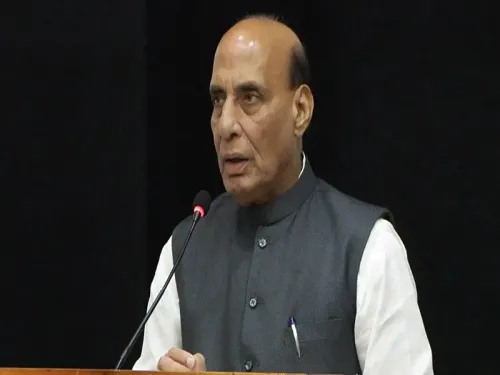
Speaking at the Air Force Commanders’ Conclave in New Delhi, Singh commended the IAF for its bravery, speed, and precision in dismantling terror camps during the operation, while effectively managing what he described as Pakistan’s “irresponsible reaction” post-strikes.
He drew attention to the increasing public confidence in the Armed Forces, especially in India’s air defense capabilities, noting that citizens’ composed reactions during attempts of Pakistani assaults on Indian facilities reflected their trust in the nation’s operational readiness. “Typically, when under enemy attack, people seek shelter. This time, citizens continued their daily activities,” he remarked.
Highlighting the necessity for ongoing evaluations of an adversary’s offensive and defensive strengths, Singh encouraged IAF commanders to learn from Operation Sindoor and remain alert for forthcoming challenges.
Referring to recent international conflicts, including the Russia-Ukraine war, the Israel-Hamas clash, the Balakot air strikes, and Operation Sindoor, he stated that air power has become a decisive factor in contemporary warfare.
“Air power equips leadership with the ability to convey a definitive strategic message to adversaries that every measure will be taken to safeguard national interests. Through speed, reach, and precision, air power has evolved into an effective mechanism for aligning national goals with military capabilities,”
he noted.
The Defence Minister reaffirmed the government's dedication to enhancing India’s security framework, commenting that 21st-century warfare increasingly relies on technology, ideas, and adaptability.
He underscored the growing significance of cyber warfare, artificial intelligence, unmanned systems, satellite-based surveillance, and space-enabled capabilities, alongside precision-guided munitions and real-time intelligence.
Singh expressed optimism that the 'Sudarshan Chakra', introduced by Prime Minister Modi during his Independence Day address, will be instrumental in safeguarding national assets. He also announced that the development of indigenous jet engines has been designated a national mission.
Emphasizing collaboration with the private sector, startups, and MSMEs, Singh mentioned initiatives such as iDEX and ADITI, which are engaging young innovators in defense manufacturing. As of November 2025, a total of 672 winners have emerged from 565 iDEX challenges, with 96 related to the IAF.
Rajnath Singh characterized Operation Sindoor as a paradigm of tri-service collaboration, stressing the necessity of unity among the three Services. He also praised the IAF’s humanitarian and disaster relief initiatives both domestically and internationally.
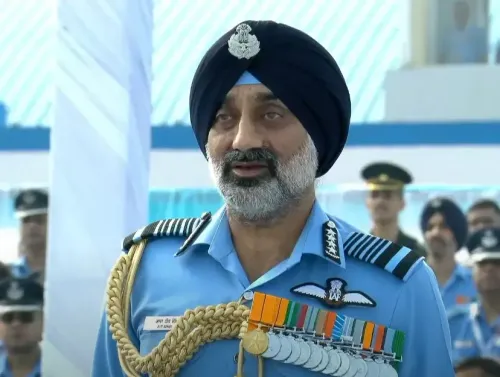
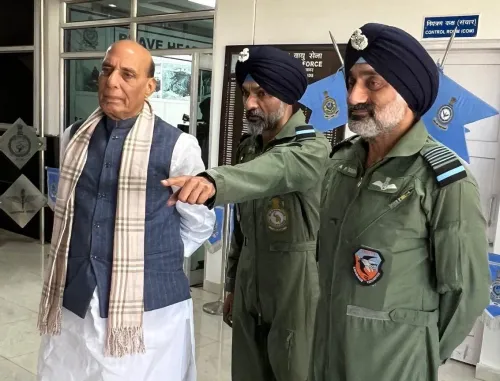
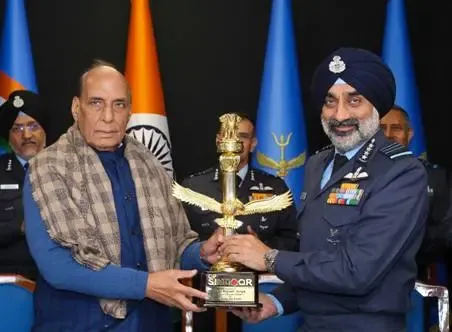
The conclave was graced by the presence of Chief of Defence Staff General Anil Chauhan and senior IAF commanders. Rajnath Singh was received by Air Chief Marshal A.P. Singh and was briefed on the IAF’s operational readiness.
Point of View
I firmly believe that the demonstration of India’s air power during Operation Sindoor marks a pivotal moment in our national defense narrative. It encapsulates the growing technological advancements and strategic readiness of our Armed Forces. With the evolving landscape of warfare, it is crucial for our nation to remain vigilant and adaptive to potential challenges ahead.
NationPress
20 Sept 2026
Frequently Asked Questions
What is Operation Sindoor?
Operation Sindoor is a military operation that showcased the Indian Air Force's capabilities in executing rapid and high-impact strikes against terror camps.
Why is air power important in modern warfare?
Air power plays a decisive role in modern warfare by providing the capability to deliver strategic messages and execute operations with speed, precision, and reach.
What did Rajnath Singh say about public trust in the Armed Forces?
Rajnath Singh highlighted the growing public confidence in the Armed Forces, particularly in air defense capabilities, as evidenced by citizens' calm demeanor during attempted attacks.
How is the government enhancing India's security framework?
The government is committed to strengthening India's security through technological advancements, cyber warfare readiness, and collaboration with the private sector in defense manufacturing.
What initiatives are promoting innovation in defense?
Initiatives like iDEX and ADITI are encouraging young innovators to participate in defense manufacturing, leading to numerous successful projects linked to the Indian Air Force.