Rajnath Singh at Joint Commanders' Conference: Learn from Op Sindoor, stay future-ready
Synopsis
One year after Operation Sindoor, Defence Minister Rajnath Singh used the Joint Commanders' Conference in Jaipur to formally institutionalise its lessons — pushing India's top military brass to master AI, cyber resilience, and multi-domain warfare as the new frontline of national security.
Key Takeaways
Defence Minister Rajnath Singh addressed the Joint Commanders' Conference in Jaipur on 9 May 2025 , themed 'Military Capability in New Domains' .
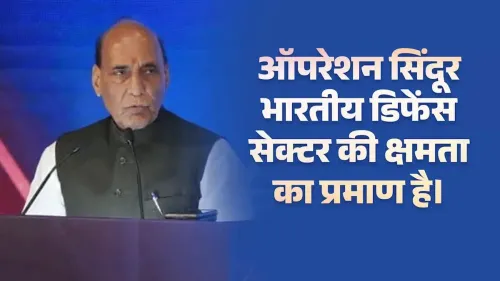
Operation Sindoor was described as a "short-duration, deep-penetration, high-intensity and high-impact operation" that compelled the adversary to surrender.
Singh released a documentary on Operation Sindoor , the Hindi version of Vision 2047 , and the Joint Doctrine for Integrated Communication Architecture .
Future warfare, he said, will be shaped by hybrid threats , AI , cyber , space , and cognitive domains — not weaponry alone.
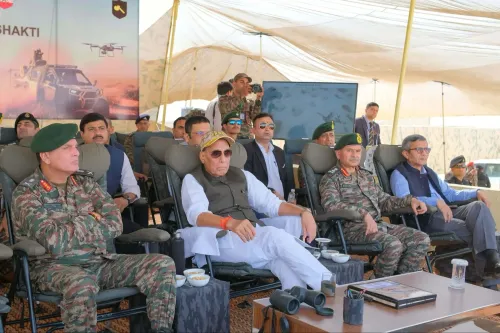
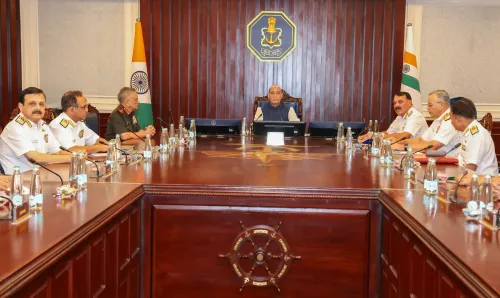
Top attendees included CDS General Anil Chauhan , Army Chief General Upendra Dwivedi , Naval Chief Admiral Dinesh Kumar Tripathi , and Air Chief Marshal A.P.
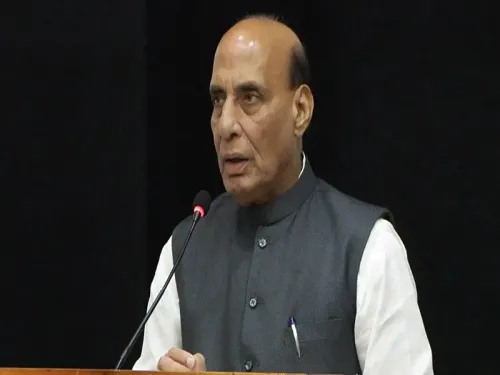
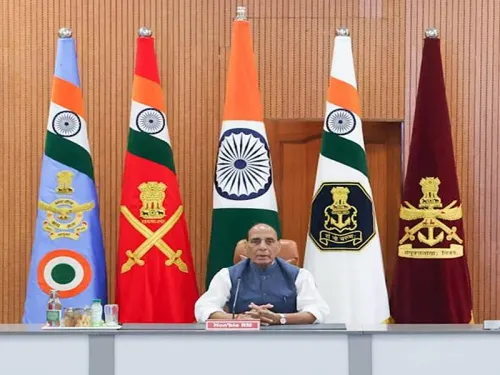
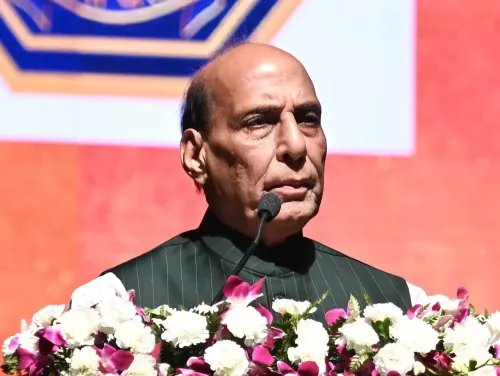
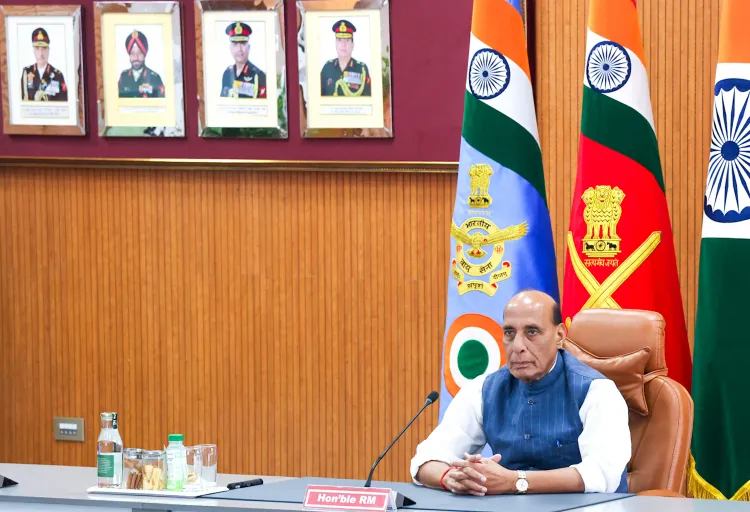
Defence Minister Rajnath Singh on Friday, 9 May 2025, called upon the Commanders of India's three Services to remain future-ready by drawing lessons from Operation Sindoor and adapting to the rapidly evolving global security landscape. Addressing the second edition of the Joint Commanders' Conference in Jaipur, Singh stressed the urgent need to strengthen India's capabilities in artificial intelligence, cyber resilience, autonomous systems, and multi-domain warfare.
Operation Sindoor: A New Military Benchmark
Rajnath Singh described Operation Sindoor as a "short-duration, deep-penetration, high-intensity and high-impact operation" that showcased India's ability to compel its adversary to surrender. "Operation Sindoor is a testament to the swift, precise and joint response of the Indian Defence Forces to safeguard national interests," he said. The Defence Minister added that the operation demonstrated India's growing military capabilities and symbolised the nation's collective resolve and a new military ethos.
During the conference, Singh released a documentary film on Operation Sindoor, reaffirming the nation's and the Defence Forces' commitment to operational preparedness and decisive national response capabilities. This comes just a year after the operation, with its lessons now being formally institutionalised into doctrine and training.
Technology, AI and Multi-Domain Warfare
Singh underscored that future conflicts would increasingly be shaped by hybrid threats, information dominance, and operations conducted simultaneously across cyber, space, electromagnetic, and cognitive domains. He stressed the importance of strengthening capabilities in data analytics, secure communication networks, and AI-enabled warfighting concepts to remain prepared amid the shifting geopolitical security scenario.
"Future wars will not be won solely through weaponry, but through innovative thinking and enhanced synergy," Singh said. He highlighted the transformative impact of emerging technologies and emphasised the need for integrated national preparedness across all spectrums of conflict. Extensive discussions at the conference covered cognitive warfare, cyber resilience against quantum and AI-enabled threats, and indigenous innovation.
Key Doctrinal Releases and Strategic Directives
Singh also released the Hindi version of Vision 2047 and the Joint Doctrine for Integrated Communication Architecture — aimed at strengthening doctrinal clarity, interoperability, and integrated communications across the Armed Forces in future multi-domain operations. He exhorted Commanders to cultivate the "element of surprise" to remain unpredictable to adversaries, while simultaneously urging vigilance against surprise tactics from the other side and staying "two steps ahead."
The Defence Minister reiterated the Prime Minister Narendra Modi-led government's commitment to enhancing the capabilities of the defence forces through state-of-the-art weapons and platforms, with special focus on research in niche domains.
Top Defence Leadership in Attendance
The conference, themed
Point of View
The government is doing two things at once: cementing a military narrative for domestic and strategic audiences, and signalling to adversaries that the operation was not a one-off. The emphasis on AI, cognitive warfare, and multi-domain operations reflects a genuine doctrinal shift, but the gap between conference rhetoric and ground-level capability absorption remains India's perennial challenge. Whether Vision 2047 and the new communication doctrine translate into interoperable systems — rather than well-produced documents — will be the real test of this conference's legacy.
NationPress
23 Sept 2026
Frequently Asked Questions
What is the Joint Commanders' Conference held in Jaipur?
The Joint Commanders' Conference is a high-level conclave that brings together the top leadership of India's Ministry of Defence and the three armed Services to deliberate on emerging security challenges, technological transformation, and joint capability development. The second edition, held in Jaipur in May 2025, was themed 'Military Capability in New Domains'.
What did Rajnath Singh say about Operation Sindoor at the conference?
Rajnath Singh described Operation Sindoor as a short-duration, deep-penetration, high-intensity and high-impact operation that demonstrated India's ability to compel its adversary to surrender. He called it a testament to the swift, precise, and joint response of the Indian Defence Forces to safeguard national interests.
What documents were released at the Joint Commanders' Conference 2025?
Defence Minister Rajnath Singh released a documentary film on Operation Sindoor, the Hindi version of Vision 2047, and the Joint Doctrine for Integrated Communication Architecture — all aimed at strengthening doctrinal clarity and interoperability across the Armed Forces.
Why is AI and cyber resilience a focus for India's armed forces?
Singh stressed that future conflicts will be shaped by hybrid threats, information dominance, and simultaneous operations across cyber, space, electromagnetic, and cognitive domains. Strengthening AI, autonomous systems, data analytics, and secure communication networks is seen as essential to staying prepared in the evolving geopolitical security scenario.
Who attended the Joint Commanders' Conference in Jaipur?
The conference was attended by Chief of Defence Staff General Anil Chauhan, Army Chief General Upendra Dwivedi, Naval Chief Admiral Dinesh Kumar Tripathi, Air Chief Marshal A.P. Singh, Defence Secretary Rajesh Kumar Singh, DRDO Chairman Dr Samir V. Kamat, and other senior civil and military officials.