CM Madhya Pradesh Hails 12 Years of Modi Govt Defence Gains
Synopsis
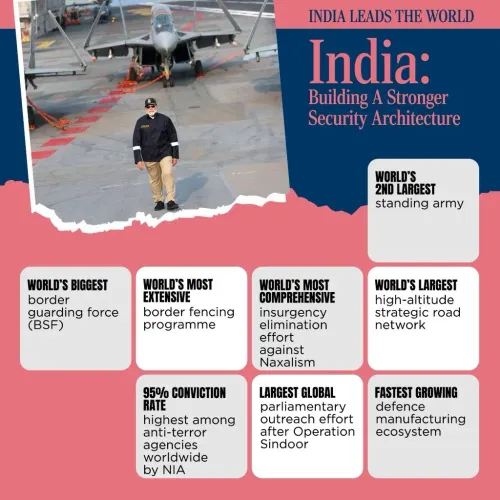
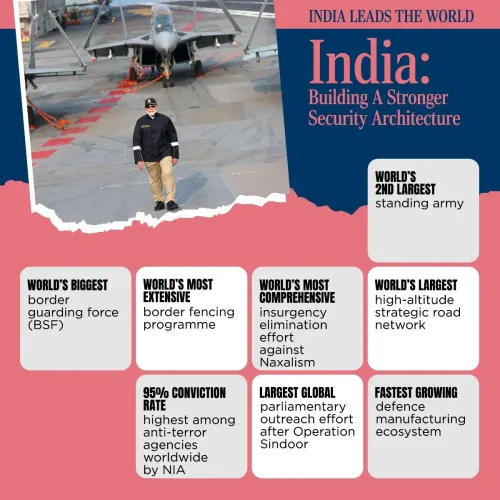
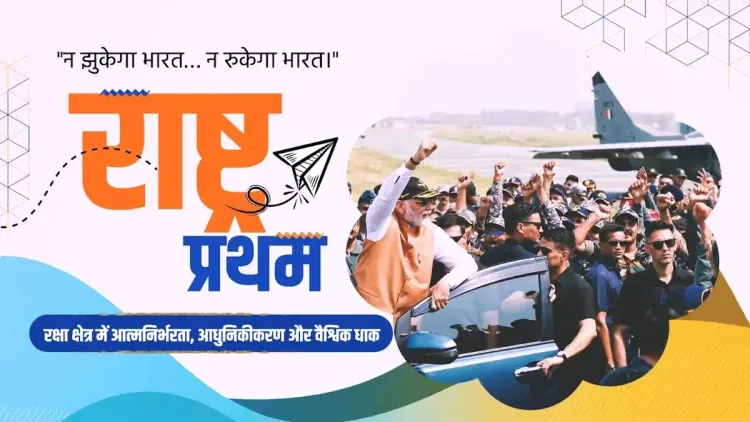
The Chief Minister's Office of Madhya Pradesh credited PM Narendra Modi's government with transforming India's defence sector over 12 years through indigenous missiles, drones, modern air defence systems, a rising budget, and record exports — framing India as a more secure and self-reliant nation.
Key Takeaways
The Chief Minister's Office of Madhya Pradesh posted on 17 June 2026 hailing 12 years of defence achievements under PM Narendra Modi .
The post cited indigenous missiles, advanced drones, modern air defence systems, a growing defence budget, and record defence exports as key milestones.
The message was tagged to @PMOIndia , CM Mohan Yadav , and the Ministry of Defence spokesperson , signalling coordinated government messaging.
India's defence indigenisation drive is anchored in policies including Make in India (2014) , revised Defence Procurement Procedure (2016) , and positive indigenisation lists (from 2020) .
The post is part of a broader campaign under hashtags #12YearsOfSeva and #12YearsOfSurakshitBharat marking over a decade of the NDA government .
Defence exports have grown from negligible levels to multi-billion-dollar annual figures under the same policy continuum.
The Chief Minister's Office of Madhya Pradesh on Wednesday, 17 June 2026 posted a tribute on X crediting Prime Minister Narendra Modi's government with transforming India's defence sector over the past 12 years, citing indigenous missiles, advanced drones, modern air defence systems, a rising defence budget, and record defence exports as evidence of the country's growing strategic self-reliance.
Context
The post, shared from the official @CMMadhyaPradesh account, carried the Hindi declaration 'Rashtra Suraksha Sarvopari' — 'National security is paramount' — as its opening line. It stated that under PM Modi's leadership, India's defence sector has achieved 'remarkable accomplishments' (ullekhaniya uplabdhiyan) over the past twelve years. The message was tagged to @PMOIndia, Chief Minister Mohan Yadav (@DrMohanYadav51), and the @SpokespersonMoD, signalling a coordinated messaging effort across government accounts. The hashtags #12YearsOfSeva, #12YearsOfNayaBharatNirman, and #12YearsOfSurakshitBharat place the post within a broader campaign marking a decade-plus of the BJP-led National Democratic Alliance government at the Centre.
Policy Backdrop
India's push for defence self-reliance has been built on a series of policy interventions since 2014. The Make in India initiative, launched in September 2014, explicitly designated defence manufacturing as a priority sector. The Defence Procurement Procedure was revised in 2016 to prioritise indigenously designed, developed, and produced equipment, giving domestic manufacturers a structural advantage over foreign suppliers.
A landmark institutional reform came in December 2019 with the creation of the Chief of Defence Staff post, aimed at integrating the three armed services under unified strategic direction. From 2020 onward, the Ministry of Defence notified successive positive indigenisation lists — banning imports of specified defence items to compel domestic substitution. DRDO, India's primary defence research agency, has been central to developing the missiles, drone platforms, and air defence systems referenced in the post.
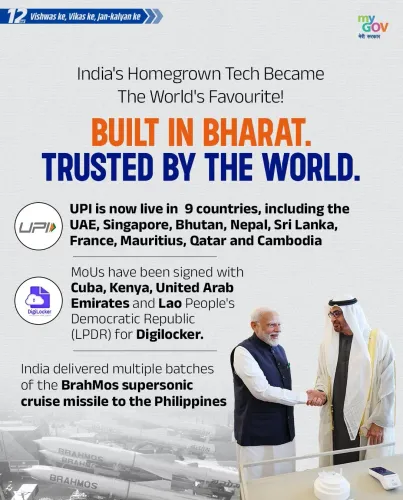
Defence exports, which were negligible before this policy cycle, have grown into multi-billion-dollar annual figures, reflecting both improved product quality and an active government push to open new markets for Indian-made defence hardware.
Stakeholders and Impact
The primary beneficiaries of this policy shift are India's armed forces, which gain operationally from reduced import dependency and faster domestic supply chains, and domestic defence manufacturers — both public-sector undertakings and a growing private-sector ecosystem — who have seen order books expand under indigenisation mandates. For Madhya Pradesh, the state has been positioning itself as an emerging defence manufacturing hub, making the CM office's amplification of central government achievements politically and economically relevant at the state level.
Broader strategic implications are significant: sustained border tensions with neighbouring countries have accelerated the logic of building indigenous missile and air-defence capabilities, reducing the risk of supply disruptions that import dependence would otherwise create.
What's Next
Attention will now turn to the next Union Budget defence allocation and any fresh negative import lists or major DRDO inductions expected in 2026-27. The #12YearsOfSeva campaign suggests the ruling dispensation intends to make defence self-reliance a centrepiece of its political narrative heading into the next electoral cycle. Whether the momentum translates into further structural reforms — including deeper private-sector integration and new export agreements — will determine how durable the gains highlighted in this post prove to be.
Point of View
Drones, and record exports, the Madhya Pradesh CM office is aligning itself with the Atmanirbhar Bharat brand at a moment when border security remains a live public concern. The coordinated tagging of the PMO and the Ministry of Defence spokesperson suggests this is less a spontaneous tribute and more a structured communications rollout. For the broader policy arc, the messaging underscores that defence self-reliance has become one of the ruling dispensation's most electorally potent themes — a shift from the pre-2014 era when defence imports and procurement delays were routine political liabilities.
NationPress
20 Sept 2026
Frequently Asked Questions
What has India achieved in defence in the last 12 years under Modi?
Under PM Narendra Modi's government since 2014, India has advanced indigenous missile development, expanded drone manufacturing, built modern air defence systems, increased the defence budget, and grown defence exports from negligible levels to multi-billion-dollar annual figures, according to the government's own communications.
What is the Make in India defence initiative?
Make in India, launched in September 2014, designated defence manufacturing as a priority sector, encouraging domestic production through revised procurement rules, positive indigenisation lists banning certain imports, and incentives for both public and private defence manufacturers.
Why did the Madhya Pradesh CM office post about defence achievements?
The post by the Chief Minister's Office of Madhya Pradesh is part of a coordinated campaign marked by hashtags such as #12YearsOfSeva and #12YearsOfSurakshitBharat, celebrating over a decade of the NDA government at the Centre and aligning the state government with the central leadership's record.
What is India's defence export status in 2026?
India's defence exports have grown substantially under the Atmanirbhar Bharat policy framework, rising from negligible levels before 2014 to multi-billion-dollar annual figures, driven by simplified export procedures and improved indigenous product quality — though precise figures for the full 12-year period are subject to official government data.
What is the Chief of Defence Staff role in India?
The Chief of Defence Staff post was created in December 2019 to improve strategic integration across the Indian Army, Navy, and Air Force, providing unified military advice to the government and streamlining joint operational planning.