Rijiju marks 12 years of Modi govt with governance review
Synopsis
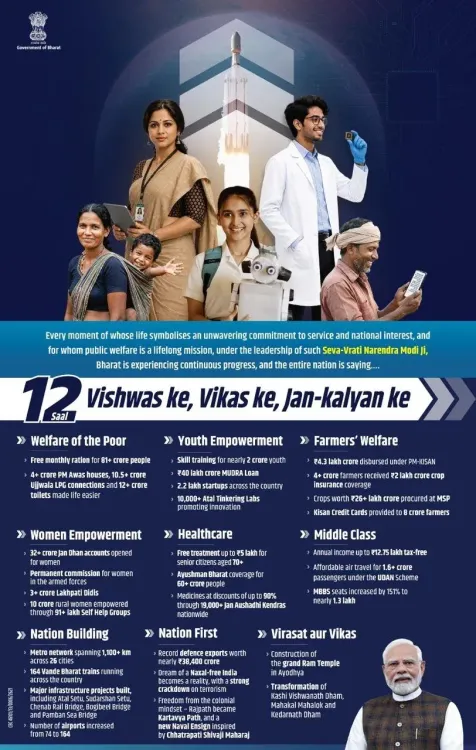
Union Minister Kiren Rijiju marked the Modi government's 12th anniversary on June 9, 2026, citing progress in healthcare, digital inclusion, financial empowerment, women-led development, skills, entrepreneurship and clean energy under the #12YearsOfSeva campaign.
Key Takeaways
Kiren Rijiju , Union Minister of Parliamentary Affairs, posted on June 9, 2026 to mark 12 years of the Modi government.
The post cited seven policy pillars: healthcare, digital inclusion, financial empowerment, women-led development, skills, entrepreneurship and clean energy.
Pradhan Mantri Jan Dhan Yojana (August 2014) and Digital India (July 2015) are among the flagship schemes underpinning the financial and digital inclusion claims.
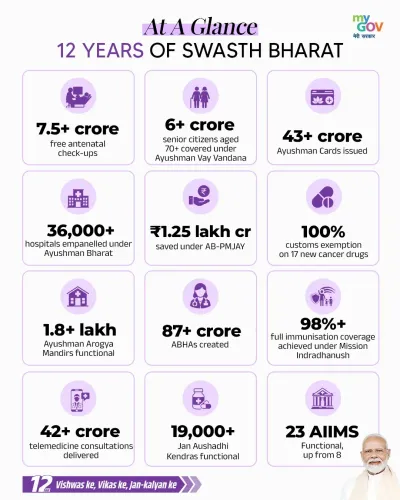
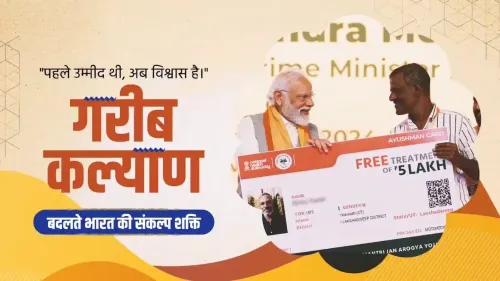
Pradhan Mantri Ujjwala Yojana (May 2016) and Ayushman Bharat (February 2018) anchor the clean energy and healthcare dimensions of the anniversary narrative.
The #12YearsOfSeva hashtag signals a coordinated BJP communication push marking the government's milestone in its third term.
Parliamentary scrutiny of scheme outcomes is expected in the upcoming monsoon session , with NITI Aayog evaluations also anticipated.
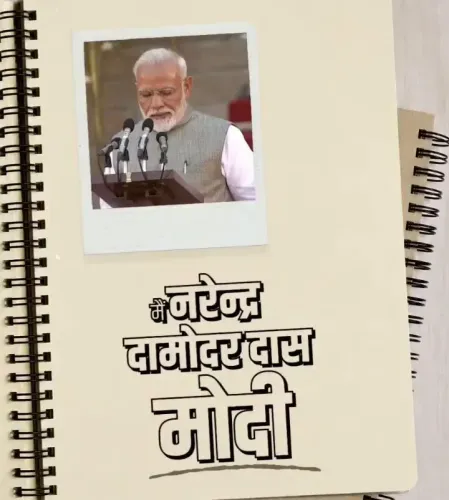
Union Parliamentary Affairs Minister Kiren Rijiju on Tuesday, June 9, 2026, marked the 12th anniversary of the Narendra Modi government with a social media post highlighting gains across healthcare, digital inclusion, financial empowerment, women-led development, skills, entrepreneurship and clean energy under the hashtag #12YearsOfSeva.
Context
Rijiju's post arrives as the BJP-led central government completes 12 years in office, having first assumed power in May 2014 under Prime Minister Narendra Modi. The minister wrote: 'The true measure of governance is the impact it creates in people's lives. Over the past 12 years, focused efforts in healthcare, digital inclusion, financial empowerment, women-led development, skills, entrepreneurship and clean energy have expanded opportunities and strengthened aspirations.'
The post is part of a coordinated ruling-party communication push marking the milestone, with senior ministers and BJP leaders amplifying the #12YearsOfSeva narrative across platforms.
Policy Backdrop
The seven pillars Rijiju cites map directly onto flagship central schemes launched since 2014. Pradhan Mantri Jan Dhan Yojana, launched in August 2014, aimed to bring unbanked households into the formal financial system. Digital India, rolled out in July 2015, sought to expand broadband, e-governance and digital payments across rural and urban India.
On clean energy, Pradhan Mantri Ujjwala Yojana — started in May 2016 — provided LPG connections to women from below-poverty-line families, directly addressing the 'women-led development' and 'clean energy' themes in Rijiju's post. The Skill India Mission, also launched in 2015, targeted youth employment and entrepreneurship, while Ayushman Bharat, introduced in February 2018, extended health coverage to economically vulnerable families. The Startup India initiative, announced in January 2016, rounded out the government's push on ease of doing business.
Together these programmes reflect an integrated welfare model that links direct-benefit transfers, digital identity infrastructure and targeted subsidies — a framework the government has consistently described as measurable, delivery-focused governance.
Stakeholders and Impact
The primary beneficiaries of the schemes referenced span rural households, women, youth and the MSME sector. Women-centric programmes such as Ujjwala Yojana and Jan Dhan accounts have been positioned as cornerstones of the government's inclusive growth agenda, with female beneficiaries frequently cited in official communication.
The framing of 'women-led development' in Rijiju's post echoes a broader shift in government messaging that has increasingly placed women's economic agency — through self-help groups, micro-finance and skill training — at the centre of welfare delivery narratives ahead of electoral cycles.
What's Next
Periodic scheme evaluation reports from NITI Aayog are expected to provide independent assessments of implementation outcomes across these programmes. Parliamentary scrutiny is also anticipated during the upcoming monsoon session, where opposition members are likely to raise questions on delivery gaps, reach and fund utilisation across the schemes Rijiju highlighted.
As the government moves deeper into its third term, the 12-year governance record is likely to remain a central plank of BJP's political messaging — with ministers such as Rijiju playing a key role in projecting that narrative to regional and national audiences.
Point of View
The BJP is signalling that its welfare agenda is broad-based and not reducible to any single scheme, a message calibrated for both urban and rural audiences. The #12YearsOfSeva framing also serves a forward-looking function: anchoring the party's third-term identity in continuity rather than disruption. For the opposition, the anniversary creates an opening to demand scheme-level accountability data, making the monsoon session a likely arena for that contest.
NationPress
23 Sept 2026
Frequently Asked Questions
What is #12YearsOfSeva about?
#12YearsOfSeva is a BJP campaign hashtag marking 12 years of the Narendra Modi government in power since May 2014, used by party leaders to highlight welfare and governance achievements across healthcare, digital inclusion, financial empowerment and clean energy.
What did Kiren Rijiju say about 12 years of Modi government?
Rijiju wrote that 'the true measure of governance is the impact it creates in people's lives' and cited focused efforts over 12 years in healthcare, digital inclusion, financial empowerment, women-led development, skills, entrepreneurship and clean energy as having expanded opportunities and strengthened aspirations.
Which schemes are linked to the Modi government's 12-year governance record?
Key schemes include Pradhan Mantri Jan Dhan Yojana for financial inclusion (2014), Digital India for e-governance and broadband (2015), Skill India Mission for youth employment (2015), Pradhan Mantri Ujjwala Yojana for clean cooking fuel for women (2016), Startup India for entrepreneurship (2016) and Ayushman Bharat for health coverage (2018).
Who is Kiren Rijiju?
Kiren Rijiju is a senior BJP leader from Arunachal Pradesh who currently serves as Union Minister of Parliamentary Affairs and Minister of Minority Affairs in the Modi government.
When did the Modi government complete 12 years in office?
The Narendra Modi government first came to power in May 2014 and completed 12 years in office in May 2026; the anniversary is being marked by BJP leaders including Rijiju in June 2026.