Rijiju Cites A.K. Antony on Congress Border Infrastructure Policy

Synopsis
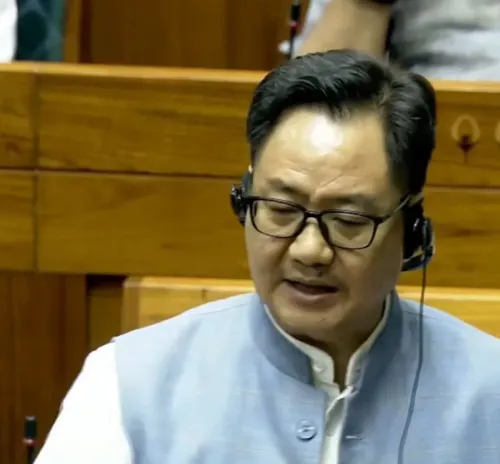
Union Parliamentary Affairs Minister Kiren Rijiju has cited former Defence Minister A.K. Antony's parliamentary admission that the Congress government deliberately avoided building infrastructure in border areas, reigniting the BJP-Congress debate over LAC security policy.
Key Takeaways
Union Parliamentary Affairs Minister Kiren Rijiju posted on 20 August 2026 citing former Defence Minister A.K.
Antony's parliamentary admission on border infrastructure policy.
Antony served as Defence Minister from 2006 to 2014 under the UPA government led by the Indian National Congress.
The UPA maintained a restrained approach to construction along the Line of Actual Control (LAC) , citing escalation risks — a policy critics say left border areas under-connected.
Since 2014 , successive BJP-led governments have accelerated road, bridge, and tunnel projects in Arunachal Pradesh and Ladakh .
Rijiju, himself from Arunachal Pradesh , used Antony's own words to frame the contrast in border security priorities between the two parties.
A pointed political charge from Union Parliamentary Affairs Minister Kiren Rijiju landed on Thursday, 20 August 2026 — one that reaches back more than a decade to a parliamentary admission by one of the Congress party's most respected figures.
Rijiju singled out A.K. Antony, who served as Defence Minister from 2006 to 2014 under the UPA government, calling him 'honest amongst the Congress leaders' for acknowledging on the floor of Parliament that the Congress government had a deliberate policy of not building infrastructure in border areas. The compliment is a backhanded one: Rijiju is using Antony's own words as the sharpest possible indictment of UPA-era security policy.
Antony's Parliamentary Admission and What It Meant
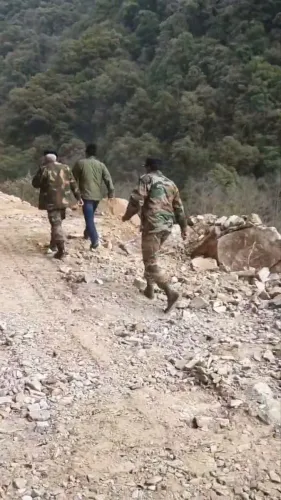
The UPA governments maintained a restrained approach to construction along the Line of Actual Control (LAC), with the stated reasoning being that new roads and bridges could be used against India in the event of a conflict — a logic critics have long argued left border communities isolated and defence forces under-supplied. Antony's reported acknowledgement of this policy from the parliamentary dispatch box gave that critique an official stamp, making it a recurring reference point in BJP political messaging. Rijiju, himself from Arunachal Pradesh — a state whose borders with China have been the subject of sustained strategic attention — carries particular weight when raising this issue. The northeast has been a focal point of border road projects since 2014, and Rijiju's invocation of Antony's admission connects personal constituency stakes to a national security argument.The Infrastructure Race Along the LAC Since 2014
Since the BJP came to power at the centre, successive governments have accelerated road, bridge, and tunnel projects along the LAC and through the northeast. The Border Roads Organisation has recorded successive years of record construction output, and projects in Arunachal Pradesh and Ladakh have been showcased as evidence of a strategic pivot away from the UPA's restraint doctrine. The political exchange fits a well-worn pattern: BJP leaders regularly cite the pre-2014 approach to border connectivity as proof of contrasting security priorities, while Congress has contested the characterisation of its policy as negligence rather than calibrated caution. Rijiju's post sharpens that argument by anchoring it not in BJP assertion but in a Congress minister's own parliamentary record. If Antony said it on the floor of the House, the BJP's case writes itself — and that is precisely the point Rijiju is making.Point of View
He simultaneously validates the admission and sharpens the charge against Congress. The move fits a broader BJP strategy of anchoring the border infrastructure debate in UPA-era statements rather than BJP claims alone, making the critique harder to dismiss. For Rijiju, a minister from Arunachal Pradesh, the issue is also deeply personal — his constituency sits at the centre of the LAC infrastructure push. As border road milestones continue to accumulate, expect this line of political argument to intensify ahead of any national security debate in Parliament.
NationPress
21 Aug 2026
Frequently Asked Questions
What did A.K. Antony admit about Congress border infrastructure policy?
A.K. Antony, who served as Defence Minister from 2006 to 2014, reportedly acknowledged on the floor of Parliament that the Congress government had a policy of not building infrastructure in border areas. The precise session and verbatim text of the admission have not been independently verified from available public records.
Why did Congress avoid building infrastructure along the LAC?
The UPA government's stated rationale was that new roads and bridges near the Line of Actual Control could be exploited by adversaries in a conflict scenario. Critics, including the BJP, have long argued this logic left border communities isolated and defence forces under-supplied.
What has changed in border infrastructure policy since 2014?
Since 2014, successive BJP-led central governments have significantly accelerated construction of roads, bridges, and tunnels along the LAC, particularly in Arunachal Pradesh and Ladakh, through agencies such as the Border Roads Organisation.
Why is Kiren Rijiju raising this issue?
Rijiju is Union Parliamentary Affairs Minister and a senior BJP leader from Arunachal Pradesh, a state directly affected by LAC border infrastructure decisions. His post appears aimed at highlighting what the BJP presents as a stark contrast between UPA-era restraint and post-2014 construction activity.
Is A.K. Antony still active in Congress politics?
A.K. Antony is a senior Congress leader and former long-serving Defence Minister. His standing within the party as a figure known for personal integrity is precisely what makes Rijiju's citation of his parliamentary admission politically potent.