Rijiju cites A.K. Antony's Parliament admission on border infra
Synopsis
Union Minister Kiren Rijiju cited former Defence Minister A.K. Antony's own parliamentary admission that the UPA government deliberately avoided building border infrastructure, framing it as an honest concession from within Congress ranks and contrasting it with the NDA's accelerated border connectivity push since 2014.
Key Takeaways
Kiren Rijiju , Union Parliamentary Affairs and Minority Affairs Minister, replied to a Prime Minister Modi post citing A.K.
Antony's parliamentary admission on border infrastructure.
Antony served as Defence Minister from 2006 to 2014 under the UPA coalition government.
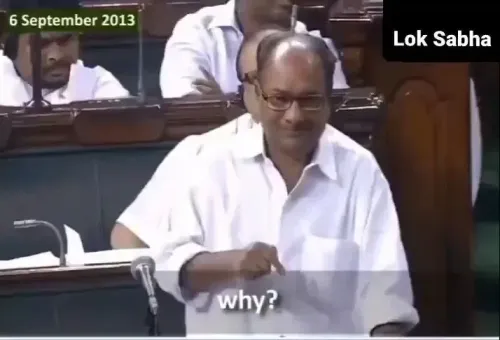
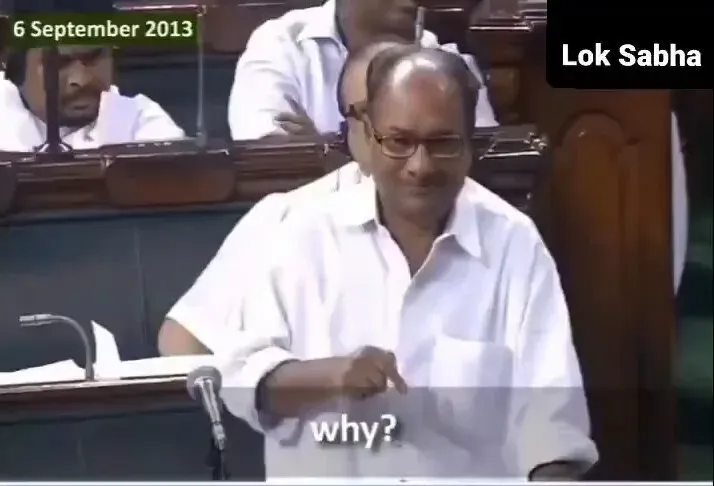
Rijiju claims Antony admitted on the floor of Parliament that the Congress government followed a policy of not developing border infrastructure.
The UPA-era caution on Line of Actual Control infrastructure has been a sustained point of contrast in NDA political messaging since 2014 .
Rijiju represents Arunachal Pradesh , a frontier state directly affected by border connectivity decisions.
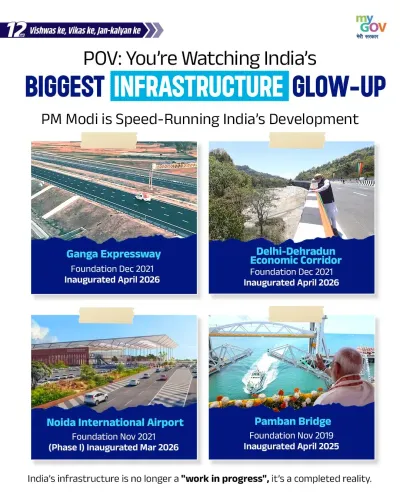
Since 2014, the NDA has prioritised all-weather roads, tunnels, and bridges in sensitive border zones as a stated strategic correction.
A sharp political barb landed on Thursday when Union Parliamentary Affairs and Minority Affairs Minister Kiren Rijiju invoked a senior Congress figure to make a pointed argument about the UPA government's border infrastructure record — and chose the Congress party's own words to do it.
Replying to a post by Prime Minister Narendra Modi, Rijiju singled out A.K. Antony — who served as Defence Minister from 2006 to 2014 under the UPA coalition — as an exception to a broader critique of Congress leadership. 'Amongst the Congress leaders, A.K. Anthony Ji is very honest,' Rijiju wrote, before delivering the substantive charge: that Antony had admitted on the floor of Parliament that the Congress government followed a policy of not building border infrastructure.
What Antony admitted — and why it still stings
The reference cuts to a long-running strategic debate. During the UPA years (2004–2014), India's approach to infrastructure development along the Line of Actual Control was notably cautious. The rationale at the time — partly rooted in a Cold War-era logic that roads near the border could aid an advancing adversary — meant that roads, bridges, and connectivity projects in frontier zones moved slowly or stalled. Rijiju's post frames Antony's parliamentary statement as an on-record acknowledgement of that restraint, giving the charge an institutional weight that a mere political allegation would lack. By praising Antony's honesty while indicting the policy itself, Rijiju deploys a classic rhetorical move: using the credibility of the opponent's most respected voice against the opponent's own record.The contrast with NDA's border push since 2014
Since 2014, successive NDA administrations have made accelerated border connectivity a visible priority — fast-tracking project approvals, commissioning tunnels, and expanding all-weather road networks in Arunachal Pradesh, Ladakh, Sikkim, and other frontier zones. Rijiju himself represents Arunachal Pradesh, a state that shares a long and sensitive boundary with China, giving his commentary on border infrastructure a personal as well as political dimension. The broader pattern is one of competing narratives: the NDA frames its infrastructure push as strategic correction; Congress has argued that terrain, ecology, and security calculus — not timidity — shaped UPA-era decisions. Antony's parliamentary statement, as cited by Rijiju, is a recurring reference point in that argument. With defence budget discussions and project-completion milestones continuing to draw parliamentary scrutiny, the border infrastructure debate is unlikely to fade. Rijiju's post is a reminder that in Indian politics, what a minister says on the floor of the House can echo for decades.Point of View
He amplifies the policy indictment rather than letting it read as partisan attack. The reference to a parliamentary admission is strategically significant: it grounds the charge in institutional record rather than political allegation. This fits a broader NDA pattern of framing border infrastructure acceleration as strategic correction of a documented UPA failure, a narrative that gains traction each time tensions along the northern frontier return to public attention. The debate is unlikely to resolve cleanly, since both sides hold defensible positions on the strategic logic of the era.
NationPress
5 Oct 2026
Frequently Asked Questions
What did A.K. Antony admit in Parliament about border infrastructure?
According to Kiren Rijiju's post, A.K. Antony admitted on the floor of Parliament that the Congress-led UPA government followed a policy of not building border infrastructure along India's frontiers. The precise text of that parliamentary statement has not been independently reproduced in this report.
Why did the UPA government avoid building border infrastructure?
During the UPA period (2004–2014), a cautious approach to border infrastructure was partly rooted in an older strategic logic that extensive roads near the frontier could assist an advancing adversary. Terrain, ecological concerns, and security calculus were also cited at the time.
What has the NDA government done differently on border infrastructure since 2014?
Since 2014, the NDA government has prioritised accelerated approvals and execution of roads, tunnels, and all-weather connectivity projects along the Line of Actual Control in states such as Arunachal Pradesh, Ladakh, and Sikkim.
Why is Kiren Rijiju's comment on border infrastructure significant?
Rijiju represents Arunachal Pradesh, a state sharing a sensitive boundary with China, making his commentary on border connectivity directly relevant to his constituency. As a senior BJP minister, his post also signals continued NDA political messaging on the UPA's infrastructure record.
Who is A.K. Antony and what is his role in Congress?
A.K. Antony is a senior Indian National Congress leader who served as Defence Minister from 2006 to 2014 under the UPA government. He is widely regarded as one of the most personally honest figures in Congress's senior leadership.