Rijiju visits Arunachal border areas to push infrastructure drive
Synopsis
Union Minister Kiren Rijiju visited remote border areas of Arunachal Pradesh — Maza, Galemo, and Taksing — on 20 August 2026 to personally oversee infrastructure acceleration, asserting that border development is now a top priority under the Modi government after decades of neglect.
Key Takeaways
Kiren Rijiju personally visited Maza, Galemo, and Taksing in Arunachal Pradesh on 20 August 2026 to speed up border infrastructure works.
Rijiju stated that border areas were neglected in the past but are now a 'top priority' under the Modi government .
The Border Roads Organisation (BRO) received expanded mandates and enhanced funding from 2014 onward to address long-pending frontier connectivity gaps.
The Border Area Development Programme was revamped post-2014 with revised guidelines and increased budget allocations.
India's border infrastructure push in the Northeast is explicitly linked to national security and the Act East Policy .
Key areas to watch include project completion timelines in Upper Subansiri and adjacent districts, and border infrastructure budget discussions in parliament.
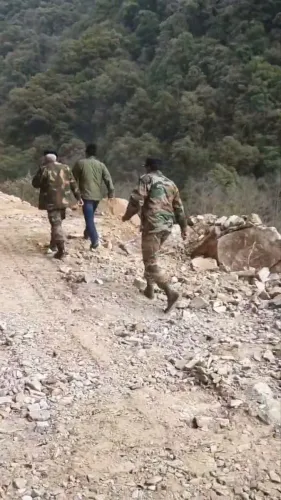
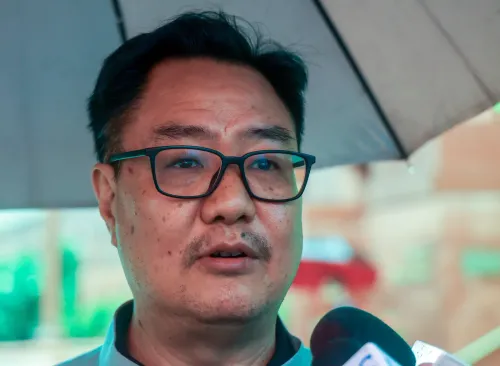
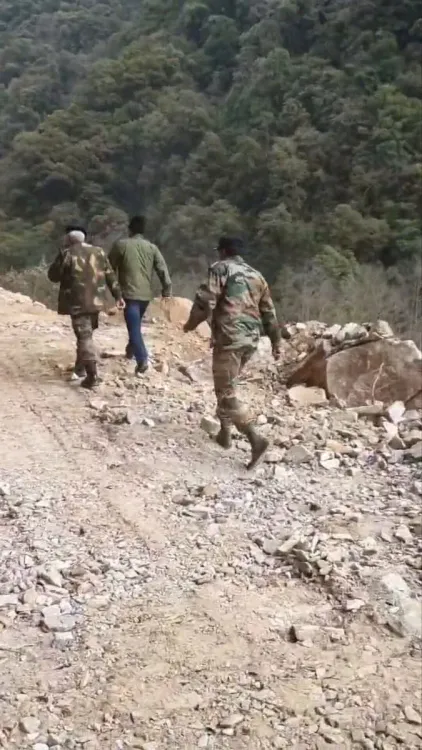
Deep in the remote frontier districts of Arunachal Pradesh, where roads are a lifeline and neglect has historically been the norm, Union Parliamentary Affairs Minister Kiren Rijiju has made a pointed on-ground visit — and a pointed political statement. On Thursday, 20 August 2026, Rijiju posted that he had personally travelled to the Maza, Galemo, and Taksing areas of the state to accelerate pending infrastructure works, pushing back against what he called casual commentary on border conditions.
The visit and what it signals
Rijiju's post was direct: 'Some people casually commented on border. Border areas are tough but the Modi government is committed to border development.' The minister — himself a native of Arunachal Pradesh — framed the visit as a hands-on accountability exercise, not a ceremonial tour. The areas he named — Maza, Galemo, and Taksing — sit in some of the most difficult terrain in the Northeast, close to India's frontier with China.
The subtext is unmistakable: the BJP government is countering any perception that border communities in the Northeast are being overlooked. By going to the ground himself, Rijiju is signalling that political ownership of these projects runs to the ministerial level.
From neglect to national priority: the policy shift since 2014
Rijiju's visit fits a deliberate pattern. After 2014, the Modi government launched an accelerated push to complete long-pending border roads and bridges in Arunachal Pradesh through the Border Roads Organisation (BRO). The Border Area Development Programme received enhanced funding and revised operational guidelines, explicitly addressing what successive governments had left unfinished since the 1962 Sino-Indian war.
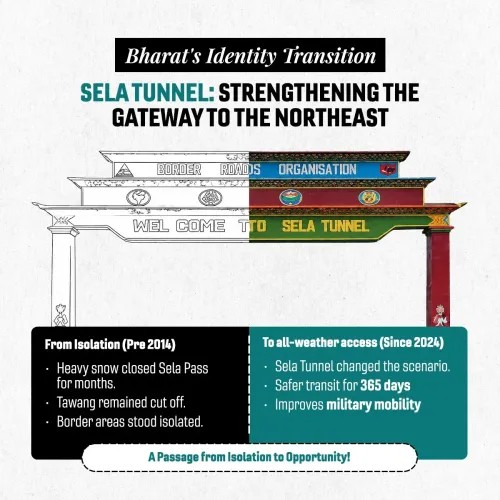
Successive administrations had treated border infrastructure in the Northeast with strategic caution — wary that better roads could aid an adversary as much as Indian forces. That doctrine was quietly reversed in the mid-2010s, with the current administration linking frontier connectivity directly to national security and its Act East Policy. Remote segments near the Line of Actual Control have since been earmarked for time-bound completion.
What border communities and defence planners are watching
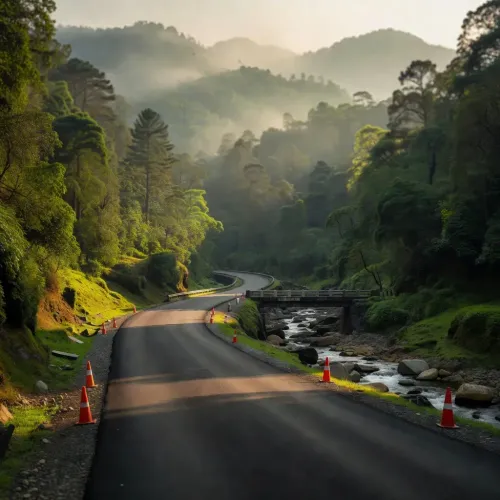
For the villages and towns in Upper Subansiri and adjacent frontier districts, the stakes are not abstract. Roads mean access to markets, healthcare, and government services — and for the defence forces, they mean faster logistics and troop mobility. The BRO's expanded mandate has brought measurable movement on connectivity projects that sat dormant for decades.
The next indicators to watch: project completion timelines for key roads and bridges in these districts, and any fresh budget allocations for border infrastructure in the upcoming parliamentary session.
A minister visiting the toughest corners of his home state to personally push stalled projects is one thing; whether the roads reach the last village before the next election cycle is the real test.
Point of View
And Rijiju's post sharpens that contrast ahead of any political challenge on the issue. The broader arc here is India's quiet but consequential doctrine shift: from avoiding border roads as a strategic liability to treating them as a force-multiplier and a tool of civilian integration. How fast these projects actually close out will determine whether the political messaging holds.
NationPress
5 Oct 2026
Frequently Asked Questions
Why did Kiren Rijiju visit Arunachal Pradesh border areas?
Rijiju visited the Maza, Galemo, and Taksing areas of Arunachal Pradesh to personally oversee and accelerate pending infrastructure works in remote border regions, stating it is a top priority of the Modi government.
Which areas in Arunachal Pradesh did Rijiju visit for border infrastructure?
He visited Maza, Galemo, and Taksing — remote frontier areas in Arunachal Pradesh close to India's border with China.
What is the Border Roads Organisation doing in Arunachal Pradesh?
The Border Roads Organisation has an expanded mandate since 2014 to construct and complete strategic roads and bridges in Arunachal Pradesh's frontier districts, with time-bound targets for segments near the Line of Actual Control.
Was border infrastructure in Arunachal Pradesh neglected before 2014?
Yes, successive governments moved slowly on border roads in the Northeast, partly due to strategic caution. The Modi government reversed this approach from 2014, enhancing funding under the Border Area Development Programme and the BRO.
What is India's Act East Policy and how does it relate to border infrastructure?
The Act East Policy is India's strategic framework for deepening ties with Southeast Asia and its own Northeast. The Modi government has explicitly linked border connectivity projects in Arunachal Pradesh to both national security goals and Act East objectives.