CM Fadnavis joins Catch the Rain 2026 review with Union Minister Paatil
Synopsis
Chief Minister Devendra Fadnavis and Union Jal Shakti Minister C R Paatil held an online review of Maharashtra's progress under the 'Jal Sanchay Jan Bhagidari: Catch the Rain 2026' campaign on 19 November 2026, with Union MoS Dr Raj Bhushan Choudhary also attending.
Key Takeaways
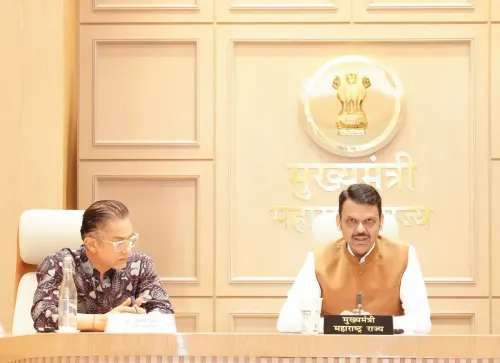
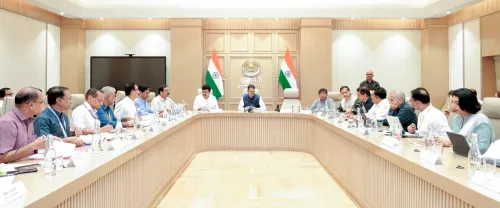
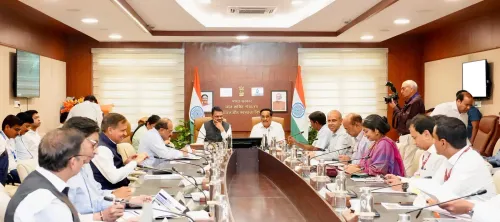
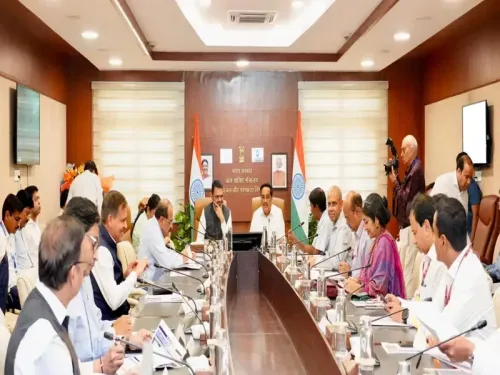
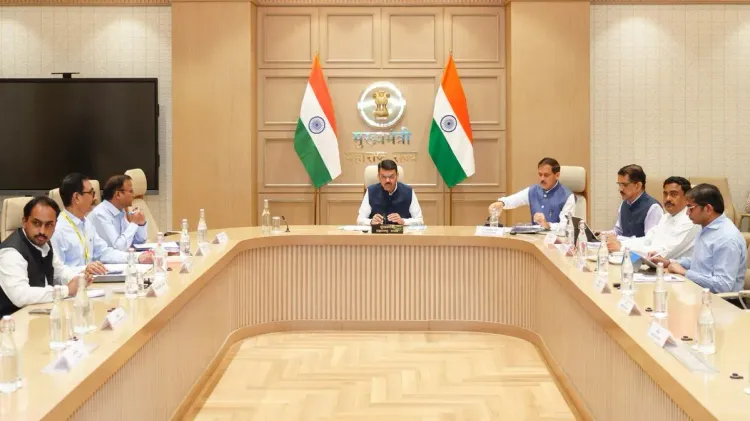
CM Devendra Fadnavis attended an online progress review of Jal Sanchay Jan Bhagidari: Catch the Rain 2026 (CTR) at Varsha Bungalow, Mumbai on 19 November 2026 .
The meeting was chaired by Union Minister of Jal Shakti C R Paatil , with Union MoS Dr Raj Bhushan Choudhary also joining online.
The Catch the Rain campaign was launched nationally in 2021 to promote rainwater harvesting and groundwater recharge through community participation.
Maharashtra is a priority state for the campaign due to its variable monsoon and chronic water stress in regions like Marathwada and Vidarbha.
Farmers, urban local bodies, and rural communities stand to benefit from outcomes of the CTR 2026 implementation.
The review is part of ongoing Centre–state monitoring under the National Water Mission .
Water security moved to centre stage at Varsha Bungalow, Mumbai, on 19 November 2026, as Chief Minister Devendra Fadnavis and Union Minister of Jal Shakti C R Paatil convened an online review meeting to assess the progress of 'Jal Sanchay Jan Bhagidari : Catch the Rain 2026' — the nationwide community-driven rainwater harvesting campaign. Union Minister of State for Jal Shakti Dr Raj Bhushan Choudhary and senior officials from both governments joined the session online.
What 'Catch the Rain 2026' asks of Maharashtra
Launched nationally in 2021 by the Ministry of Jal Shakti, the annual Catch the Rain campaign pushes every state to build and restore rainwater harvesting structures — from farm ponds and check dams to urban rooftop collectors — before and during the monsoon season. The goal is straightforward: intercept every raindrop before it runs off, recharge depleted aquifers, and reduce dependence on erratic surface-water supply.
Maharashtra has particular skin in this game. The state's rainfall is notoriously uneven — the Konkan coast floods while Vidarbha and Marathwada run dry — making community-level storage infrastructure not a convenience but a survival strategy for millions of farmers and rural households.
Centre–state coordination under the National Water Mission
Thursday's review sits within a larger architecture of water governance: the National Water Mission, under which the Centre sets annual targets for structures created, funds a portion of the work, and holds states accountable through exactly these inter-governmental progress checks. C R Paatil, as the Cabinet minister overseeing Jal Shakti, chairs such reviews to ensure state implementation aligns with national benchmarks before the next monsoon cycle begins.
The online format — with Paatil and Choudhary joining remotely while Fadnavis attended from his official residence — reflects the routine but consequential nature of these sessions: ministerial bandwidth preserved, monitoring continuity assured.
Maharashtra's stakeholders waiting on results
The audiences for whatever targets or course-corrections emerged from the 11:10 am meeting are concrete and large: farmers dependent on groundwater recharge for rabi crops, urban local bodies managing acute dry-season demand in cities like Pune and Nashik, and rural communities across drought-prone districts where a single season's harvesting infrastructure can mean the difference between a functional borewell and a dry one.
Progress reports on structures built or repaired under CTR 2026, and any revision to central funding or state targets, will be the tangible outputs that determine how much of Thursday's review translates into water on the ground by mid-2027.
Point of View
Participation in CTR 2026 is both a governance signal and a practical necessity — the state's drought-prone interior has historically lagged on rainwater infrastructure despite repeated policy pushes. The online format normalises high-frequency monitoring without demanding physical convergence, which is itself a governance efficiency worth noting. How Maharashtra's implementation numbers stack up against central benchmarks will be the real test of whether this review moved the needle.
NationPress
19 Nov 2026
Frequently Asked Questions
What is 'Catch the Rain 2026' in Maharashtra?
'Catch the Rain 2026' — formally called 'Jal Sanchay Jan Bhagidari: Catch the Rain 2026 (CTR)' — is the annual rainwater harvesting campaign run by the Union Ministry of Jal Shakti since 2021, in which Maharashtra participates to build and restore water conservation structures through community involvement.
What was the purpose of the CM Fadnavis and C R Paatil meeting on 19 November 2026?
The meeting was a progress review of Maharashtra's implementation of the CTR 2026 campaign, chaired online by Union Minister C R Paatil with Chief Minister Devendra Fadnavis and Union MoS Dr Raj Bhushan Choudhary attending.
Who is C R Paatil and why is he involved in Maharashtra's water policy?
C R Paatil is the Union Cabinet Minister for Jal Shakti, the ministry responsible for national water conservation campaigns including 'Catch the Rain'. He chairs inter-governmental reviews to monitor state-level progress against national targets.
When was the Catch the Rain campaign launched in India?
The Catch the Rain campaign was launched by the Ministry of Jal Shakti in 2021 to promote creation of rainwater harvesting structures and community participation in water conservation across all states.
Why is water conservation especially important for Maharashtra?
Maharashtra faces highly uneven rainfall distribution — coastal Konkan receives heavy rain while interior regions like Marathwada and Vidarbha suffer recurring drought — making rainwater harvesting infrastructure critical for farmers, rural communities, and urban local bodies.