Rajnath Singh Issues Press Statement After 2+2 Talks in Tokyo
Synopsis
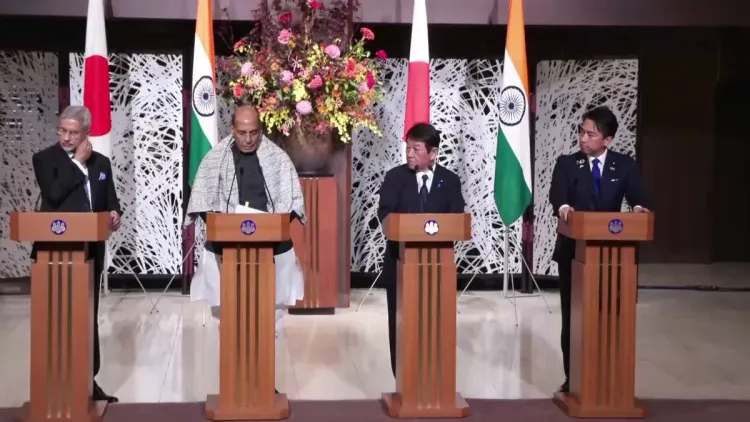
Union Defence Minister Rajnath Singh concluded the India-Japan 2 Plus 2 Ministerial Dialogue in Tokyo on November 19, 2026, issuing a press statement from the summit. The 2+2 format, launched in 2019, is India's most structured bilateral security mechanism with Japan, covering defence technology, maritime coordination, and Indo-Pacific strategy.
Key Takeaways
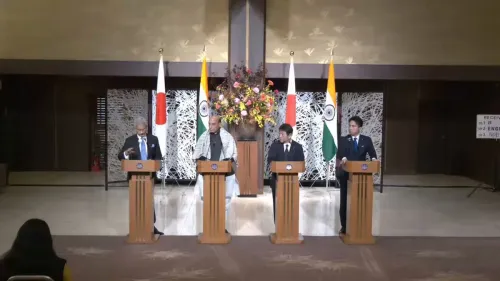
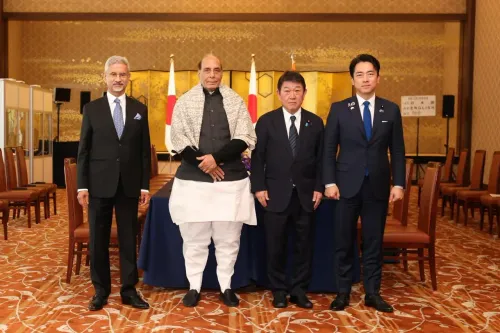
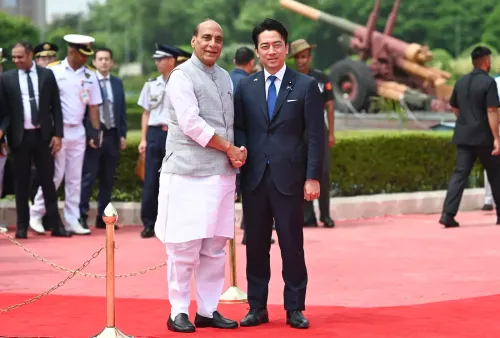
Rajnath Singh participated in the India-Japan 2 Plus 2 Ministerial Dialogue in Tokyo on November 19, 2026 .
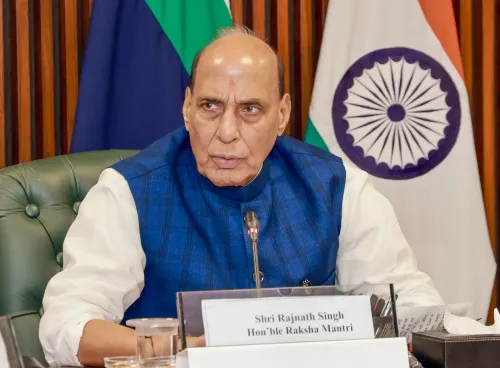
He issued a formal press statement after the dialogue, signalling outcomes he wanted placed on public record promptly.
The 2+2 format brings together the defence and external affairs ministers of both countries simultaneously, instituted by India and Japan in 2019 .
The dialogue covers defence technology cooperation, joint exercises, maritime security, and Indo-Pacific coordination.
India operates the 2+2 mechanism with a select group of strategic partners, with Japan among the highest-tier.
Full details of any agreements or follow-up actions depend on the content of the minister's press statement.
India's defence diplomacy touched down in Tokyo on Thursday, November 19, 2026, as Union Defence Minister Rajnath Singh concluded the 2 Plus 2 Ministerial Dialogue with Japan and issued a press statement — a signal that the two nations' most structured security conversation had produced results worth declaring on the record.
What the 2+2 Format Actually Does
The 2+2 Ministerial Dialogue brings together the defence and external affairs ministers of both countries in one room — a configuration designed precisely to prevent security commitments from being siloed away from foreign-policy strategy. India and Japan launched this format in 2019, and it has since become one of the most substantive bilateral mechanisms New Delhi operates in the Indo-Pacific.
The format's value is architectural: by aligning two ministries on the same day, around the same table, both governments can make decisions that stick — on joint exercises, defence equipment transfers, and maritime coordination — rather than trading separate communiqués that never quite sync.
India-Japan Defence Ties: The Trajectory Behind This Meeting
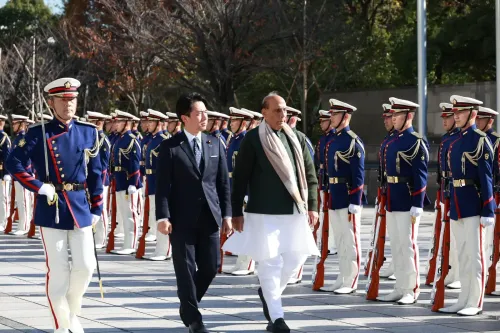
Japan sits at the intersection of nearly every strategic concern India is tracking: the Indo-Pacific balance of power, semiconductor and defence technology supply chains, and the shape of a rules-based order east of the Malacca Strait. For Rajnath Singh, who has been the principal architect of India's defence diplomacy as minister since 2019, Tokyo is not a courtesy call — it is a working session.
India has expanded its 2+2 dialogue mechanism with a small circle of key partners, and Japan sits firmly in that tier. The agenda at these meetings typically spans defence technology cooperation, interoperability between the two countries' forces, and coordination on shared maritime flashpoints.
A Press Statement, Not a Joint Communiqué — and Why That Distinction Matters
The minister's decision to release a formal press statement following the dialogue — rather than waiting for a joint communiqué or a Ministry of Defence readout — suggests the meeting yielded points he wanted placed on the public record quickly. The full text of that statement, and any follow-up agreements on equipment or joint exercises it may reference, will be the next thing to watch.
For a defence relationship that has been quietly accelerating — Japan has loosened its own arms-export constraints significantly over recent years, opening new possibilities for co-production with Indian industry — a press statement from the minister himself carries weight beyond the words alone.
The story of this 2+2 round will ultimately be written in the specifics: which platforms, which exercises, which corridors of the Indo-Pacific both sides agreed to watch together. Those details are coming.
Point of View
And the minister's choice to issue his own press statement rather than await a joint readout suggests the meeting generated concrete outcomes. For New Delhi, deepening the Japan axis also serves a supply-chain logic: as Tokyo eases its arms-export constraints, India gains a potential co-production partner outside its traditional supplier base. Each 2+2 round is a ratchet — rarely reversed, often tightened.
NationPress
19 Nov 2026
Frequently Asked Questions
What is the India-Japan 2 Plus 2 Ministerial Dialogue?
The India-Japan 2 Plus 2 Ministerial Dialogue is a bilateral forum that brings together the defence and foreign affairs ministers of both countries to coordinate security policy and defence cooperation. India and Japan established this format in 2019 to institutionalise their strategic relationship.
Why did Rajnath Singh go to Tokyo in November 2026?
Union Defence Minister Rajnath Singh travelled to Tokyo to participate in the India-Japan 2 Plus 2 Ministerial Dialogue on November 19, 2026 , and issued a press statement on the outcomes of the meeting.
What topics are discussed at the India-Japan 2+2 Ministerial Dialogue?
The dialogue typically covers defence technology cooperation, joint military exercises, maritime security, and broader Indo-Pacific strategic coordination between India and Japan.
How often does India hold 2+2 ministerial dialogues with Japan?
India and Japan have held 2+2 ministerial dialogues periodically since the format was launched in 2019 . The frequency reflects the depth of their strategic partnership and evolving regional security conditions.
Which countries does India have a 2+2 ministerial dialogue with?
India operates the 2+2 ministerial dialogue format with a small group of key strategic partners. Japan is among the most significant, alongside other major partners with whom India has deepened defence and foreign policy coordination.