CM Yogi Hits SP, Congress Over Suheldev Memorial
Synopsis
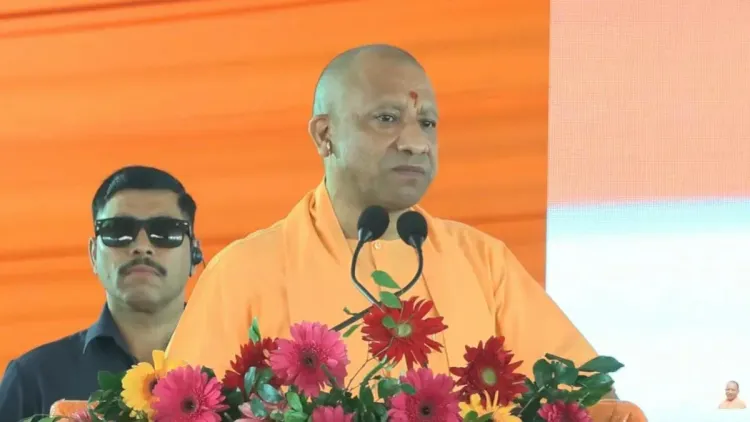
CM Yogi Adityanath challenged SP and Congress over their failure to build a memorial for 11th-century king Maharaja Suheldev, accusing them of instead backing the Ghazi mela at Bahraich — a sharp cultural and electoral provocation in Uttar Pradesh.
Key Takeaways
CM Yogi Adityanath posted on 19 November 2026 questioning why SP and Congress never built a memorial for Maharaja Suheldev .
He accused both parties of being 'followers of the Ghazi' and prioritising the Ghazi mela at Bahraich over Hindu heritage.
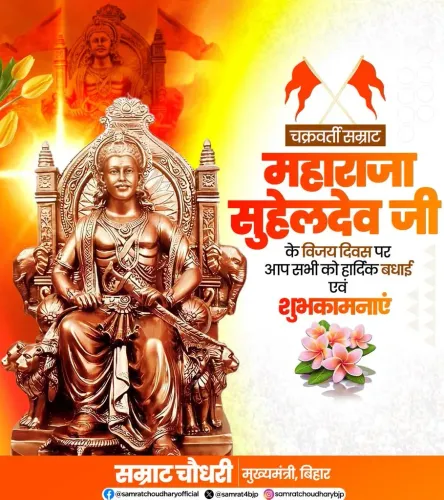
Maharaja Suheldev was an 11th-century king of Shravasti credited with defeating Ghazi Saiyyad Salar Masood near Bahraich .
The BJP government announced a Suheldev memorial at Bahraich after taking power in 2017 , framing it as a correction of decades of neglect.
The Suheldev legacy holds strong electoral significance among Rajbhar and OBC communities in eastern Uttar Pradesh.
The post continues a broader BJP pattern of reclaiming medieval-era Hindu rulers as state heritage figures across BJP-governed states.
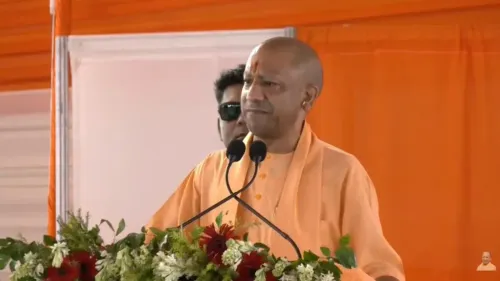
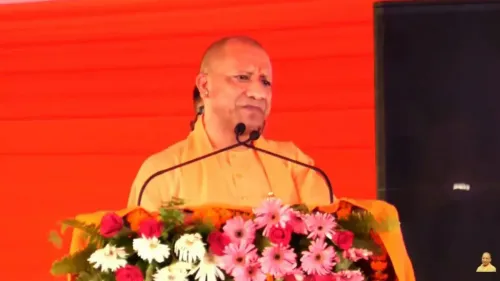
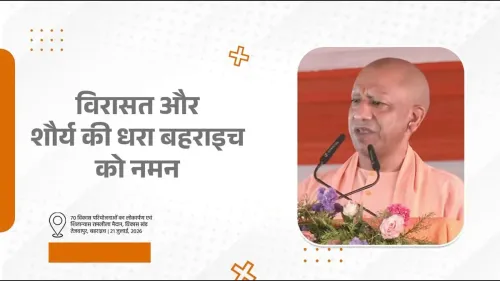
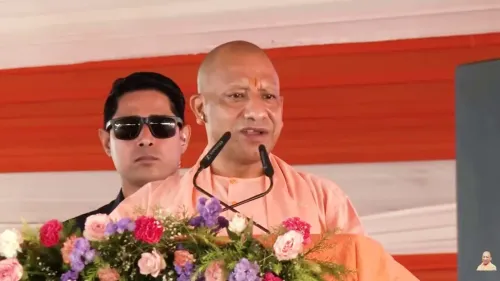
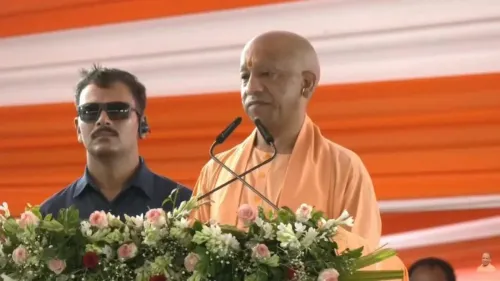
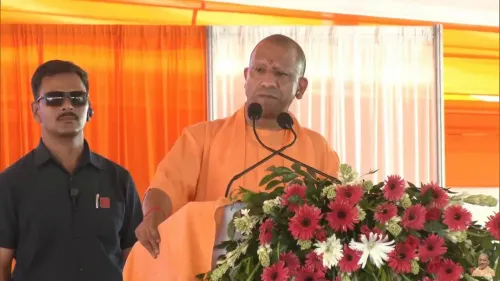
A sharp cultural gauntlet landed on Thursday, 19 November 2026, when Uttar Pradesh Chief Minister Yogi Adityanath publicly challenged the Samajwadi Party and the Indian National Congress over their silence on building a memorial for Maharaja Suheldev — the 11th-century king of Shravasti revered for defeating the medieval commander Ghazi Saiyyad Salar Masood near Bahraich.
Posting in Hindi on X, CM Yogi asked pointedly: 'Maharaja Suheldev ka smarak banane ki fursat Samajwadi Party aur Congress ko kahan thi?' — 'Where did the Samajwadi Party and Congress find the time to build Maharaja Suheldev's memorial?' He added a sharper charge: 'They had to organise the Ghazi's mela... they are followers of the Ghazi.'
Who Was Maharaja Suheldev — and Why Does He Matter Now?
Maharaja Suheldev is celebrated in folk memory across the Awadh and Terai belt as a king who assembled a coalition of local chieftains and defeated the army of Ghazi Saiyyad Salar Masood — a 12th-century figure whose shrine at Bahraich has historically drawn a large annual fair — in the Battle of Bahraich. His legacy carries enormous symbolic weight among OBC and Rajbhar communities in eastern Uttar Pradesh.
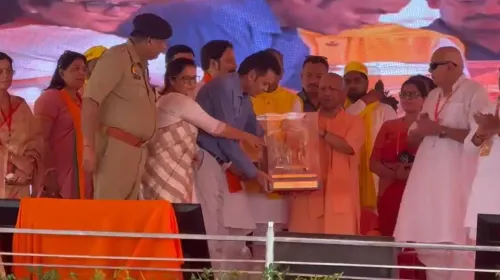
The BJP government in Lucknow announced a dedicated memorial and statue for Suheldev at Bahraich shortly after coming to power in 2017, framing it as a long-overdue tribute that previous administrations had neglected. The accusation implicit in CM Yogi's post — that SP and Congress were more interested in state patronage of the Ghazi mela than in honouring a Hindu king who resisted medieval conquest — strikes at the heart of a bitterly contested cultural narrative in the state.
The SP and Congress Record CM Yogi Is Invoking
The Samajwadi Party governed Uttar Pradesh for 2012–2017 and in earlier tenures; the Congress dominated the state before 1989. Neither administration built a prominent Suheldev memorial, a gap the BJP has long flagged as evidence of what it calls 'vote-bank appeasement.' The charge is not new — but its restatement now, with apparent reference to ongoing progress on the Bahraich site, signals the memorial is being kept alive as a live political wedge.
The Ghazi mela at Bahraich — a centuries-old fair at the dargah of Salar Masood — received official state support under multiple prior governments. CM Yogi's framing positions that support as a political choice that came at the expense of Hindu heritage figures like Suheldev. Opposition parties have typically countered that the fair is a syncretic, composite cultural tradition, not a political statement.
A Pattern Across BJP-Governed States
The Suheldev debate is one node in a wider BJP strategy of reclaiming local kings and commanders who resisted medieval invasions as state-worthy heroes. Memorials, statues, and renamed institutions honouring figures from Prithviraj Chauhan to Rani Durgavati have been inaugurated across BJP-ruled states since 2014. In each case, the implicit or explicit counterpoint is the same: these figures were 'forgotten' by Congress and its allies.
In Uttar Pradesh, with an eye always on the next assembly election, the Suheldev memorial carries particular electoral arithmetic — Rajbhar and other OBC communities whose votes both BJP and SP actively court. Yogi's post is a reminder that cultural politics and caste politics are rarely separable in the state's electoral landscape.
The question that hangs in the air after every such post: when the memorial is complete, will it settle the narrative — or simply reset the debate for the next election cycle?
Point of View
He simultaneously asserts Hindu civilisational pride and frames the opposition as historically complicit in its suppression. The message is calibrated for Rajbhar and OBC voters in eastern UP — communities both BJP and SP have competed hard for — making this as much an electoral move as a heritage statement. It also fits a decade-long BJP playbook of converting medieval-era conflict into contemporary political identity, keeping the cultural narrative constantly live rather than resolved. The unfinished memorial is, paradoxically, more useful as a talking point than a completed one would be.
NationPress
19 Nov 2026
Frequently Asked Questions
Who was Maharaja Suheldev?
Maharaja Suheldev was an 11th-century king of Shravasti in present-day Uttar Pradesh, remembered in regional tradition for defeating the army of Ghazi Saiyyad Salar Masood at the Battle of Bahraich . He is particularly venerated by Rajbhar and other OBC communities in eastern UP.
What is the Suheldev memorial that CM Yogi mentioned?
The Uttar Pradesh government under CM Yogi Adityanath announced a memorial and statue for Maharaja Suheldev at Bahraich after the BJP came to power in 2017 , citing the previous administrations' failure to honour the king.
What is the Ghazi mela at Bahraich?
The Ghazi mela is a centuries-old annual fair held at the dargah of Ghazi Saiyyad Salar Masood in Bahraich . Previous UP governments, including those of SP and Congress, provided state support for the event — a practice CM Yogi has repeatedly criticised.
Why is Suheldev important to BJP politics in UP?
Suheldev's legacy resonates deeply with Rajbhar and OBC communities in eastern Uttar Pradesh, making him electorally significant. Both the BJP and SP have sought to claim his legacy, and the BJP's Suheldev memorial project has been a consistent tool for distinguishing its cultural priorities from those of previous governments.
What did CM Yogi say about SP and Congress on X?
CM Yogi asked why SP and Congress never found time to build a Maharaja Suheldev memorial , and accused them of being 'followers of the Ghazi' who preferred organising the Ghazi mela over honouring a Hindu king.