Rajnath Singh departs for Tokyo 2+2 India-Japan defence talks

Synopsis
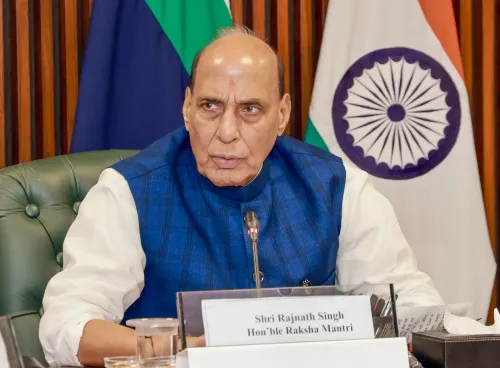
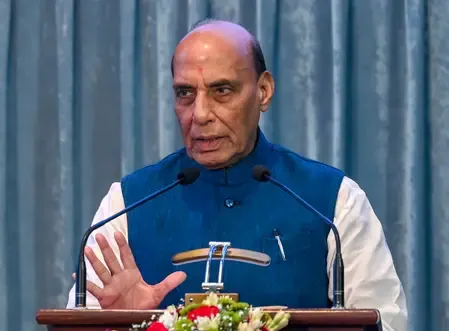
Union Defence Minister Rajnath Singh has departed for Tokyo to attend the India-Japan 2+2 Foreign and Defence Ministerial Dialogue and hold bilateral talks with Japanese Defence Minister Shinjiro Koizumi, targeting deeper cooperation on technology, maritime security, and regional stability.
Key Takeaways
Rajnath Singh departed for Tokyo on November 17, 2026 to attend the India-Japan 2+2 Foreign and Defence Ministerial Dialogue .
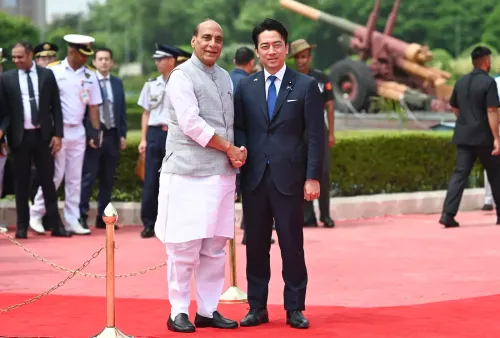
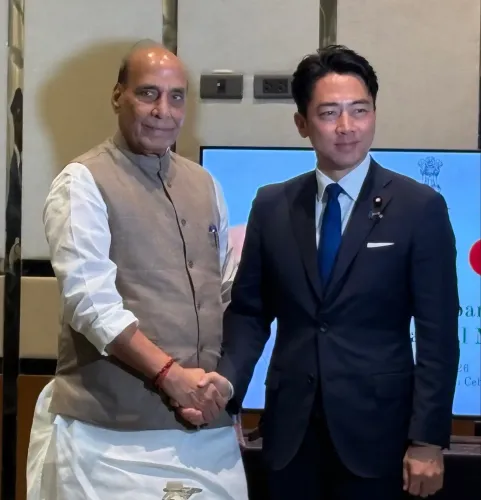
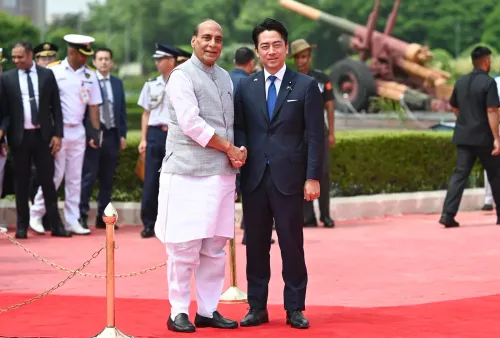
Singh will hold a separate bilateral meeting with Japanese Defence Minister Shinjiro Koizumi .
The Special Strategic and Global Partnership between India and Japan was established in 2014 ; the 2+2 format launched in 2019 .
India and Japan signed the Acquisition and Cross-Servicing Agreement in 2020 , enabling logistical support between their armed forces.
The visit will focus on defence technology, maritime security, and regional stability in the Indo-Pacific.
Singh posted his departure announcement in Japanese — a deliberate diplomatic signal to Tokyo.
India's strategic pivot to the Indo-Pacific just got a high-profile push. Union Defence Minister Rajnath Singh departed for Tokyo on Tuesday, November 17, 2026, to attend the India-Japan Foreign and Defence Ministerial Dialogue (2+2) — and to hold a bilateral sit-down with Japanese Defence Minister Shinjiro Koizumi, signalling that the two democracies are moving their partnership well past symbolism.
Posting in Japanese on X — a pointed diplomatic gesture in itself — Singh outlined his agenda plainly: 'During the visit, I will also hold bilateral talks with Japan's Defence Minister Shinjiro Koizumi.' He framed the two countries' bond as a 'Special Strategic and Global Partnership' anchored in mutual trust, shared democratic values, and a common vision of 'a free, open, and rules-based Indo-Pacific.' The goals on the table: confirming steady progress on defence and security cooperation, and exploring new possibilities in technology, maritime security, and regional stability.From 2014 upgrade to 2026 agenda
The relationship Singh is flying to reinforce was formally elevated to a Special Strategic and Global Partnership in 2014, making India and Japan among the most closely aligned democracies in Asia. The 2+2 format — where both foreign and defence ministers meet together — was itself launched only in 2019, reflecting how quickly the strategic architecture has thickened. Add the Acquisition and Cross-Servicing Agreement signed in 2020, which allows the armed forces of both nations to draw on each other's logistics and supplies, and the scaffolding for genuinely integrated security cooperation is already in place. The November 2026 dialogue is not a reset; it is an acceleration.
Koizumi meeting and the maritime security angle
The bilateral with Shinjiro Koizumi will be watched closely for any new announcements on defence technology and maritime domain awareness — areas where both capitals have strong shared interests and where the Indo-Pacific's contested waters make cooperation strategically urgent. India's Act East Policy and Japan's Free and Open Indo-Pacific vision converge most visibly here: joint naval exercises like Malabar, coordinated maritime patrols, and technology-sharing frameworks are all on the table. Any concrete deliverable — a new co-development agreement, an expanded exercise calendar, a maritime information-sharing mechanism — would mark a step-change from the previous round.
Why Singh posting in Japanese matters
Singh's choice to post his departure announcement in Japanese is not a small detail. It is a signal to Tokyo's public and political class that Delhi values the relationship enough to meet Japan on its own terms. In the grammar of diplomacy, it is the equivalent of arriving early. As both nations watch a rapidly shifting regional order — with contested maritime boundaries, evolving alliance structures, and new technology races reshaping the Indo-Pacific — that kind of small, deliberate gesture often does more to build durable trust than any formal communiqué.
The world's largest democracy and Asia's third-largest economy are heading into a room together with a packed agenda. What they agree to build — in technology, in maritime security, in mutual logistics — will shape the Indo-Pacific's balance of power long after the ministers land home.
Point of View
The bilateral with Koizumi to personalise it, and the choice to post in Japanese to signal cultural respect. The visit sits squarely within India's Act East Policy, which has used Tokyo as one of its most reliable anchors since the partnership's 2014 upgrade. With maritime security and defence technology both on the agenda, the meeting could yield concrete deliverables that go beyond diplomatic optics. Longer term, every such dialogue reinforces the emerging quad-adjacent architecture that shapes the Indo-Pacific's rules-based order.
NationPress
17 Nov 2026
Frequently Asked Questions
Why is Rajnath Singh visiting Tokyo in November 2026?
Singh is visiting Tokyo to attend the India-Japan 2+2 Foreign and Defence Ministerial Dialogue and to hold separate bilateral talks with Japanese Defence Minister Shinjiro Koizumi, focusing on defence cooperation, maritime security, and technology.
What is the India-Japan 2+2 dialogue?
The India-Japan 2+2 is a regular ministerial-level dialogue that brings together the foreign and defence ministers of both countries to advance strategic and security cooperation. The format was launched in 2019.
What is the Special Strategic and Global Partnership between India and Japan?
It is the highest-tier diplomatic framework governing India-Japan relations, established in 2014. It is based on shared democratic values and a common vision for a free, open, and rules-based Indo-Pacific.
Who is Shinjiro Koizumi and why is his meeting with Rajnath Singh significant?
Shinjiro Koizumi is Japan's Defence Minister. His bilateral meeting with Singh is significant because it allows both sides to advance defence technology and maritime security cooperation directly, building personal ties between the two nations' defence leaderships.
What is the Acquisition and Cross-Servicing Agreement between India and Japan?
Signed in 2020, the Acquisition and Cross-Servicing Agreement allows the armed forces of India and Japan to provide logistical support — including fuel, food, and spare parts — to each other, deepening operational interoperability.