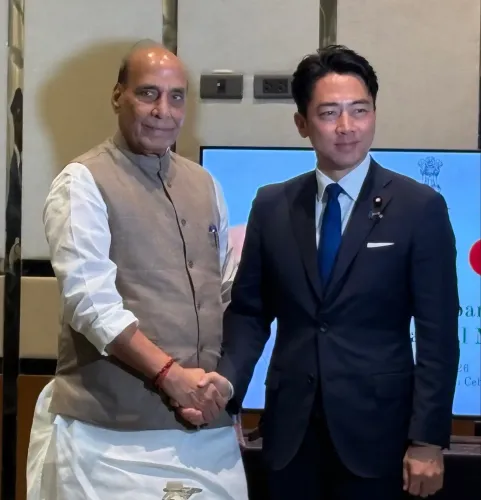
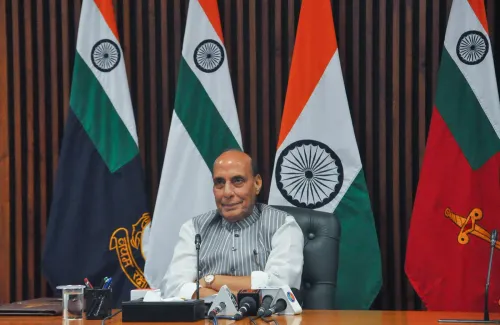
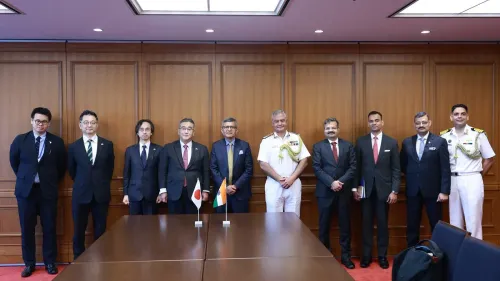
Rajnath Singh flies to Tokyo for India-Japan 2+2 Dialogue

Synopsis
Union Defence Minister Rajnath Singh travels to Tokyo on 18 November 2026 for the India-Japan 2+2 Foreign and Defence Ministerial Dialogue. The visit will cover defence technology co-development, maritime security, and regional stability under the framework of the two nations' Special Strategic and Global Partnership.
Key Takeaways
Rajnath Singh will be in Tokyo on 18 November 2026 for the India-Japan 2+2 Foreign and Defence Ministerial Dialogue .
The dialogue brings together foreign and defence ministers of both countries in a single joint session — a format first used by India and Japan in November 2019 .
India-Japan ties are governed by the Special Strategic and Global Partnership framework, formalised at the 2014 bilateral summit.
Key discussion pillars include defence technology co-development , maritime security , and regional stability in the Indo-Pacific.
Singh will also hold separate bilateral meetings with his Japanese counterparts alongside the ministerial dialogue.
Both nations are part of the Malabar naval exercise series and broader Quad architecture aimed at a rules-based Indo-Pacific.
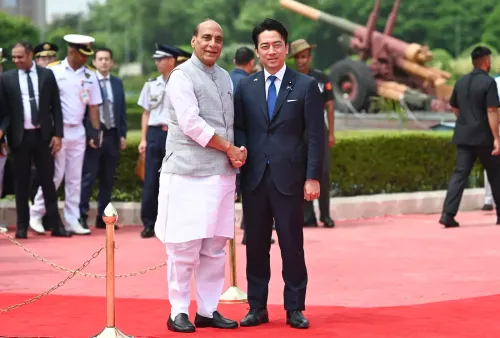
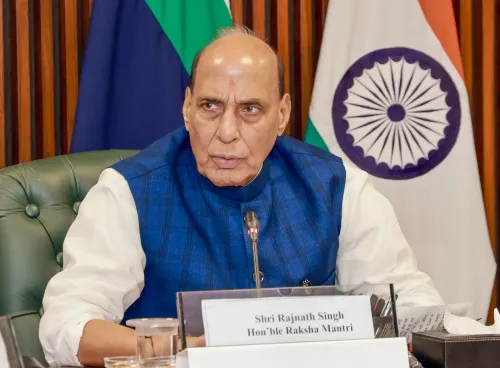
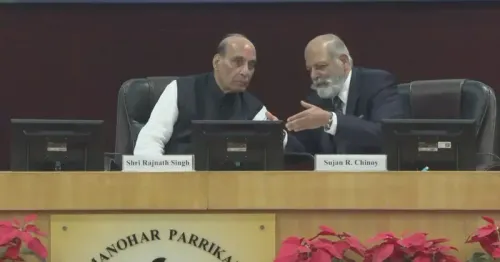
India's defence partnership with Japan moves into high gear on 18th November 2026, as Union Defence Minister Rajnath Singh heads to Tokyo for the India-Japan 2+2 Foreign and Defence Ministerial Dialogue — a flagship mechanism that seats the foreign and defence ministers of both nations at the same table to map their shared strategic future.
What the 2+2 format means for both nations
The India-Japan 2+2 Ministerial Dialogue first convened in New Delhi in November 2019, elevating a relationship that was itself upgraded to a Special Strategic and Global Partnership during the landmark 2014 bilateral summit. The format matters precisely because it eliminates the traditional silo between foreign-policy and defence conversations, forcing alignment across both ministries in a single session. When two democracies with overlapping Indo-Pacific anxieties sit down this way, the agenda tends to cut deep.
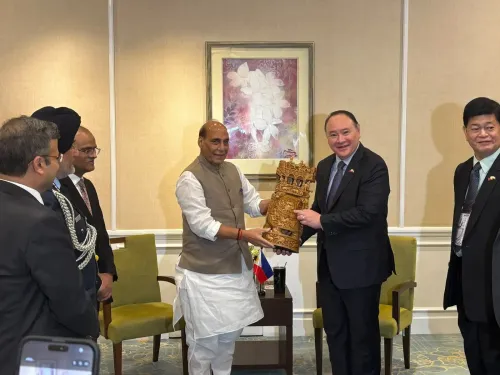
Rajnath Singh will hold bilateral meetings with his Japanese counterparts alongside the ministerial dialogue, signalling that the visit covers not just the formal joint session but direct minister-to-minister working conversations on live security files.
Technology, maritime security, and the Indo-Pacific frame
Singh's post identifies three specific pillars for the Tokyo discussions: defence technology co-development, maritime security, and regional stability. Each reflects a maturing partnership rather than a ceremonial exchange. India and Japan have progressively deepened interoperability through joint exercises, including their participation in the Malabar naval exercise series, and have expanded cooperation on maritime domain awareness — a critical capability in an Indo-Pacific where contested sea lanes run through both countries' strategic calculus.
The two nations' shared articulation of a 'free, open, and rules-based Indo-Pacific' is not diplomatic boilerplate; it is a direct signal to any actor that might seek to rewrite regional norms by force. Tokyo and New Delhi have invested years in turning that phrase into operational architecture — joint patrols, information-sharing, and the broader Quad framework that connects both capitals with Washington and Canberra.
From 2014 to 2026: a partnership with a long spine
Twelve years after the Special Strategic and Global Partnership was formalised, the relationship has accumulated substance: regular bilateral summits, defence equipment discussions, and an expanding grid of security dialogues. The 2+2 format is part of a wider pattern India now maintains with a select group of partners — a club whose membership itself signals strategic weight. For Japan, deepening ties with India is equally purposeful, providing strategic depth in South Asia and a counterpart whose naval reach extends across the Indian Ocean.
What emerges from the Tokyo meetings — any joint statements, new memoranda on technology transfer, or signals on maritime cooperation architecture — will be the story to watch when Singh returns.
Point of View
Not just a rhetorical one.
NationPress
17 Nov 2026
Frequently Asked Questions
What is the India-Japan 2+2 Ministerial Dialogue?
The India-Japan 2+2 Ministerial Dialogue is a high-level meeting that brings together the foreign ministers and defence ministers of both countries simultaneously to review and advance security and defence cooperation. India and Japan held the first such dialogue in New Delhi in November 2019.
Why is Rajnath Singh visiting Tokyo in November 2026?
Union Defence Minister Rajnath Singh is visiting Tokyo on 18 November 2026 to participate in the India-Japan 2+2 Foreign and Defence Ministerial Dialogue, with discussions focused on defence technology, maritime security, and regional stability in the Indo-Pacific.
What is India and Japan's Special Strategic and Global Partnership?
The Special Strategic and Global Partnership is the framework governing India-Japan relations, formalised during a bilateral summit in 2014. It emphasises defence cooperation, technology collaboration, and a shared commitment to a free, open, and rules-based Indo-Pacific.
What is the Malabar naval exercise and does Japan participate?
The Malabar naval exercise is a multilateral maritime drill originally started between India and the United States. Japan joined as a permanent participant, and the exercise has since expanded to include Australia, strengthening interoperability among Quad nations.
What outcomes are expected from Rajnath Singh's Tokyo visit?
The visit is expected to yield discussions on defence technology co-development, maritime security architecture, and regional stability. Specific outcomes such as joint statements or new memoranda of understanding will be known after the meetings conclude on 18 November 2026.