Rajnath Singh at 4th India-Japan 2+2 Dialogue in Tokyo
Synopsis
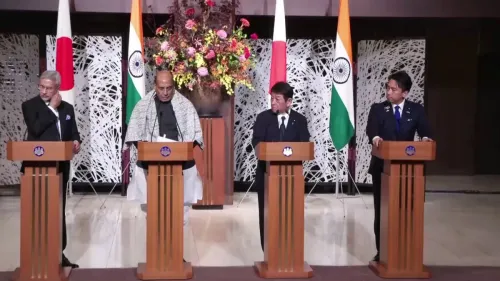
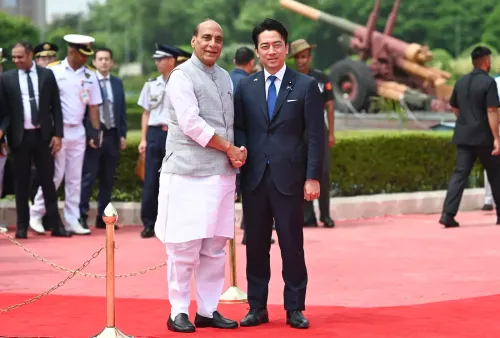
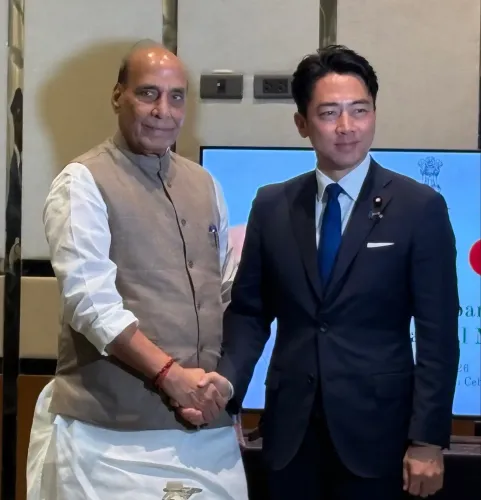
Union Defence Minister Rajnath Singh joined External Affairs Minister Dr S Jaishankar in Tokyo for the 4th India-Japan 2+2 Ministerial Dialogue on 19 November 2026, reaffirming the Special Strategic and Global Partnership and both nations' commitment to a free, open, rules-based Indo-Pacific.
Key Takeaways
The 4th India-Japan 2+2 Ministerial Dialogue was held in Tokyo on 19 November 2026 .
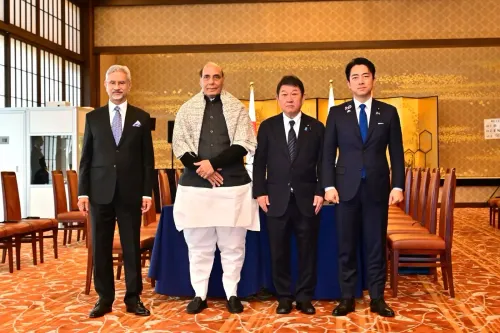
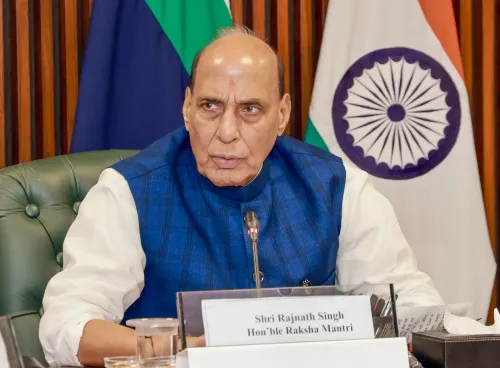
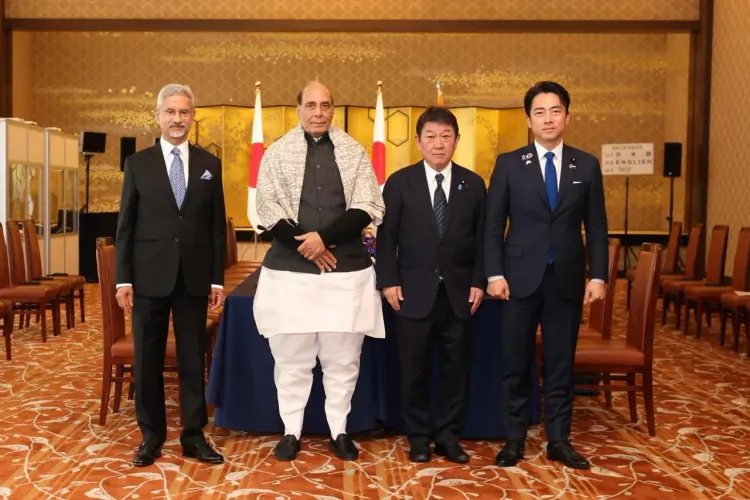
Union Defence Minister Rajnath Singh and EAM Dr S Jaishankar represented India at the talks.
The Japanese side was represented by Foreign Minister Toshimitsu Motegi and Defence Minister Shinjiro Koizumi .
Both sides reaffirmed the India-Japan Special Strategic and Global Partnership .
A shared commitment to a 'free, open, and rules-based Indo-Pacific' was explicitly reaffirmed.
The 2+2 dialogue mechanism between India and Japan was instituted in 2019 , making this the fourth edition.
In Tokyo on Thursday, 19 November 2026, Union Defence Minister Rajnath Singh sat across the table from his Japanese and Indian counterparts to reinforce one of Asia's most consequential strategic partnerships — and the message that emerged was unambiguous: the India-Japan Special Strategic and Global Partnership is deepening, and both nations stand firmly behind a free, open, and rules-based Indo-Pacific.
What the 4th 2+2 dialogue covered
Rajnath Singh described the talks as 'productive discussions,' held alongside External Affairs Minister Dr S Jaishankar on the Indian side and Japanese Foreign Minister Toshimitsu Motegi and Japanese Defence Minister Shinjiro Koizumi on the Japanese side. The 2+2 format — which brings together the foreign and defence ministers of both countries in a single room — is specifically designed to synchronise diplomatic and military tracks, cutting through the siloed bilateralism that often dulls strategic coordination.
Central to the dialogue was a reaffirmation of the two nations' 'shared commitment to a free, open, and rules-based Indo-Pacific' — language that carries unmistakable strategic weight at a moment when maritime flashpoints from the South China Sea to the Indian Ocean are testing the region's norms.
Seven years of the 2+2 mechanism — and why it matters now
The India-Japan 2+2 Ministerial Dialogue was instituted in 2019, making today's fourth edition a marker of how rapidly this framework has matured. India runs only a handful of such 2+2 mechanisms globally — with the United States, Australia, Russia, and Japan among them — a selective club that signals the highest tier of bilateral trust.
Beyond the dialogue table, India and Japan have steadily expanded practical defence cooperation: joint naval exercises such as Malabar, defence technology collaboration, and coast-guard-level maritime coordination all feed into a partnership built on shared democratic values and converging Indo-Pacific interests. Each 2+2 round is both a stocktake of that progress and a mandate-setter for the next phase.
The Indo-Pacific frame — and what follows
The explicit invocation of a 'rules-based Indo-Pacific' by both sides is not diplomatic boilerplate — it is a deliberate signal to the region. For India, anchoring this language in a ministerial joint statement with Japan reinforces its broader Quad-aligned posture without formal treaty obligations. For Japan, a deepening defence relationship with India extends strategic depth well into the Indian Ocean, complementing its alliances in the Pacific.
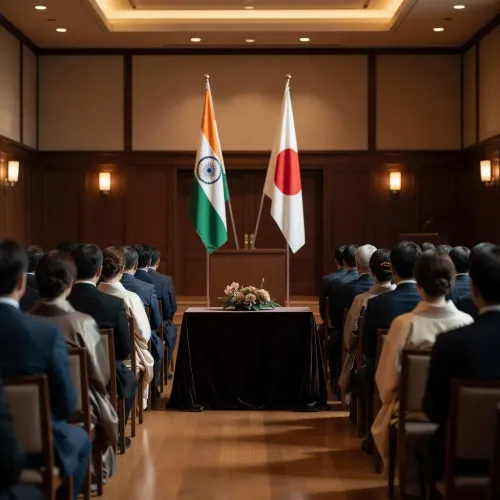
Watchers will now look for concrete follow-through: whether the dialogue produced new defence technology agreements, maritime domain awareness arrangements, or a confirmed date for the next round. The two flags planted side by side on Rajnath Singh's post — 🇮🇳🇯🇵 — are more than emoji. They mark a partnership that is quietly becoming one of the load-bearing pillars of Indo-Pacific security architecture.
Point of View
Complementing its Quad membership and bilateral ties with the US and Australia. By deploying both its Defence and External Affairs ministers to a single forum in Tokyo, New Delhi signals that it treats the Japan relationship as a comprehensive security partnership, not merely a trade or investment story. The 'rules-based Indo-Pacific' language, repeated at the ministerial level, also serves as a coordinated normative pushback against revisionist pressures in the region. For the BJP government, showcasing the maturing of this mechanism is consistent with its 'Act East' policy narrative ahead of potential electoral cycles.
NationPress
19 Nov 2026
Frequently Asked Questions
What is the India-Japan 2+2 Ministerial Dialogue?
The India-Japan 2+2 Ministerial Dialogue is a bilateral forum established in 2019 that brings together the foreign and defence ministers of both countries to coordinate on strategic, diplomatic, and security matters.
Who attended the 4th India-Japan 2+2 dialogue from India?
Union Defence Minister Rajnath Singh and External Affairs Minister Dr S Jaishankar represented India at the 4th India-Japan 2+2 Ministerial Dialogue held in Tokyo on 19 November 2026.
What is India and Japan's Special Strategic and Global Partnership?
The Special Strategic and Global Partnership is the highest tier of bilateral relationship between India and Japan, covering defence, technology, economic, and strategic cooperation, underpinned by shared democratic values and Indo-Pacific interests.
What does 'free and open Indo-Pacific' mean for India and Japan?
A 'free, open, and rules-based Indo-Pacific' refers to both countries' commitment to freedom of navigation, overflight, and adherence to international law in the region — implicitly countering attempts to unilaterally alter the status quo.
How often is the India-Japan 2+2 Ministerial Dialogue held?
The India-Japan 2+2 Ministerial Dialogue is held periodically, with the mechanism instituted in 2019 and the fourth round taking place in Tokyo in November 2026.