India-Japan 2+2 Dialogue: Free Indo-Pacific, SDF to use Indian firing range in 2027
Synopsis
At the 4th India-Japan 2+2 Dialogue in Tokyo, the two countries announced that Japan's Self-Defence Forces will use an Indian firing range for the first time in 2027 — a move Japanese Defence Minister Koizumi called 'a major step strategically.' Combined with a joint tour of a JMSDF frigate, the visit marks a decisive shift from symbolic partnership to operational military integration.
Key Takeaways
India and Japan held the 4th 2+2 Ministerial Dialogue in Tokyo on 19 November 2026 .
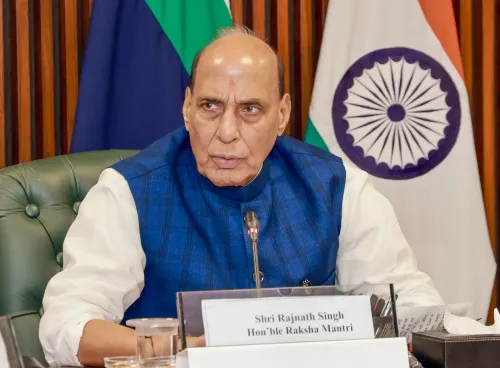
Japan's Self-Defence Forces will use an Indian firing range for the first time in 2027 , described by Koizumi as 'a major step strategically.' Defence Minister Rajnath Singh and EAM S.
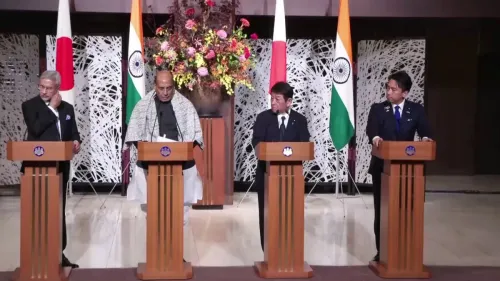
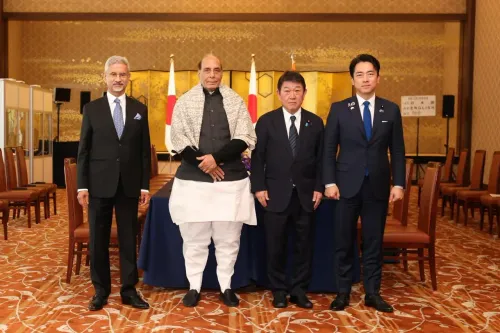
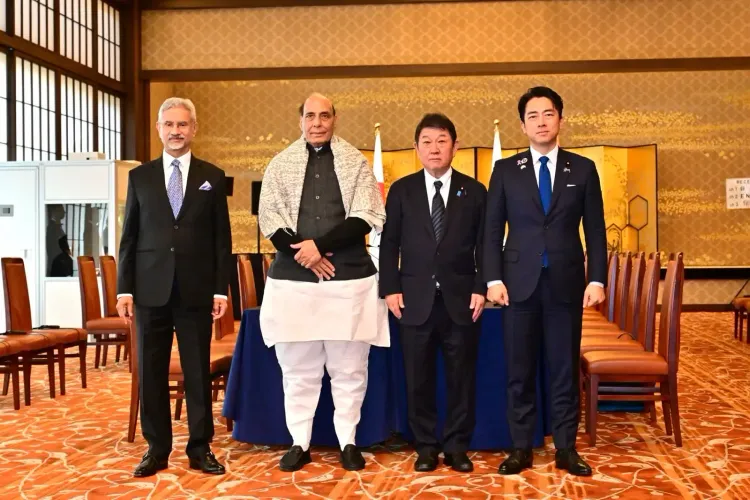
Jaishankar participated alongside Japanese FM Toshimitsu Motegi and Japanese Defence Minister Shinjiro Koizumi .
Singh and Koizumi toured the Mogami-class frigate JS Natori at JMSDF Naval Base, Yokosuka on 18 November .
Both sides reaffirmed the Special Strategic and Global Partnership and commitment to a free, open, rules-based Indo-Pacific .
India and Japan held the 4th India-Japan Foreign and Defence Ministers' Dialogue (2+2) in Tokyo on Thursday, 19 November 2026, reaffirming their Special Strategic and Global Partnership and a shared vision of a free, open, and rules-based Indo-Pacific. The talks brought together Defence Minister Rajnath Singh, External Affairs Minister S. Jaishankar, Japanese Foreign Minister Toshimitsu Motegi, and Japanese Defence Minister Shinjiro Koizumi.
Key Outcomes of the 2+2 Dialogue
The most significant operational announcement from the ministerial meeting was the agreement that Japan's Self-Defence Forces (SDF) will use an Indian firing range for the first time in 2027. Koizumi described this as 'a major step strategically,' signalling a deepening of bilateral defence cooperation well beyond joint exercises and maritime patrols.
Rajnath Singh characterised the discussions as 'productive,' noting that both sides reaffirmed their commitment to a rules-based order in the Indo-Pacific. The 2+2 format — which combines foreign and defence ministers from both countries — has become a cornerstone of India-Japan strategic coordination since its first edition.
Singh and Koizumi Tour JMSDF Naval Base in Yokosuka
A day before the formal dialogue, on Wednesday, 18 November, Rajnath Singh visited the Japan Maritime Self-Defence Force (JMSDF) Naval Base in Yokosuka, accompanied by Koizumi. The two ministers toured the Mogami-class multi-mission frigate JS Natori, with both sides exchanging views aboard the escort ship on maritime strategy and cooperation between the Indian Navy and the JMSDF.
Singh said the growing maritime cooperation between the two nations 'reflects the deep trust and shared commitment of India and Japan toward ensuring a free, open, and rules-based Indo-Pacific.' Koizumi called the discussions aboard JS Natori 'a meaningful time.'
Ceremonial Welcome and Bilateral Meetings
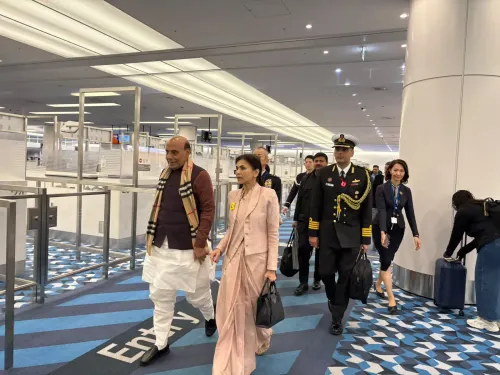
Earlier on Wednesday, Singh was accorded a ceremonial Guard of Honour at Japan's Ministry of Defence in Tokyo, where he was welcomed by Koizumi. India's Ambassador to Japan, Nagma Mallick, received Singh upon his arrival in Japan.
Singh's Tokyo visit was specifically for the fourth edition of the 2+2 Dialogue and bilateral discussions with his Japanese counterpart, underscoring the growing frequency and depth of high-level defence engagement between New Delhi and Tokyo.
Strategic Context: Why This Dialogue Matters
The India-Japan 2+2 format sits within a broader regional security architecture that includes the Quad — comprising India, Japan, the United States, and Australia — aimed at maintaining a stable balance of power in the Indo-Pacific. This comes amid continued concerns over China's assertiveness in the South China Sea and the East China Sea, as well as evolving security dynamics on the Korean Peninsula. Notably, the SDF's planned use of an Indian firing range would mark an unprecedented level of military interoperability between the two countries, moving the partnership from declaratory commitments toward concrete operational integration.
With the SDF-India firing range exercise set for 2027, both governments are expected to begin institutional groundwork in the coming months.
Point of View
But operational military interoperability has lagged far behind the rhetoric. A Japanese force training on Indian soil — even at a firing range — sets a precedent that neither Beijing nor Islamabad will overlook. The more difficult question is whether India's domestic defence infrastructure and clearance frameworks are ready to absorb allied SDF deployments without bureaucratic drag. The 2027 timeline is tight, and the institutional scaffolding will need to be built fast.
NationPress
19 Nov 2026
Frequently Asked Questions
What was agreed at the India-Japan 2+2 Ministerial Dialogue on 19 November 2026?
India and Japan reaffirmed their Special Strategic and Global Partnership and agreed that Japan's Self-Defence Forces will use an Indian firing range for the first time in 2027. The dialogue also covered maritime cooperation and the shared commitment to a free, open, and rules-based Indo-Pacific.
What is the India-Japan 2+2 Ministerial Dialogue?
It is a strategic consultation format that brings together the foreign and defence ministers of India and Japan to coordinate on security, defence, and geopolitical matters. The 19 November meeting in Tokyo was the fourth edition of this dialogue.
Why is the SDF using an Indian firing range significant?
It marks the first time Japan's Self-Defence Forces will train on Indian soil, representing a concrete step toward operational military interoperability between the two countries. Japanese Defence Minister Shinjiro Koizumi called it 'a major step strategically.'
What did Rajnath Singh and Shinjiro Koizumi do at the Yokosuka naval base?
Defence Minister Rajnath Singh and Japanese Defence Minister Shinjiro Koizumi toured the Mogami-class multi-mission frigate JS Natori at the JMSDF Naval Base in Yokosuka on 18 November 2026. The visit included an exchange of views between the Indian Navy and the JMSDF aboard the vessel.
Who attended the 4th India-Japan 2+2 Dialogue?
The dialogue was attended by India's Defence Minister Rajnath Singh and External Affairs Minister S. Jaishankar on the Indian side, and Japanese Foreign Minister Toshimitsu Motegi and Japanese Defence Minister Shinjiro Koizumi on the Japanese side.