India-Japan defence talks: Singh meets Koizumi in Tokyo on 13 July
Synopsis
Within two weeks of PM Takaichi's New Delhi summit with Modi, India's Defence Secretary flew to Tokyo for talks on regional security and defence industry cooperation — a pace of engagement that signals the India-Japan strategic partnership is shifting from declaration to action, with co-production and Indo-Pacific coordination now firmly on the table.
Key Takeaways
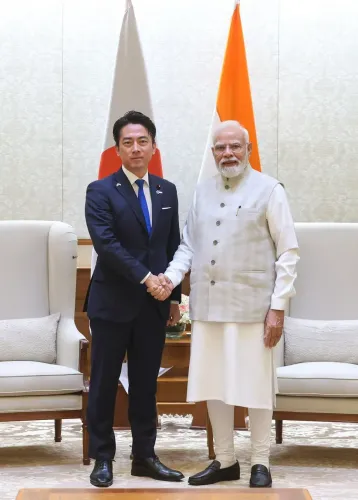
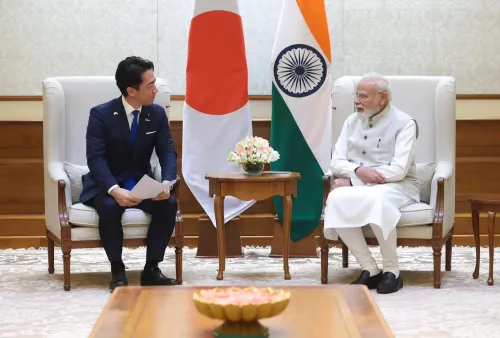
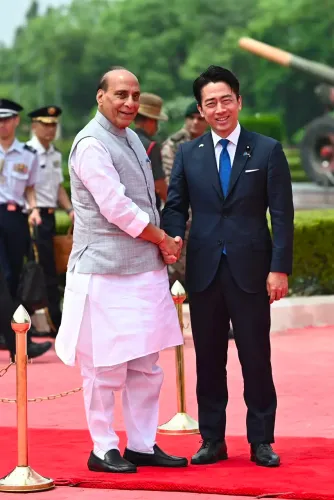
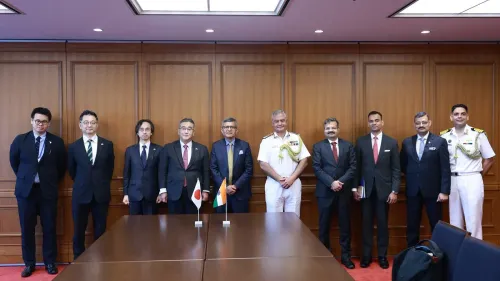
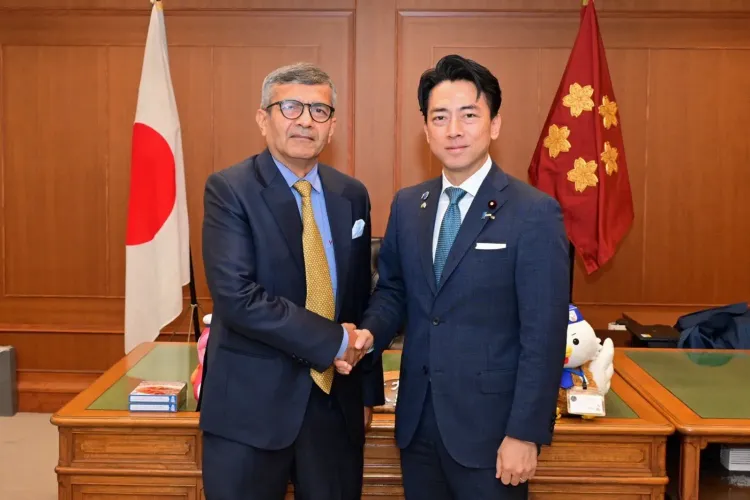
Defence Secretary Rajesh Kumar Singh met Japanese Defence Minister Shinjiro Koizumi in Tokyo on 13 July 2026 , covering regional security and defence industry cooperation.
Singh laid a wreath at the Self-Defense Forces Memorial Stone in Tokyo, reflecting the India-Japan Special Strategic and Global Partnership .
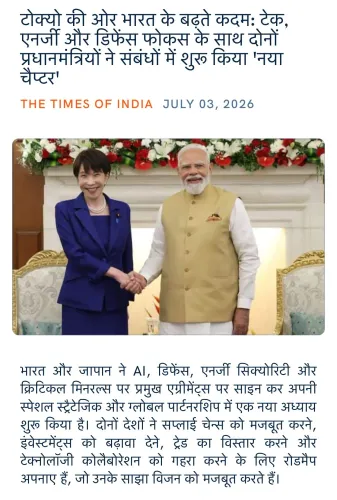
The visit follows Japanese PM Sanae Takaichi 's trip to India from 1–3 July , during which the 16th India-Japan Annual Summit was held at Hyderabad House, New Delhi .
Both sides adopted three landmark documents: a Joint Declaration on Economic Security , a Joint Statement on AI Cooperation , and a Joint Statement on Energy Resilience .
Both countries agreed on activities to mark the 75th anniversary of diplomatic relations.
Defence Secretary Rajesh Kumar Singh met Japanese Defence Minister Shinjiro Koizumi in Tokyo on 13 July 2026, with discussions spanning regional security dynamics and defence industry cooperation — the latest in a series of high-level engagements cementing the India-Japan Special Strategic and Global Partnership.
Key Developments from the Tokyo Meeting
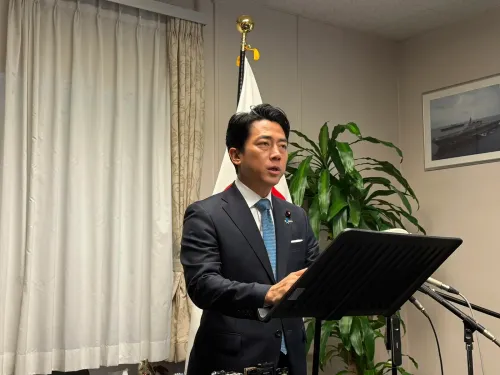
The bilateral talks covered a broad agenda, including the regional security situation and prospects for deeper defence industrial collaboration. Koizumi, in a post on X, described the exchange as 'broad and constructive,' noting it also served as a follow-up to Japanese Prime Minister Sanae Takaichi's recent visit to India. 'First visit to Japan by India's Defence Secretary Singh. Including follow-up to Prime Minister Takaichi's recent visit to India, we were able to engage in a broad and constructive exchange of views on regional situations, defence industry cooperation, and more,' Koizumi wrote.
Singh also laid a wreath at the Self-Defense Forces Memorial Stone in Tokyo, paying tribute to Japanese service personnel who lost their lives in the line of duty. The Ministry of Defence described the gesture as reflecting 'the enduring India-Japan Special Strategic and Global Partnership, founded on shared values, mutual respect, and a common commitment to peace and stability.'
Context: Takaichi's India Visit and the Annual Summit
Singh's Tokyo visit follows Prime Minister Takaichi's trip to India from 1–3 July — her first since assuming office — during which she and Prime Minister Narendra Modi held the 16th India-Japan Annual Summit at Hyderabad House in New Delhi. The summit covered the full spectrum of bilateral ties: trade and investment, economic security, energy, emerging technologies, defence, and people-to-people exchanges, according to the Ministry of External Affairs (MEA).
The two leaders also addressed the India-Japan Joint Economic Forum, where discussions centred on expanding investment, strengthening resilient supply chains, and advancing manufacturing partnerships under the 'Make in India for the World' framework.
Landmark Documents Signed
Following the summit talks, both sides adopted three landmark documents: a Joint Declaration on Economic Security, a Joint Statement on Cooperation in the field of Artificial Intelligence, and a Joint Statement on Energy Resilience. Key Memoranda of Understanding (MoUs) were also exchanged, spanning clean energy, critical technologies, and research and development.
MEA spokesperson Randhir Jaiswal confirmed on X that both sides 'agreed on a list of activities for celebrating the 75th anniversary of establishment of diplomatic relations' between India and Japan.
What This Signals
The back-to-back engagements — a summit-level visit followed within two weeks by a defence secretary-level meeting — signal an acceleration in the India-Japan security relationship. Notably, the focus on defence industry cooperation points to potential co-development and co-production arrangements, a direction both governments have been exploring as an alternative to traditional arms transfers. With regional tensions in the Indo-Pacific remaining elevated, the strategic logic of closer India-Japan coordination is only likely to deepen in the months ahead.
Point of View
Particularly on economic security and AI, also suggest the partnership is being future-proofed for technology competition, not just conventional security. The real test will be whether these MoUs translate into funded programmes with timelines — something past India-Japan agreements have occasionally struggled to deliver.
NationPress
12 Oct 2026
Frequently Asked Questions
What did India's Defence Secretary Rajesh Kumar Singh discuss in Tokyo?
Singh met Japanese Defence Minister Shinjiro Koizumi on 13 July 2026 in Tokyo to discuss the regional security situation and defence industry cooperation. The talks were described by Koizumi as 'broad and constructive,' and also served as a follow-up to PM Takaichi's recent visit to India.
Why did Rajesh Kumar Singh visit Japan?
Singh's visit was part of ongoing high-level defence diplomacy between India and Japan, building on PM Takaichi's summit with PM Modi in New Delhi from 1–3 July 2026. The visit aimed to advance defence industrial cooperation and review regional security developments.
What was agreed at the 16th India-Japan Annual Summit?
At the 16th Annual Summit held at Hyderabad House in New Delhi, PM Modi and PM Takaichi adopted three landmark documents — a Joint Declaration on Economic Security, a Joint Statement on AI Cooperation, and a Joint Statement on Energy Resilience — and exchanged MoUs on clean energy, critical technologies, and R&D.
What is the India-Japan Special Strategic and Global Partnership?
It is the highest tier of bilateral relationship between India and Japan, founded on shared democratic values, mutual respect, and a commitment to regional peace and stability. The partnership covers defence, trade, technology, energy, and people-to-people ties.
What is the significance of the 75th anniversary of India-Japan diplomatic relations?
Both countries agreed on a calendar of activities to mark 75 years of diplomatic relations, signalling an intent to use the milestone to deepen public and institutional engagement across sectors beyond the traditional security and trade focus.