Giriraj Singh shares India-Japan summit coverage on X
Synopsis
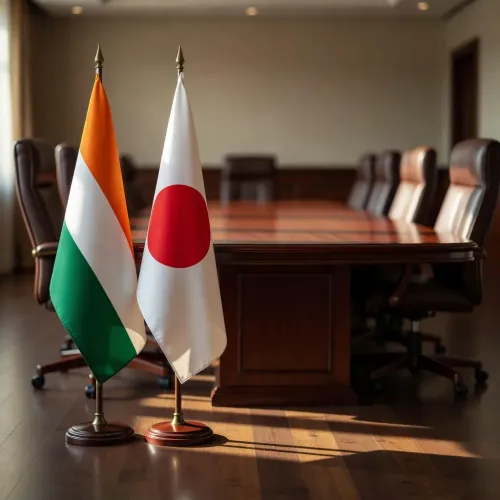
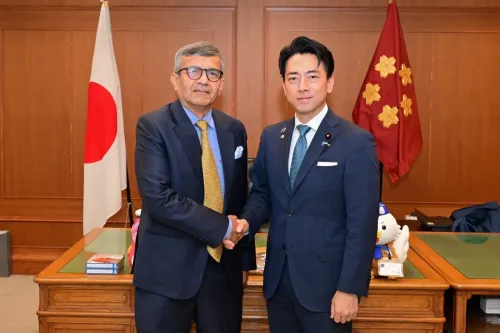
Union Textiles Minister Giriraj Singh shared a report on 3 July 2026 highlighting a 'new chapter' in India-Japan ties, with the two prime ministers' Tokyo summit focusing on technology, energy and defence cooperation — continuing a partnership built since 2006.
Key Takeaways
Union Textiles Minister Giriraj Singh amplified coverage of the India-Japan summit in Tokyo on 3 July 2026 .
The post framed the summit as opening a 'new chapter' in bilateral ties, with technology, energy and defence as the three core pillars.
India and Japan have maintained a Special Strategic and Global Partnership since 2006 , underpinned by an Annual Summit mechanism.
A 2+2 Foreign and Defence Ministers' dialogue launched in 2019 has deepened security and technology collaboration.
Both nations are Quad members, giving the bilateral relationship a broader Indo-Pacific strategic dimension.
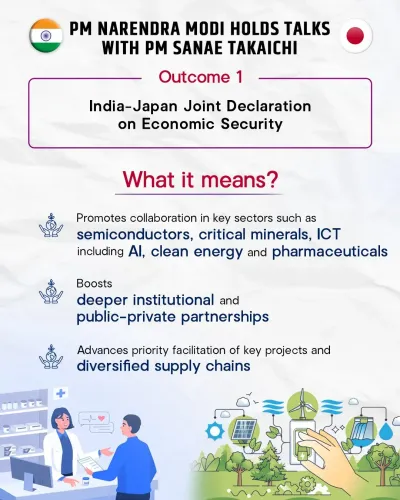
Key areas to watch include new agreements on semiconductors, hydrogen energy and defence co-production emerging from the Tokyo meeting.
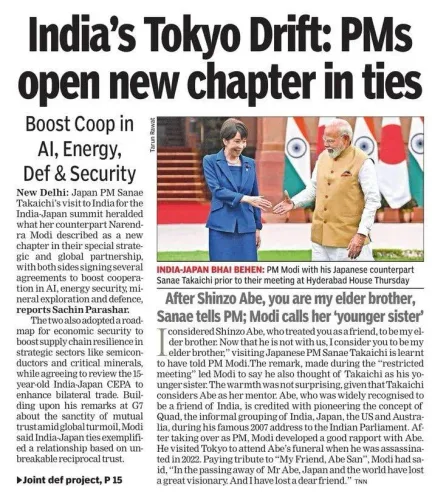
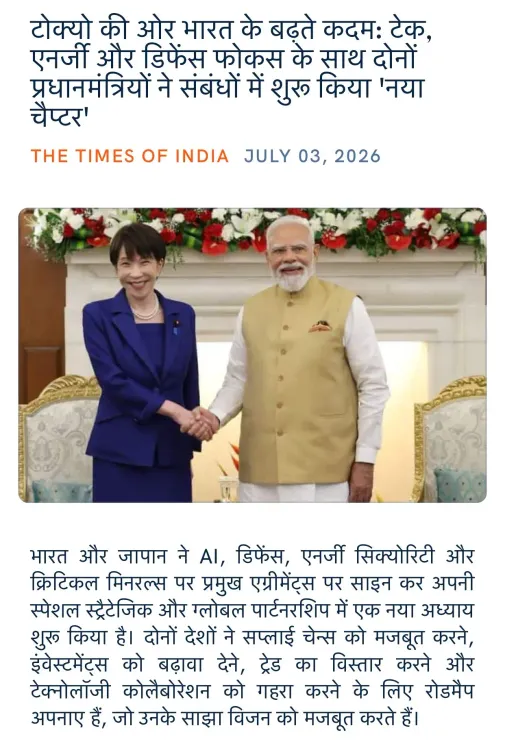
Union Textiles Minister Giriraj Singh shared a media report on Friday, 3 July 2026 highlighting a fresh chapter in India-Japan bilateral ties, centred on cooperation in technology, energy and defence, following a summit between the two countries' prime ministers in Tokyo.
The post, shared via the NaMo App, carried the headline 'टोक्यो की ओर भारत के बढ़ते कदम: टेक, एनर्जी और डिफेंस फोकस के साथ दोनों प्रधानमंत्रियों ने संबंधों में शुरू किया नया चैप्टर' — translated as 'India's advancing steps towards Tokyo: with focus on tech, energy and defence, both prime ministers begin a new chapter in ties.' The minister's decision to amplify the report signals the ruling dispensation's intent to underscore the diplomatic momentum with Japan.
Context
Prime Minister Narendra Modi has visited Japan multiple times since 2014 to deepen what is formally described as a Special Strategic and Global Partnership. The latest Tokyo engagement continues a pattern of annual or near-annual summits that have progressively expanded the bilateral agenda beyond trade into high-technology and security domains. The framing of a 'new chapter' suggests both sides view the current moment as a qualitative upgrade in the relationship.
India and Japan elevated their ties to a Strategic and Global Partnership as far back as 2006 during a landmark visit by then-Japanese Prime Minister Shinzo Abe. That foundation institutionalised the Annual Summit mechanism and set the template for the structured, multi-domain cooperation visible today.
Policy Backdrop
The three pillars highlighted in the post — technology, energy and defence — map directly onto the established architecture of India-Japan engagement. Joint frameworks for research in semiconductors and hydrogen energy have been under discussion across successive summits, reflecting India's strategy to secure supply chains in critical sectors. A 2+2 Foreign and Defence Ministers' dialogue, instituted in 2019, deepened the security and technology collaboration track.
Both countries are also members of the Quad — the quadrilateral grouping with the United States and Australia — which coordinates on regional security and technology standards in the Indo-Pacific. The Tokyo summit therefore carries significance beyond the bilateral, feeding into a broader multilateral architecture that India has been cultivating as part of its Indo-Pacific outreach.
Stakeholders and Impact
Indian tech firms, defence manufacturers and energy companies stand to be the primary beneficiaries if the summit produces actionable agreements. The emphasis on semiconductor collaboration and clean energy is particularly significant given global supply-chain realignments and India's own push to build domestic manufacturing capacity in these sectors. Defence co-development frameworks, if advanced, could also accelerate India's indigenisation goals under programmes such as Make in India.
For Japan, deeper engagement with India offers a strategic hedge in the Indo-Pacific and a large market for its technology and infrastructure exports. The mutual interest in supply-chain security and regional stability has made the partnership increasingly central to both countries' foreign-policy calculus.
What's Next
Attention will now turn to the rollout of any new memoranda of understanding on semiconductor manufacturing, clean-energy projects and defence co-production that may have been signed or announced during the Tokyo summit. Parliamentary scrutiny of technology-transfer clauses and financing arrangements for joint projects is expected to follow. The trajectory of the relationship will also be shaped by the next formal India-Japan Annual Summit and any Quad-level engagements scheduled in the months ahead.
Point of View
But it reflects the BJP government's consistent messaging around India's rising global stature and deepening strategic partnerships. The 'new chapter' framing fits a well-worn diplomatic narrative that successive summits have used, yet the specific focus on semiconductors, hydrogen and defence co-development marks a concrete policy evolution beyond earlier infrastructure-heavy cooperation. For India, the Japan partnership is increasingly a hedge against supply-chain vulnerabilities and a pillar of its Indo-Pacific positioning — making this summit more substantive than ceremonial. The minister's post, while brief, signals that the government wants the Tokyo momentum to register with a domestic audience attuned to economic and security dividends.
NationPress
1 Oct 2026
Frequently Asked Questions
What was discussed at the India-Japan summit in Tokyo in 2026?
The summit focused on deepening cooperation in technology, energy and defence, with both prime ministers described as opening a 'new chapter' in bilateral ties. Specific agreements signed have not yet been officially confirmed in detail.
What is India's relationship with Japan called?
The bilateral relationship is formally designated a Special Strategic and Global Partnership , a status elevated progressively since 2006 when the two countries first formalised a Strategic and Global Partnership during a visit by then-PM Shinzo Abe.
Why did Giriraj Singh share the India-Japan summit news?
As a senior BJP minister and Lok Sabha MP , Giriraj Singh routinely amplifies government diplomatic achievements on social media. Sharing the Tokyo summit report underscores the ruling party's emphasis on India's growing global partnerships.
What is the Quad and how does Japan fit in?
The Quad is a quadrilateral security grouping comprising India, Japan, the United States and Australia . It coordinates on regional security, technology standards and supply-chain resilience in the Indo-Pacific , making India-Japan ties central to the broader grouping's agenda.
What are the key areas of India-Japan cooperation?
Key areas include semiconductor manufacturing, hydrogen and clean energy, defence co-development , infrastructure investment and digital technology. A 2+2 Foreign and Defence Ministers' dialogue launched in 2019 provides a structured forum for security and technology collaboration.