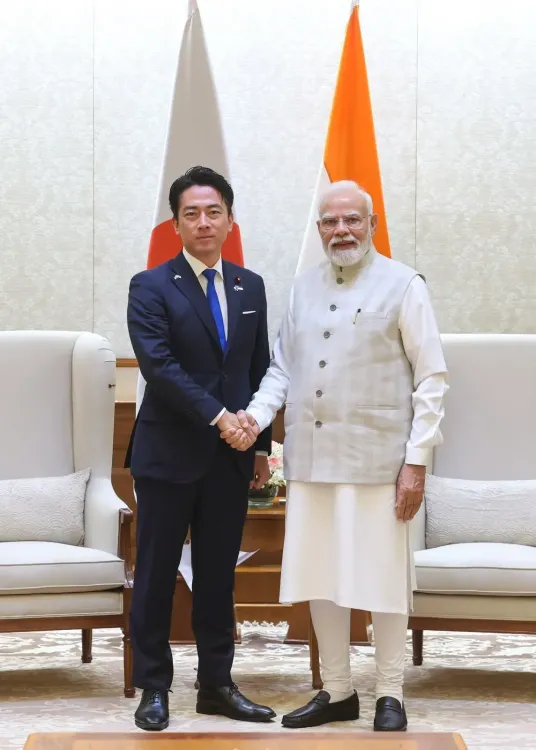
PM Modi meets Japan's Defence Minister Koizumi, eyes deeper Indo-Pacific ties
Synopsis
Prime Minister Narendra Modi met Japanese Defence Minister Shinjiro Koizumi on 20 August 2026, reaffirming the Special Strategic and Global Partnership and discussing deeper defence, security, and Indo-Pacific cooperation — backed by a 2019 2+2 dialogue framework and a 2020 logistics agreement.
Key Takeaways
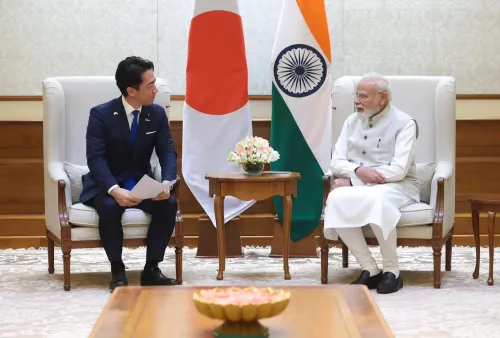
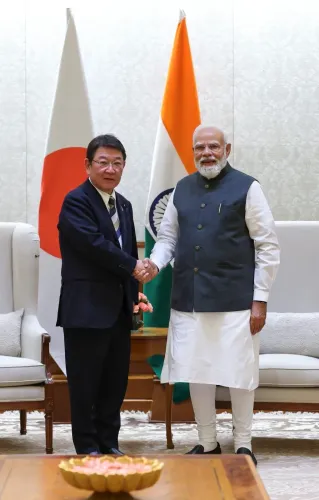
Prime Minister Narendra Modi held talks with Japan's Defence Minister Shinjiro Koizumi on 20 August 2026 .
Both sides reaffirmed the Special Strategic and Global Partnership , upgraded in 2014 , as an anchor for Indo-Pacific peace and stability.
India and Japan have institutionalised security ties through the 2+2 Foreign and Defence Ministerial Dialogue , launched in 2019 .
The Acquisition and Cross-Servicing Agreement (ACSA) , signed in 2020 , enables mutual logistical support during joint military activities.
The bilateral partnership operates within the broader Quad framework alongside the United States and Australia .
The next 2+2 ministerial meeting or annual summit is the key moment to watch for new defence technology or maritime cooperation announcements.
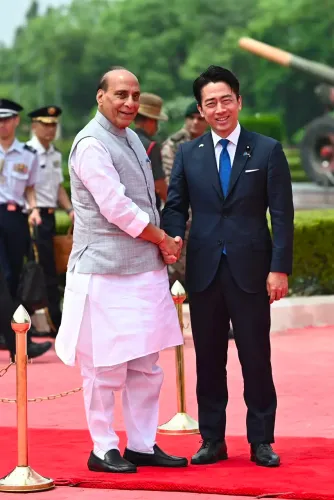
A high-stakes defence conversation landed in New Delhi on Thursday, 20 August 2026, as Prime Minister Narendra Modi sat down with Japan's Defence Minister Shinjiro Koizumi — a meeting that put the spotlight squarely on one of Asia's most consequential security partnerships.
What Modi and Koizumi discussed
Prime Minister Modi described the exchange as 'an excellent conversation on deepening defence and security ties between India and Japan.' He underscored the Special Strategic and Global Partnership — the bilateral framework first elevated in 2014 — as 'an important anchor for peace, stability and prosperity in the Indo-Pacific.' The framing was deliberate: both nations have consistently positioned their relationship not as a bilateral convenience but as a structural pillar of regional order.
The architecture behind the handshake
The meeting sits atop a layered defence architecture built over nearly a decade. In 2019, India and Japan institutionalised high-level security consultations through the 2+2 Foreign and Defence Ministerial Dialogue, bringing together the top diplomatic and defence voices from both sides on a regular basis. A year later, in 2020, the two countries signed the Acquisition and Cross-Servicing Agreement (ACSA), enabling each other's armed forces to access supplies, fuel, and logistical support during joint exercises and operations — a practical enabler that transforms policy intent into operational reality.
Regular military exercises and expanding technology collaboration have steadily filled out the partnership's operational depth. That work feeds directly into the broader Quad framework, where India and Japan coordinate alongside the United States and Australia on maritime security, supply-chain resilience, and emerging technologies.
Why Koizumi's visit matters now
Defence ministerial visits of this kind typically precede or follow substantive decisions — a new logistics pact, a co-development agreement, or a fresh mandate for the next 2+2 session. With Indo-Pacific maritime competition intensifying and both capitals deepening their security postures, the signal from this meeting is clear: the partnership is moving from framework to force. The next annual summit or 2+2 dialogue will be the moment to watch for concrete announcements on defence technology and maritime cooperation.
For India, the Koizumi visit is one more data point in a consistent pattern — building a web of like-minded security partners across the Indo-Pacific, with the Special Strategic and Global Partnership as one of its strongest threads.
Point of View
Operationally grounded defence architecture. By anchoring the conversation in the Special Strategic and Global Partnership, Modi signals that Tokyo occupies a tier-one slot in India's Indo-Pacific strategy — distinct from transactional partnerships. The emphasis on the Indo-Pacific as a shared responsibility also subtly positions both capitals within the Quad's collective security logic, without requiring either side to name adversaries. If the next 2+2 or summit produces a co-development or maritime-domain-awareness agreement, this meeting will be seen as the political clearance that made it possible.
NationPress
5 Oct 2026
Frequently Asked Questions
Who is Shinjiro Koizumi and why did he visit India?
Shinjiro Koizumi is a Japanese politician and member of the Liberal Democratic Party who serves as Japan's Defence Minister. He visited India on 20 August 2026 to hold talks with Prime Minister Narendra Modi on deepening bilateral defence and security ties.
What is the India-Japan Special Strategic and Global Partnership?
The Special Strategic and Global Partnership is the overarching bilateral framework between India and Japan, upgraded in 2014 to reflect enhanced strategic convergence on security, economic, and regional issues, particularly in the Indo-Pacific.
What is the India-Japan 2+2 Ministerial Dialogue?
The 2+2 Foreign and Defence Ministerial Dialogue, launched in 2019, brings together the foreign and defence ministers of both countries to institutionalise high-level security consultations on a regular basis.
What did India and Japan sign in 2020?
In 2020, India and Japan signed the Acquisition and Cross-Servicing Agreement (ACSA), which allows the armed forces of both countries to access each other's supplies, fuel, and logistical support during joint exercises and operations.
How does the India-Japan defence partnership connect to the Quad?
India and Japan are both members of the Quad alongside the United States and Australia. Their bilateral defence cooperation — through exercises, logistics agreements, and the Special Strategic and Global Partnership — feeds directly into the Quad's shared emphasis on a free and open Indo-Pacific.