CM Fadnavis Chairs Water Security Meet in New Delhi
Synopsis
Maharashtra CM Devendra Fadnavis chaired a water resources review in New Delhi with Union Minister C. R. Patil on 27 May 2026, outlining plans to make the state drought-free through Jal Jeevan Mission, PMKSY, river-linking projects, and strengthened conservation schemes including Jalyukt Shivar and Jaltara.
Key Takeaways
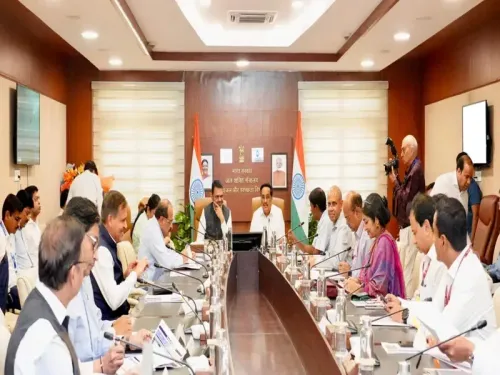
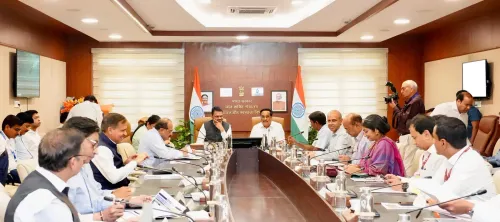
CM Devendra Fadnavis chaired a review of the State Water Resources Department and Jal Jeevan Mission in New Delhi on 27 May 2026 .
The Central Government responded positively to Maharashtra's request for additional support in water infrastructure.
Jal Jeevan Mission , PMKSY , Jal Sanchay Jan Bhagidari , Jaltara , and Jalyukt Shivar Abhiyan are being prioritised to achieve a drought-free state.
The Wainganga–Nalganga river linking project and diversion of westward-flowing rivers to Marathwada and North Maharashtra were discussed as priority inter-basin transfer proposals.
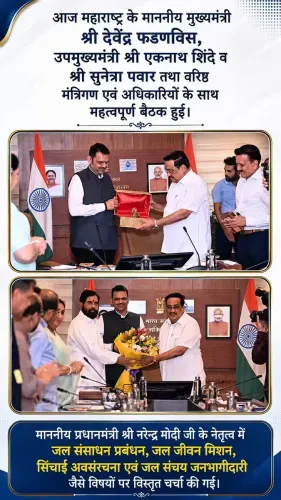
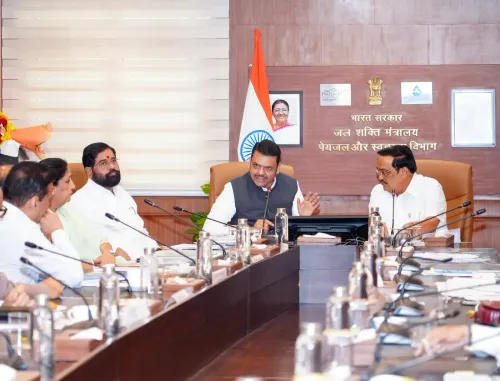
Deputy CMs Eknath Shinde and Sunetra Pawar and three cabinet ministers attended alongside senior officials.
Progress on technical approvals and funding sanctions for river-linking projects will be the key near-term indicator of implementation.
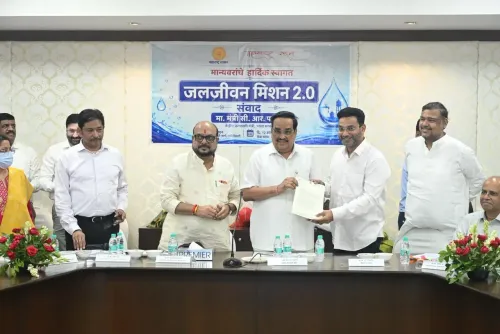
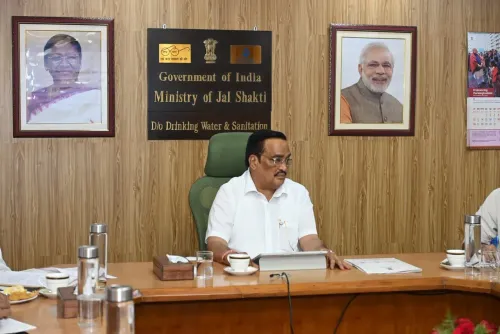
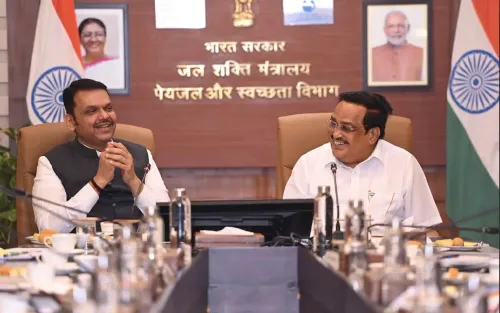
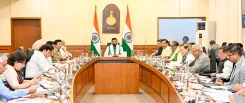
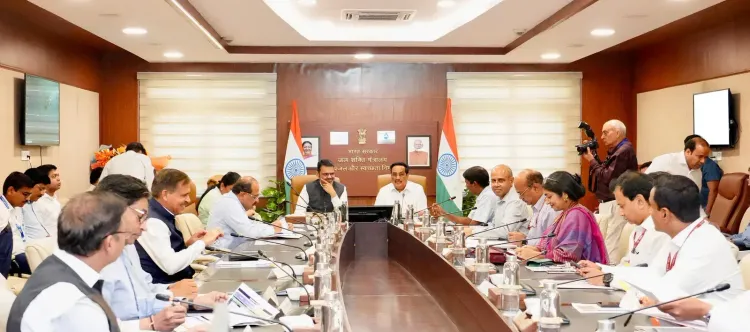
Maharashtra Chief Minister Devendra Fadnavis chaired a high-level review meeting of the State Water Resources Department and Jal Jeevan Mission in New Delhi on Wednesday, 27 May 2026, alongside Union Minister for Jal Shakti C. R. Patil, outlining a strategic roadmap to make Maharashtra drought-free through a convergence of central and state water schemes.
Context
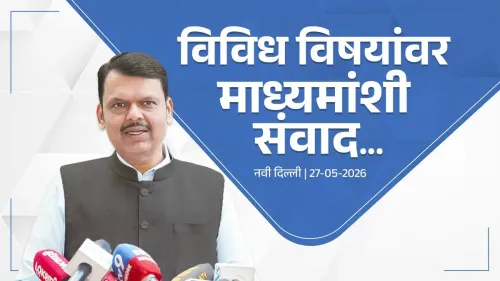
Fadnavis announced that the state would prioritise the Jal Jeevan Mission, Pradhan Mantri Krishi Sinchayee Yojana (PMKSY), Jal Sanchay Jan Bhagidari, and multiple state-level conservation and irrigation programmes to achieve drought-free status. He stated the meeting reviewed all ongoing irrigation projects under PMKSY and that the Central Government had responded positively to Maharashtra's request for additional support in strengthening water infrastructure.
The Chief Minister also reaffirmed the state's commitment to realising Prime Minister Narendra Modi's vision behind the Jal Jeevan Mission, which was launched in 2019 to provide functional household tap connections to rural India. Maharashtra has been among the states with significant rural coverage gaps, particularly in its drought-prone interior districts.
Policy Backdrop
The meeting placed special emphasis on two flagship state-level water conservation initiatives — Jaltara and Jalyukt Shivar Abhiyan — which are being strengthened to enhance water storage at the village level. Jalyukt Shivar Abhiyan, first launched in 2015, focuses on micro-watershed works and has been a cornerstone of Maharashtra's decentralised water conservation strategy.
PMKSY, introduced in 2015, aims to expand the cultivable area under assured irrigation and improve on-farm water use efficiency. Maharashtra has repeatedly sought enhanced central funding under this scheme, particularly for projects targeting the chronically water-scarce Marathwada and Vidarbha regions.
Stakeholders and Impact
The meeting gave priority attention to major river-linking proposals, including the Wainganga–Nalganga river linking project and a proposal to divert westward-flowing rivers towards Marathwada and North Maharashtra. These inter-basin transfer projects are intended to bring water security to regions that have historically faced acute drought conditions and agrarian distress.
The beneficiaries of these combined initiatives span Maharashtra's farming communities, rural households dependent on rain-fed agriculture, and millions of residents in drought-prone districts who lack reliable access to drinking water. Deputy Chief Ministers Eknath Shinde and Sunetra Pawar, along with Ministers Girishbhau Mahajan, Radhakrishna Vikhe Patil, and Gulabrao Patil, were present at the meeting alongside senior officials.
What's Next
The strategic roadmap discussed in New Delhi is expected to translate into formal requests for revised cost-sharing arrangements and expedited environmental and technical clearances for the Wainganga–Nalganga link and the western rivers diversion project. River-interlinking proposals of this scale have been part of India's National Perspective Plan since the early 2000s, with specific Maharashtra components advancing through planning stages over the past decade.
Progress on funding sanctions and technical approvals at upcoming central-state water resources coordination meetings will be the key marker of whether the roadmap moves from policy commitment to ground-level implementation in drought-affected regions.
Point of View
Fadnavis is projecting coalition cohesion on a flagship welfare agenda. The emphasis on river-linking projects — long-pending and technically complex — suggests the state is building a case for expedited clearances and revised central cost-sharing rather than announcing imminent construction. This pattern of high-visibility coordination meetings typically precedes formal budgetary or regulatory requests to the Centre.
NationPress
10 Oct 2026
Frequently Asked Questions
What is the Wainganga–Nalganga river linking project?
The Wainganga–Nalganga river linking project is a proposed inter-basin water transfer in Maharashtra designed to divert surplus water from the Wainganga river in Vidarbha to the water-scarce Nalganga basin, helping irrigate drought-prone districts. It is part of India's broader National Perspective Plan for river interlinking and has been under planning for several years.
What is Jalyukt Shivar Abhiyan?
Jalyukt Shivar Abhiyan is a Maharashtra government water conservation programme launched in 2015 that creates micro-watershed structures such as farm ponds, check dams, and canal deepening works in villages to store rainwater and reduce dependence on monsoon variability. It aims to make villages water-surplus and reduce drought vulnerability.
What is the Jal Jeevan Mission and how does it affect Maharashtra?
The Jal Jeevan Mission is a central government scheme launched in 2019 to provide every rural household in India with a functional tap water connection. In Maharashtra , the mission targets rural households in drought-prone and tribal regions that have historically lacked piped water supply, with the state and Centre sharing implementation costs.
What is Pradhan Mantri Krishi Sinchayee Yojana?
Pradhan Mantri Krishi Sinchayee Yojana (PMKSY) is a national irrigation programme introduced in 2015 to expand the area under assured irrigation and improve water use efficiency at the farm level. Maharashtra has several ongoing projects under this scheme, particularly targeting Marathwada and Vidarbha .
Why is Maharashtra seeking more central support for water infrastructure?
Maharashtra's Marathwada and Vidarbha regions face chronic drought conditions due to low and erratic rainfall combined with limited irrigation coverage. The state has repeatedly sought enhanced central funding and faster clearances for large-scale irrigation and river-linking projects to reduce agrarian distress and improve drinking water availability in these regions.