CM Fadnavis chairs Delhi meet on irrigation, JJM, river linking
Synopsis
Chief Minister Devendra Fadnavis chaired a New Delhi review of Maharashtra's water resources and Jal Jeevan Mission with Union Minister C. R. Patil. The state expects ₹6,800 crore from the Centre and plans to advance the Wainganga-Nalganga river-linking project to make Maharashtra drought-free.
Key Takeaways
CM Devendra Fadnavis chaired a water resources and Jal Jeevan Mission review meeting in New Delhi on 27 May 2026 , with Union Minister C.
Maharashtra expects approximately ₹6,800 crore from the Centre for pipeline and water infrastructure projects, with the Centre giving a positive response.
Schemes more than 75 per cent complete and those between 50 and 75 per cent complete will be prioritised for funding under Jal Jeevan Mission.
The Wainganga-Nalganga river-linking project plans to divert 62 TMC of water annually toward Marathwada and north Maharashtra; tendering awaits Central Water Commission clearance.
A separate plan proposes diverting 75 TMC from the Ulhas basin to Marathwada to address chronic drought.
Maharashtra and Madhya Pradesh have signed an agreement on a 'Mega Recharge' groundwater replenishment project, described as a potential national model.
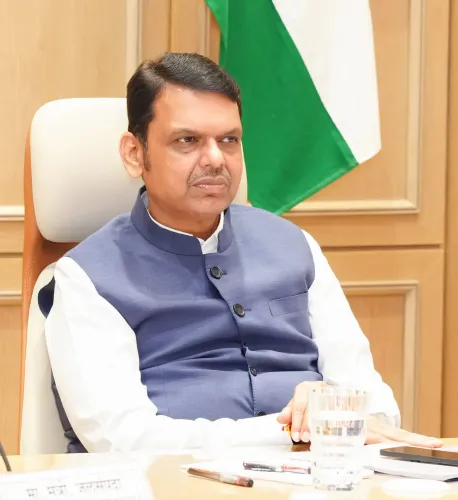
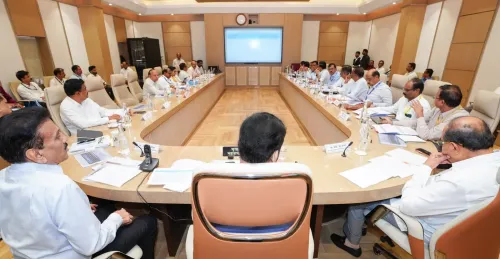
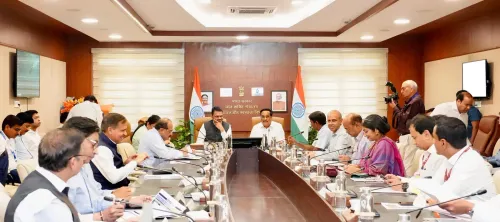
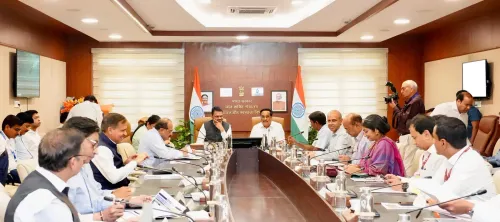
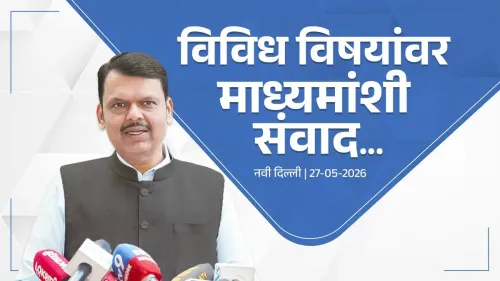
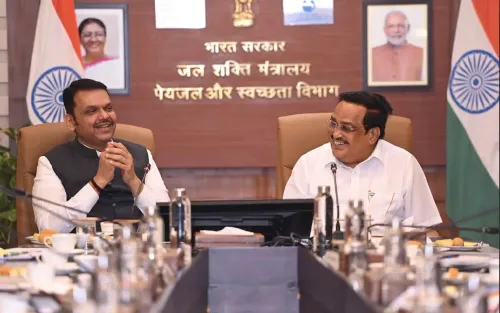
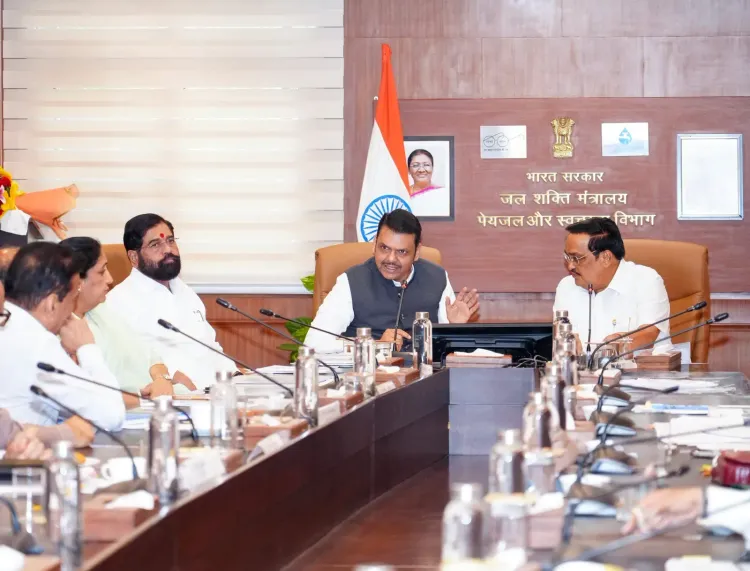
The Chief Minister's Office of Maharashtra announced on Wednesday, 27 May 2026 that Chief Minister Devendra Fadnavis chaired a high-level review meeting in New Delhi covering the state's water resources department and Jal Jeevan Mission, with Union Minister C. R. Patil in prominent attendance. The state said the Centre responded positively to Maharashtra's demands across irrigation, drinking water, and river-linking proposals.
Context
The meeting, held in New Delhi, reviewed progress under the Pradhan Mantri Krishi Sinchayee Yojana (PMKSY) and Jal Jeevan Mission (JJM) — two flagship central schemes that form the backbone of Maharashtra's drought-relief and rural water-supply strategy. State and central officials jointly reviewed 90 per cent of ongoing schemes, identifying gaps and charting corrective action.
CM Fadnavis stated that the state government would give the highest priority to JJM, PMKSY, the Jalasanchay Janbhagidari (community water conservation participation) programme, and various state-level water conservation and irrigation schemes to make Maharashtra drought-free.
Policy Backdrop
Jal Jeevan Mission, launched in 2019, aims to provide piped drinking water to every rural household. Maharashtra has sought central funding to complete remaining works under the scheme. The state expects approximately ₹6,800 crore from the Centre for pipeline and water infrastructure projects, with schemes that are more than 75 per cent complete and those between 50 and 75 per cent complete to be prioritised for funding.
PMKSY, expanded in 2015-16, targets completion of stalled irrigation projects. At the meeting, Maharashtra sought additional funds for incomplete irrigation works under the scheme, and the Centre gave a positive response. Completed water-supply schemes will be verified at village, gram panchayat, taluka, and district levels.
On water conservation, CM Fadnavis said the Jalyukt Shivar Abhiyan — a state programme launched in 2015 to create water-neutral villages — would continue through convergence, while the Jal Tara initiative would be scaled up significantly. Large-scale conservation works would be undertaken using CSR and MGNREGA funds, and the number of Jal Tara structures would be increased.
River Linking and Inter-Basin Transfers
The most ambitious proposals discussed were inter-basin river-linking projects. CM Fadnavis said river linking could 'transform Maharashtra's fortunes,' and directed that intra-state river-linking projects be prioritised. The Wainganga-Nalganga river-linking project plans to divert 62 TMC of the 100 TMC of water that currently flows into the sea every year, directing it toward drought-prone Marathwada and north Maharashtra.
A separate proposal envisages diverting 75 TMC out of 350 TMC of water from the Ulhas basin toward Marathwada. All required studies and reports for these projects have been completed, and tendering will begin after clearance from the Central Water Commission. CM Fadnavis noted that central government assistance would be essential for these large projects.
An agreement between Maharashtra and Madhya Pradesh on a 'Mega Recharge' project for groundwater replenishment was also highlighted, with the Chief Minister describing it as a potential national model.
Stakeholders and What's Next
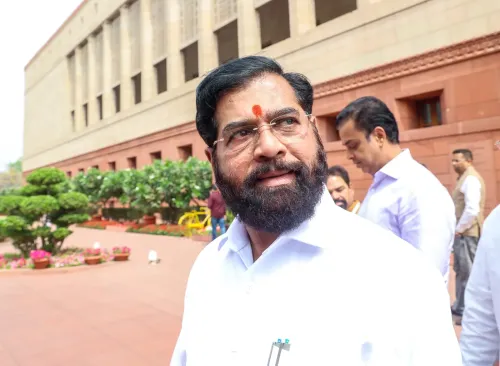
Deputy Chief Ministers Eknath Shinde and Sunetra Ajit Pawar, along with ministers Girish Mahajan, Radhakrishna Vikhe Patil, and Gulabrao Patil, were present at the meeting, underscoring its political weight. Senior officials from both state and central governments also attended.
The immediate next steps hinge on Central Water Commission clearance for the Wainganga-Nalganga and Ulhas diversion projects, after which tendering will commence. Disbursement of the expected ₹6,800 crore under JJM and village-level verification of completed schemes will be closely watched. If the river-linking projects advance on schedule, they hold the potential to structurally end recurring drought in Marathwada and parts of north Maharashtra — a goal that has eluded the state for decades.
Point of View
Time-bound projects ahead of Maharashtra's recurring drought season. By personally chairing the review alongside a Union Minister, Fadnavis is leveraging the state's alignment with the ruling dispensation at the Centre to fast-track clearances and funds that have historically stalled at the bureaucratic level. The emphasis on river-linking — particularly the Wainganga-Nalganga corridor — marks an escalation from incremental conservation to structural redistribution of water, a politically potent promise in perennially drought-hit Marathwada. The meeting's broad ministerial attendance, including both Deputy Chief Ministers, also signals coalition cohesion on a development agenda that cuts across factional lines within the ruling alliance.
NationPress
19 Sept 2026
Frequently Asked Questions
What was decided at the Maharashtra water resources review meeting in New Delhi?
The meeting reviewed progress under Jal Jeevan Mission and PMKSY, with the Centre giving a positive response to Maharashtra's request for additional funds. The state expects approximately ₹6,800 crore for pipeline and water infrastructure, and priority funding will go to schemes that are more than 50 per cent complete.
What is the Wainganga-Nalganga river-linking project?
The Wainganga-Nalganga project proposes to divert 62 TMC of water — out of 100 TMC that currently flows into the sea annually — toward drought-prone Marathwada and north Maharashtra. All studies and reports are complete, and tendering will begin after Central Water Commission clearance.
How much money is Maharashtra expecting from the Centre for Jal Jeevan Mission?
Maharashtra expects approximately ₹6,800 crore from the central government to complete pipeline and water supply infrastructure projects under Jal Jeevan Mission, with priority given to schemes that are more than 75 per cent complete.
What is the Jal Tara initiative in Maharashtra?
Jal Tara is a Maharashtra water conservation initiative that CM Fadnavis has said will be scaled up significantly, with more structures to be built using CSR and MGNREGA funds to support long-term drought relief.
What is the Maharashtra-Madhya Pradesh Mega Recharge project?
Maharashtra and Madhya Pradesh have signed an agreement on a 'Mega Recharge' project aimed at groundwater replenishment. CM Fadnavis described it as a potential national model for aquifer recharge.