Jal Shakti Minister Paatil Meets Maharashtra CM Fadnavis on Water Schemes
Synopsis
Union Jal Shakti Minister C. R. Paatil met Maharashtra Chief Minister Devendra Fadnavis and senior state ministers on 27 May 2026 to review Jal Jeevan Mission progress, irrigation infrastructure, and Jal Sanchay Jan Bhagidari Yojana implementation, with all district collectors joining via video conference.
Key Takeaways
Union Jal Shakti Minister C.
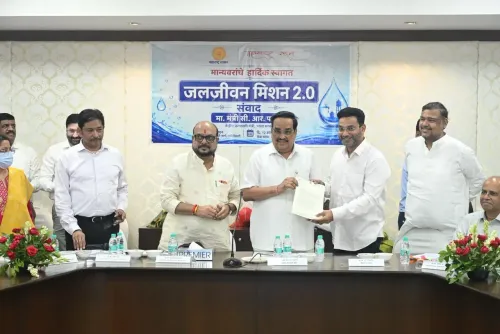
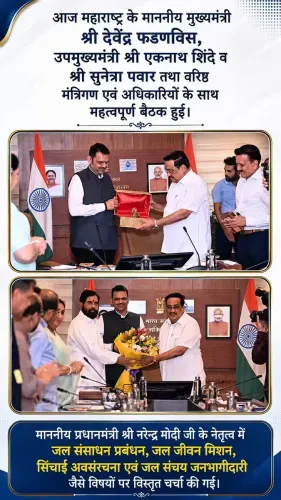
Paatil chaired a coordination meeting with Maharashtra CM Devendra Fadnavis and Deputy CMs Eknath Shinde and Sunetra Pawar on 27 May 2026 .
Discussions focused on Jal Jeevan Mission , water resource management, irrigation infrastructure strengthening, and the Jal Sanchay Jan Bhagidari Yojana .
All district collectors, municipal commissioners, and district council CEOs across Maharashtra participated via video conferencing .
Senior Maharashtra ministers Radhakrishna Vikhe Patil , Girish Mahajan , and Gulabrao Patil were part of the delegation.
The meeting reflects the Centre's cooperative federalism approach to ensuring saturation coverage of welfare water infrastructure.
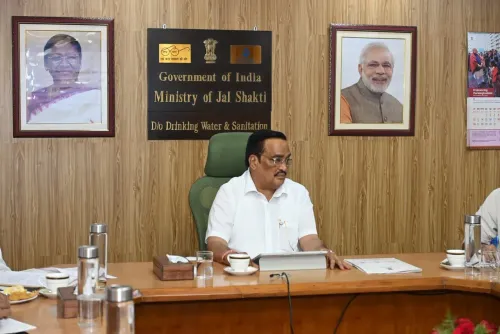
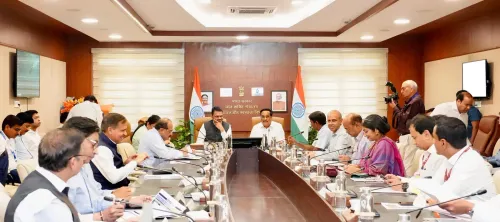
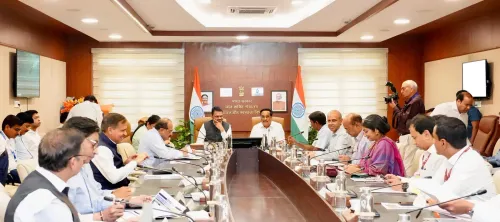
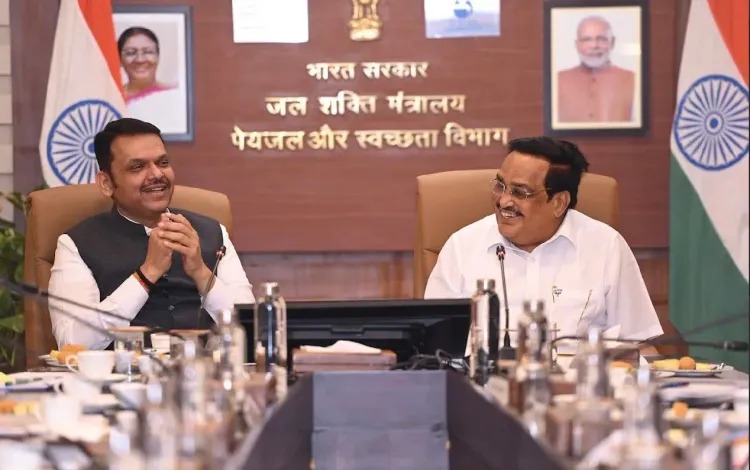
Union Jal Shakti Minister C. R. Paatil held a high-level coordination meeting with Maharashtra Chief Minister Devendra Fadnavis, Deputy Chief Ministers Eknath Shinde and Sunetra Pawar, and senior state ministers on Wednesday, 27 May 2026, to advance the implementation of central water schemes in the state. The meeting covered key areas including water resource management, the Jal Jeevan Mission, irrigation infrastructure strengthening, and the Jal Sanchay Jan Bhagidari Yojana.
Context
Minister Paatil announced the meeting on X, noting that senior Maharashtra ministers — Radhakrishna Vikhe Patil, Girish Mahajan, and Gulabrao Patil — along with other senior delegation members were present. All district collectors, municipal commissioners, and chief executive officers of district councils across Maharashtra joined via video conferencing, underscoring the state-wide scope of the coordination exercise.
In his post, Paatil stated that under the 'दूरदर्शी नेतृत्व' ('visionary leadership') of Prime Minister Narendra Modi, both the central and state governments are working with commitment to ensure that the benefits of schemes reach every individual. He described the discussions as advancing that shared resolve.
Policy Backdrop
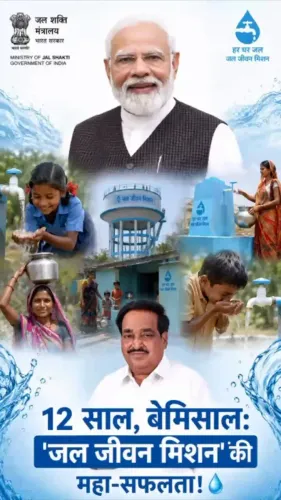
The Jal Jeevan Mission, launched in August 2019, is the flagship central programme to provide functional household tap connections to all rural households in India. The Ministry of Jal Shakti was itself formed in May 2019 by merging the erstwhile ministries of water resources and drinking water and sanitation, consolidating India's water governance under a single administrative roof.
The Jal Sanchay Jan Bhagidari Yojana is a community-participation initiative aimed at promoting decentralised water conservation and storage. These schemes together represent a multi-pronged approach to addressing India's water security challenges, with irrigation infrastructure acting as the third pillar alongside drinking water supply and conservation.
Maharashtra, with a large rural population and historically significant irrigation backlog, has been a priority state for central water investment. Coordination meetings between the Union ministry and state governments are a standard mechanism under the cooperative federalism model to align targets, resolve implementation bottlenecks, and accelerate saturation coverage.
Stakeholders and Impact
Rural households across Maharashtra stand to be the primary beneficiaries of improved Jal Jeevan Mission implementation, as the programme targets last-mile tap water connectivity. The state's farming community also has a direct stake in the strengthening of irrigation infrastructure, which can reduce dependence on erratic monsoon patterns.
The inclusion of every district collector and municipal commissioner via video conferencing signals that implementation accountability is being pushed down to the district level. This approach is designed to reduce the gap between policy sanction and on-ground delivery, particularly in remote and water-stressed districts.
What's Next
The ministry and the Maharashtra government are expected to follow up on the discussions with specific action points on pending Jal Jeevan Mission household connections and irrigation project approvals. Quarterly progress reports on tap-water coverage in Maharashtra's rural districts will be a key indicator of whether the coordination translates into accelerated outcomes on the ground.
Point of View
The Jal Shakti Ministry is signalling that it is tracking implementation at granular administrative levels, not just state capitals. For Maharashtra, a state with a historically large irrigation backlog and significant rural water-access gaps, this kind of direct central pressure can accelerate disbursals and project completions. The meeting also reinforces the political optics of Centre-state alignment under the ruling alliance, with the Mahayuti government in Maharashtra visibly coordinating with the Union cabinet on welfare delivery.
NationPress
24 Sept 2026
Frequently Asked Questions
What was discussed in the Jal Shakti Minister meeting with Maharashtra government?
The meeting on 27 May 2026 covered Jal Jeevan Mission progress, water resource management, irrigation infrastructure strengthening, and the Jal Sanchay Jan Bhagidari Yojana, along with the effective implementation of central welfare schemes in Maharashtra.
What is the Jal Jeevan Mission and its status in Maharashtra?
The Jal Jeevan Mission, launched in August 2019, aims to provide functional household tap water connections to all rural households in India. Maharashtra is a priority state for the mission given its large rural population and ongoing water access needs.
Who attended the Jal Shakti Ministry meeting with Maharashtra on 27 May 2026?
The meeting was attended by Chief Minister Devendra Fadnavis, Deputy Chief Ministers Eknath Shinde and Sunetra Pawar, senior ministers Radhakrishna Vikhe Patil, Girish Mahajan, and Gulabrao Patil, along with all district collectors and municipal commissioners who joined via video conferencing.
What is the Jal Sanchay Jan Bhagidari Yojana?
The Jal Sanchay Jan Bhagidari Yojana is a central government initiative that promotes community participation in water conservation and storage projects, aiming to build decentralised water infrastructure at the local level.
Why does the Union Jal Shakti Ministry hold coordination meetings with state governments?
These meetings are part of the cooperative federalism model, used to align state implementation with central scheme targets, resolve on-ground bottlenecks, and ensure that welfare benefits in areas like drinking water and irrigation reach intended beneficiaries.