Russia warns foreign troops in Ukraine are legitimate targets amid NATO drills
Synopsis
Russia has put Western nations on direct notice: any foreign troops deployed in Ukraine under the 'Coalition of the Willing' or any other framework will be treated as legitimate military targets. The warning lands on the eve of both multinational NATO drills inside Ukraine and a high-stakes US-Russia-Ukraine diplomatic meeting in Abu Dhabi — a collision of military signalling and diplomacy that could define the war's next phase.
Key Takeaways
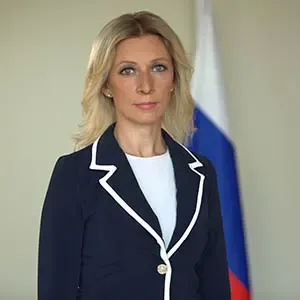
Russia declared foreign military units in Ukraine will be treated as legitimate targets, according to Foreign Ministry spokesperson Maria Zakharova on 8 November .
The warning was directed at the 'Koalicja 26.2' multinational military exercises planned for 9–22 November in Ukraine.
Zakharova accused Britain and France of seeking to maintain a military foothold in Ukraine to inflict a defeat on Russia.
The 'Coalition of the Willing' multinational force was announced after a Kyiv meeting on 24 August 2026 .
US, Russian, and Ukrainian negotiators are set to meet in Abu Dhabi on 10–11 November , with Steve Witkoff confirmed as US special envoy.
Ukraine peace talks had stalled after US-Israel strikes on Iran in February and only resumed in September 2026 .
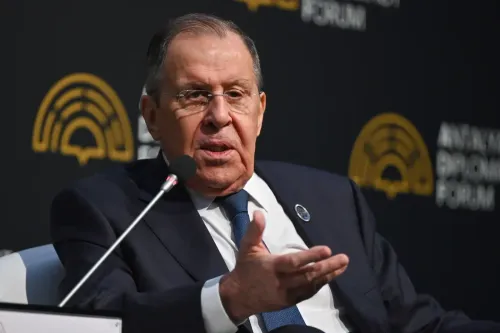
Russia has declared that any foreign military units deployed in Ukraine will be treated as legitimate targets, Russian Foreign Ministry spokesperson Maria Zakharova said on Saturday, 8 November, warning that such deployments would deepen the conflict and pose direct security threats to Moscow. The statement came as multinational military exercises involving Western forces were set to begin inside Ukrainian territory.
What Russia Said
Zakharova issued the warning in direct response to the 'Koalicja 26.2' military exercises — a multinational drill scheduled for 9 to 22 November in Ukraine. She accused Western nations of deliberately ignoring Russia's security concerns and stoking tensions in the region.
'We reiterate once again that the deployment of foreign military contingents in Ukraine is categorically unacceptable — whether under the auspices of a so-called 'Coalition of the Willing' or any other grouping,' Zakharova said, adding that such intervention would generate additional security threats to Russia.
She further alleged that Britain and France were seeking to maintain a foothold in Ukraine through the deployment of multinational forces, with the aim of confronting Russia and inflicting a military defeat on the country. Zakharova also argued that the exercises would deepen the involvement of European NATO members in the conflict.
Background: Coalition of the Willing
According to the Russian Foreign Ministry, the creation of the multinational force in Ukraine was formally announced following a 'Coalition of the Willing' meeting held in Kyiv on 24 August 2026. Russia has consistently opposed any formalised Western military presence inside Ukraine, viewing it as a direct escalation of the conflict beyond its current boundaries.
Notably, the timing of the drills — beginning on the eve of fresh diplomatic talks — drew sharp criticism from Moscow. Zakharova argued that the scheduling of the exercises demonstrated that European countries had effectively disqualified themselves from any seat at the negotiating table.
Abu Dhabi Talks on the Horizon
US, Russian, and Ukrainian negotiators are set to meet in Abu Dhabi on 10 and 11 November, according to US special envoy Steve Witkoff. The talks represent a significant moment in a turbulent year for Ukraine's peace process, which stalled after the United States and Israel began striking Iran in February and only resumed in September, when Witkoff and fellow envoy Jared Kushner met Russian President Vladimir Putin in Moscow before travelling to Kyiv for their first visit as negotiators.
What Happens Next
The convergence of the multinational military exercises and the Abu Dhabi diplomatic talks creates a volatile backdrop for any ceasefire negotiations. Russia's framing of the drills as a provocation signals that Moscow may use the exercises as leverage in the talks — or as justification for a fresh military escalation. Whether the Coalition of the Willing presses ahead with troop deployments following the talks will be a critical test of Western resolve and diplomatic coherence in the months ahead.
Point of View
Conducting exercises on its soil, and being excluded from the diplomatic table by Washington and Moscow — a posture that is strategically incoherent and increasingly untenable.
NationPress
8 Nov 2026
Frequently Asked Questions
Why did Russia warn that foreign troops in Ukraine are legitimate targets?
Russia issued the warning in response to the 'Koalicja 26.2' multinational military exercises planned for 9–22 November inside Ukraine. Spokesperson Maria Zakharova said any foreign military contingent deployed in Ukraine — under the Coalition of the Willing or any other framework — would be treated as a legitimate military target and would create additional security threats to Russia.
What are the 'Koalicja 26.2' military exercises?
The 'Koalicja 26.2' exercises are multinational military drills scheduled to take place in Ukraine from 9 to 22 November. Russia has linked them to the broader Coalition of the Willing initiative announced after a meeting in Kyiv on 24 August 2026, which aims to deploy a multinational force inside Ukraine.
What are the Abu Dhabi talks and who is attending?
US, Russian, and Ukrainian negotiators are set to meet in Abu Dhabi on 10 and 11 November, according to US special envoy Steve Witkoff. The talks are a resumption of a peace process that stalled earlier in 2026 and revived in September after Witkoff and Jared Kushner met President Vladimir Putin in Moscow.
What role are Britain and France playing in Ukraine?
According to Zakharova, Britain and France are seeking to maintain a military foothold in Ukraine through the deployment of multinational forces, with the goal of confronting Russia and inflicting a military defeat. Both countries are key members of the Coalition of the Willing that announced the multinational force in August 2026.
Why does Russia say European countries have no place at the negotiating table?
Zakharova argued that the scheduling of the Koalicja 26.2 exercises to begin on the eve of the Abu Dhabi consultations demonstrated that European nations were prioritising military escalation over diplomacy, effectively disqualifying themselves from the peace process. The Abu Dhabi talks are being held between the US, Russia, and Ukraine — without direct European participation.