Lavrov warns Western troops in Ukraine would mean direct war with Russia
Synopsis
Russia's top diplomat has drawn an explicit red line: Western boots on Ukrainian soil equal a declaration of war. Yet in the same breath, Lavrov signalled openness to US-mediated talks — a dual-track posture that keeps Moscow's options open while escalating pressure on European capitals debating troop deployments to Ukraine.
Key Takeaways
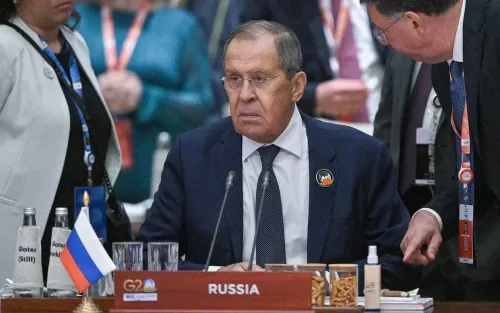
Russian Foreign Minister Sergei Lavrov warned on 17 September that deploying Western troops in Ukraine would be treated as a direct declaration of war against Russia .
Lavrov said any war involving a European attack on Russia 'will be very short,' signalling Moscow's confidence in its military deterrent.
Russia has reaffirmed it will not accept NATO presence on its borders as part of any settlement framework.
Moscow says it is open to a US -proposed trilateral negotiation format and has 'never rejected talks.' Lavrov credited the US with better understanding the 'root causes' of the conflict compared to other Western nations — a notable diplomatic distinction.
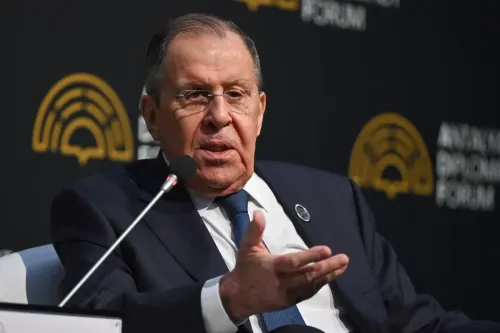
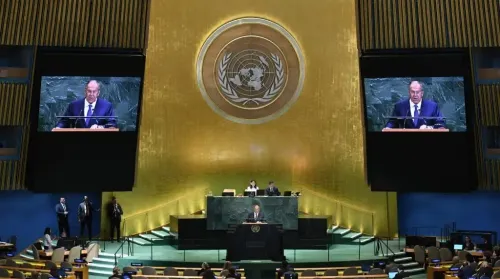
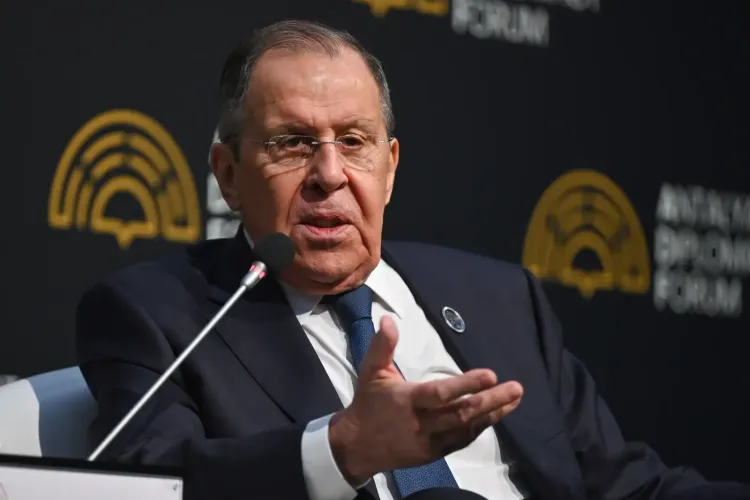
Russian Foreign Minister Sergei Lavrov on Wednesday, 17 September warned that Moscow would treat any deployment of Western troops on Ukrainian territory as a declaration of direct war against Russia. The remarks, made at the International Festival of Youth in Yekaterinburg, represent one of the Kremlin's sharpest public warnings to European capitals in recent months.
Lavrov's Warning to Europe
'Let me emphasise that we have no interest in getting involved in this, but if Europe, which talks every day about preparing for war against Russia, attacks the Russian Federation, that will be a completely different war, and it will be very short,' Lavrov said at the festival.
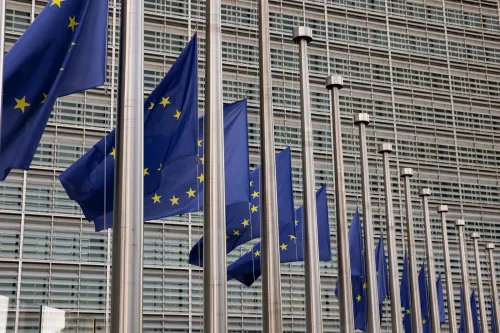
The warning came amid ongoing European discussions about potential security deployments to Ukraine as part of a broader post-conflict or ceasefire framework. Several European nations have publicly mooted sending troops in a peacekeeping or reassurance capacity, a prospect Moscow has consistently and firmly rejected.
Russia's Conditions for a Settlement
Lavrov stated that Russia remains open to a diplomatic resolution, including a trilateral format that the United States had proposed. However, he made clear that any settlement must fulfil the objectives set at the outset of the conflict and address what Moscow calls its 'root causes.'
'Therefore, for us, addressing the root causes of threats and protecting the rights of Russian people, their right to their native language and Orthodox faith, are absolutely clear and well-defined objectives of the special military operation,' he said.
Lavrov further argued that achieving these goals, as formulated by President Vladimir Putin, would 'not only resolve this crisis but also improve the situation across the entire Eurasian continent.' He framed the desired outcome as a world order 'rooted in a balance of interests and international rules.'
NATO Presence Remains a Red Line
A day earlier, on Tuesday, during an ambassadorial roundtable on the Ukrainian settlement, Lavrov reiterated that Russia is prepared to seek compromises but has not shifted its fundamental position on barring NATO from its borders.
'We are ready, within this position, to seek reasonable compromises, but fundamentally we have not changed our objectives — to ensure our security, to prevent NATO's presence on our borders,' he said.
This hardline stance on NATO expansion has been a consistent thread in Moscow's public posture since the conflict began in February 2022, and its repetition signals that security architecture in eastern Europe remains the central sticking point in any potential negotiation.
Russia's Stance on US Mediation
Lavrov offered a notably warmer assessment of Washington's role compared to other Western capitals. He said Russia welcomes US interest in facilitating a settlement, adding that 'the main thing is that the United States understands the root causes of this conflict, unlike all other Western countries.'
Lavrov also reaffirmed that Russia has never rejected talks and is prepared to engage in both bilateral and trilateral formats. This positioning suggests Moscow is keeping diplomatic channels open while maintaining maximalist public demands — a pattern that has characterised its approach throughout the conflict.
What Comes Next
The remarks come at a moment of heightened diplomatic activity around the Ukraine conflict, with the US signalling renewed interest in brokering talks. However, Lavrov's insistence on fulfilling the original objectives of the military operation leaves little apparent room for the kind of territorial compromise that a negotiated settlement would likely require. European governments and Kyiv will be watching closely for any concrete follow-up from either Washington or Moscow.
Point of View
Not a departure from script — Moscow has used the threat of direct confrontation to deter European troop deployments since 2022. What is notable here is the simultaneous diplomatic outreach: praising US engagement while threatening Europe creates a wedge that Russia has consistently tried to exploit within the Western alliance. The trilateral format endorsement is also a signal that Moscow sees Washington as the only interlocutor worth engaging, sidelining European agency in any peace process. Whether that wedge holds as US election cycles and European security anxiety shift remains the critical variable.
NationPress
17 Sept 2026
Frequently Asked Questions
What did Lavrov say about Western troops in Ukraine?
Lavrov warned on 17 September that Russia would consider any deployment of Western troops on Ukrainian territory a declaration of direct war. Speaking at the International Festival of Youth in Yekaterinburg, he said such a war 'will be very short,' signalling Moscow's confidence in its military position.
Is Russia open to peace talks on Ukraine?
Yes, according to Lavrov, Russia has never rejected talks and is prepared to negotiate in both bilateral and trilateral formats, including one proposed by the United States. However, Moscow insists any settlement must fulfil its original military objectives and address what it calls the root causes of the conflict.
What is Russia's position on NATO membership for Ukraine?
Russia has stated it will not accept NATO's presence on its borders as a non-negotiable red line. Lavrov reiterated on Tuesday that while Moscow is ready to seek 'reasonable compromises,' preventing NATO expansion eastward remains a fundamental and unchanged objective.
Why does Lavrov treat the US differently from other Western countries?
Lavrov said the United States 'understands the root causes of this conflict, unlike all other Western countries,' suggesting Moscow views Washington as a more credible interlocutor for negotiations. This framing is consistent with Russia's long-standing strategy of trying to separate the US from its European allies on Ukraine policy.
What are Russia's stated objectives in the Ukraine conflict?
According to Lavrov, Russia's objectives include ensuring its own security, preventing NATO from establishing a presence on its borders, and protecting the rights of Russian-speaking people in Ukraine — including their right to their native language and Orthodox faith. These are described as the goals of what Moscow calls its 'special military operation.'