Lavrov: West Has Declared Open War on Russia via Ukraine
Synopsis
Russian Foreign Minister Sergey Lavrov declared that the West has openly declared war on Russia using Ukraine as a 'spearhead', while the EU approved a €90 billion loan to Kyiv — with €60 billion earmarked for defence. Lavrov also warned that Europe risks triggering a third global conflict, echoing the origins of both World Wars.
Key Takeaways
Russian Foreign Minister Sergey Lavrov declared on April 24 that the West has openly declared war on Russia , using Ukraine as a frontline 'spearhead.' A senior official from the Belgian General Staff reportedly stated that Belgium is preparing for war with Russia , with Ukraine buying time for European readiness.
The European Union approved a €90 billion loan to Ukraine — €60 billion of which is allocated for defence industrial capacity and weapons procurement.
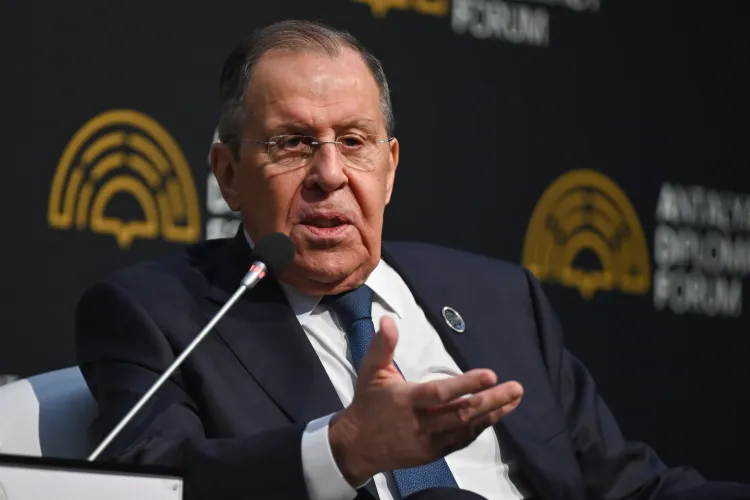
Lavrov warned at the Antalya Diplomatic Forum on April 18 that Europe risks triggering a third global conflict, referencing the origins of World War I and World War II .
More than 180 criminal cases have been filed against Ukrainian Orthodox Church clergy, including four bishops , according to figures cited by Lavrov .
The European Council simultaneously adopted the 20th package of sanctions against Russia , further restricting Moscow 's war-making capabilities.
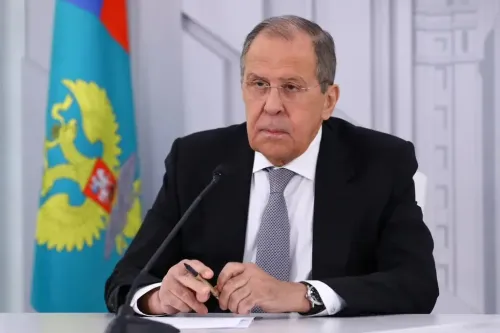
Russian Foreign Minister Sergey Lavrov declared on Friday, April 24, that Western nations have effectively declared open war on Russia, using Ukraine as a frontline instrument. Lavrov made these explosive remarks during a meeting with representatives of Russian non-governmental organisations, escalating Moscow's rhetorical posture against the West at a critical juncture in the ongoing conflict.
Lavrov's Core Accusation: Ukraine as the West's 'Spearhead'
Lavrov stated unequivocally: "Open war has been declared against us. The Kyiv regime is being used as a 'spearhead'. But everyone knows that this 'spearhead' is helpless without the material support of Western weapons, intelligence data, satellite systems, assistance in training military personnel, and much more."
The remarks signal a deliberate escalation in Moscow's framing of the conflict — shifting from a narrative of a bilateral Russia-Ukraine war to one of a direct confrontation between Russia and the collective Western alliance. This framing has significant strategic implications, as it provides Moscow a rhetorical basis to justify broader military responses.
Lavrov also pointed to a statement by a senior official from the Belgian General Staff, who reportedly declared publicly that Belgium is preparing for war with Russia, and that Ukraine is helping European nations buy time for that preparation.
Religious and Cultural Dimensions of the Conflict
At a reception marking Orthodox Easter on April 22, Lavrov charged that Satanism is currently "flourishing" in the West and Ukraine, accusing European countries of supporting what he called Kyiv's "legalised sacrilege."
He alleged that for over 10 years, the Ukrainian Orthodox Church has faced relentless persecution — including seizure of churches, vandalism, and attacks on clergy and parishioners. According to Lavrov, official data from the Kyiv administration shows that more than 180 criminal cases have been opened against clergy, including four bishops.
This religious framing is not new — Moscow has consistently used the Ukrainian Orthodox Church issue to build domestic and international support for its military campaign, positioning the conflict as a civilisational and spiritual battle rather than a purely geopolitical one.
Lavrov's Warning at the Antalya Diplomatic Forum
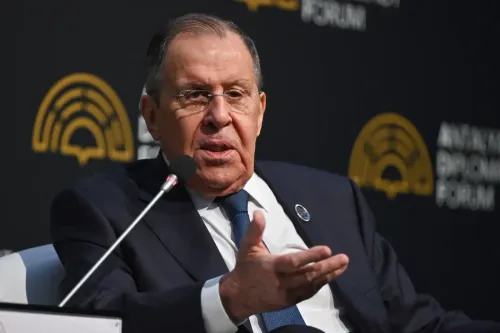
Speaking at the Antalya Diplomatic Forum on April 18, Lavrov issued a stark historical warning: "For the third time in modern human history, a global threat will originate from Europe. And they are now doing everything they can to ensure that Ukraine becomes the trigger for this global threat."
The reference to "the third time" is a pointed allusion to World War I and World War II — both of which originated in Europe — suggesting Moscow believes the current trajectory could lead to a third global conflict. This kind of language is calibrated to alarm neutral nations, particularly in the Global South, where Russia has been actively courting diplomatic sympathy.
EU Finalises €90 Billion Loan to Ukraine
Adding fuel to Moscow's accusations, the European Union on Thursday formally approved a massive €90 billion loan package for Ukraine. Of this, €30 billion is earmarked for macroeconomic stabilisation, while a substantial €60 billion will be directed toward defence industrial capacity — including the procurement of weapons and military equipment.
European Council President Antonio Costa announced the loan on X (formerly Twitter), writing: "Europe stands firm, united and unwavering in its support to Ukraine." He also confirmed that the European Council adopted the 20th package of sanctions against Russia, aimed at further degrading Moscow's capacity to sustain military operations.
The scale of the loan — particularly the €60 billion defence component — directly validates Lavrov's argument that the West is not merely providing diplomatic support but is now a material co-belligerent in all but formal declaration. Critics in Europe and beyond are increasingly questioning whether such financial and military commitments cross the threshold into direct conflict participation under international law.
Broader Implications and What Comes Next
The convergence of Lavrov's war declarations, the Belgian General Staff comments, and the EU's €90 billion commitment marks a dangerous new phase in the Russia-Ukraine conflict. NATO member states are now openly discussing war preparedness, and the rhetorical distance between proxy conflict and direct confrontation is narrowing rapidly.
For India and other non-aligned nations, the escalation presents a deepening diplomatic dilemma — balancing longstanding ties with Moscow against growing economic and strategic partnerships with Western Europe and the United States. New Delhi has thus far maintained its policy of strategic autonomy, but increasing pressure from both sides could test that position in the months ahead.
As the EU's defence funding begins flowing into Ukrainian military infrastructure and Russia continues to frame the conflict as an existential civilisational war, the prospects for a negotiated settlement appear more distant than ever. All eyes will be on upcoming NATO summits and any back-channel diplomatic developments that could shift the trajectory of the conflict.
Point of View
Particularly its €60 billion defence component, hands Moscow exactly the optics it needs to frame Europe as a co-belligerent. What the mainstream Western narrative consistently underplays is how this escalatory loop — where each Western commitment triggers a sharper Russian response — is systematically eliminating the space for diplomacy. For India and the Global South, the real danger is being forced to choose sides in a conflict where neither bloc is offering a credible path to peace.
NationPress
19 Sept 2026
Frequently Asked Questions
What did Lavrov mean when he said the West declared war on Russia?
Russian Foreign Minister Sergey Lavrov stated that Western nations have effectively declared open war on Russia by supplying Ukraine with weapons, intelligence, satellite data, and military training. He described Ukraine as a 'spearhead' that is entirely dependent on Western material support to sustain the conflict.
How much money has the EU approved for Ukraine in 2025?
The European Union finalised a €90 billion loan to Ukraine, with €30 billion for macroeconomic support and €60 billion directed toward defence industrial capacity, including weapons procurement. The announcement was made by European Council President Antonio Costa on Thursday.
What did Lavrov say about a third world war originating from Europe?
Speaking at the Antalya Diplomatic Forum on April 18, Lavrov warned that for the third time in modern history, a global threat could originate from Europe, referencing World War I and World War II. He accused Western powers of positioning Ukraine as the trigger for this potential global conflict.
What sanctions has the EU imposed on Russia recently?
The European Council adopted the 20th package of sanctions against Russia, aimed at reducing Moscow's capacity to wage war. European Council President Antonio Costa confirmed the sanctions alongside the €90 billion Ukraine loan announcement.
What allegations did Lavrov make about the Ukrainian Orthodox Church?
Lavrov claimed that for over 10 years, the Ukrainian Orthodox Church has faced persecution including church seizures, vandalism, and attacks on clergy and parishioners. He cited official data indicating more than 180 criminal cases have been opened against clergy, including four bishops.