Yadav Backs 'Catch The Rain' in Mann Ki Baat Week
Synopsis
Union Environment Minister Bhupender Yadav on 26 July 2026 amplified the 'Catch The Rain' campaign during Mann Ki Baat week, urging Indians to harvest rainwater at the source. The call links Environment Ministry messaging with India's long-running Jal Shakti water conservation drive at the peak of the monsoon season.
Key Takeaways
Union Environment Minister Bhupender Yadav posted on 26 July 2026 in support of the 'Catch The Rain' campaign, referencing Mann Ki Baat .
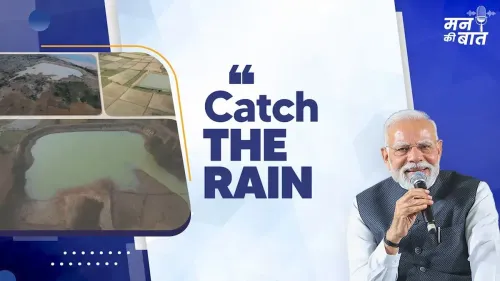
The campaign's core message: conserve water where it rains and when it rains , emphasising decentralised, community-level action.
Catch The Rain was launched in 2021 by the Ministry of Jal Shakti to promote rainwater harvesting nationwide.
It builds on the Jal Shakti Abhiyan of 2019 , which targeted water-stressed districts for aquifer recharge and conservation.
Key beneficiaries include farmers, urban residents, and local bodies across India.
Post-monsoon 2026 groundwater reports will be a critical measure of campaign effectiveness.
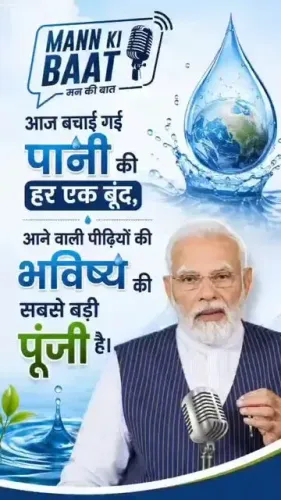
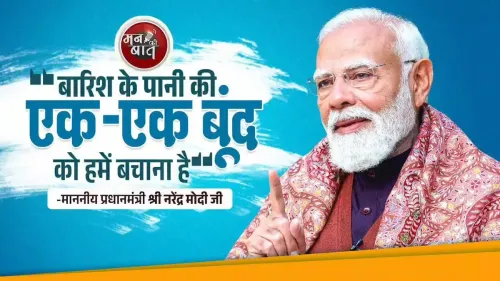
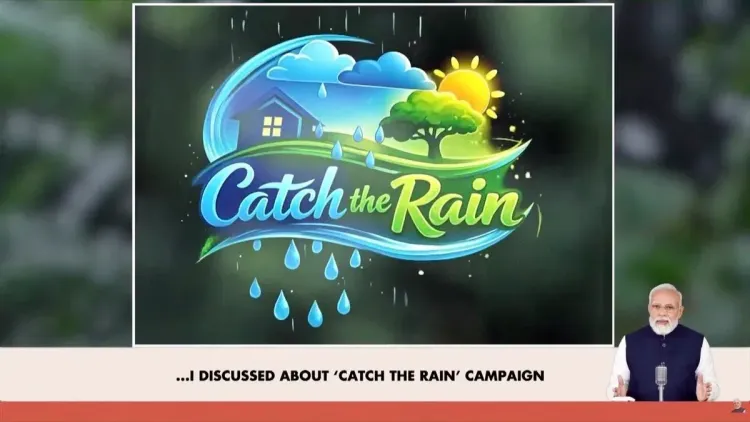
Union Environment Minister Bhupender Yadav on Sunday, 26 July 2026, amplified the message of the 'Catch The Rain' campaign, underlining its core principle: conserve water where it falls and when it falls. The minister's post came in the context of Mann Ki Baat, Prime Minister Narendra Modi's monthly radio address, which has repeatedly served as a platform for citizen-centric environmental messaging.
Context
Yadav's post, written in Hindi, states: 'Catch The Rain ka sandesh bahut seedha hai — jahan baarish gire, jab baarish gire, paani ko waheen sahejiye.' ('The message of Catch The Rain is very simple — where it rains, when it rains, save the water right there.') The statement is a direct restatement of the campaign's foundational slogan, timed to coincide with the peak of India's southwest monsoon season and the public outreach window created by Mann Ki Baat.
The Environment Ministry has increasingly aligned its public communication with the Prime Minister's radio programme, using the platform's wide rural reach to push behavioural change on water conservation at the household and community level.
Policy Backdrop
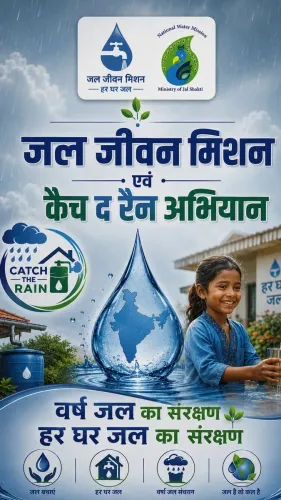
The Catch The Rain campaign was launched in 2021 by the Ministry of Jal Shakti with the explicit aim of promoting decentralised rainwater harvesting across India. Its guiding principle — capture rain where it falls, before it runs off — is designed to recharge groundwater and reduce dependence on large, centralised water infrastructure.
The campaign builds on the Jal Shakti Abhiyan, initiated in 2019, which targeted water-stressed blocks across the country with a focus on aquifer recharge and conservation. Together, these initiatives represent a sustained policy shift toward community-driven water security, particularly relevant as groundwater depletion and monsoon variability intensify under climate change pressures.
The Environment Ministry's amplification of a Jal Shakti-led campaign reflects the cross-ministerial coordination that has characterised India's national adaptation strategy over the past several years.
Stakeholders and Impact
Farmers, urban residents, and local bodies are the primary stakeholders of the Catch The Rain campaign. For farmers, rainwater harvesting directly affects irrigation availability during dry spells between monsoon showers. For urban local bodies, rooftop and surface harvesting can ease pressure on municipal water supply systems.
The campaign's decentralised design means that impact is diffuse and cumulative — dependent on millions of individual and community-level actions rather than a single infrastructure project. Minister Yadav's post, shared during the monsoon peak, is timed to reach citizens at precisely the moment when rainwater harvesting is most immediately actionable.
What's Next
Groundwater level data at the end of the 2026 monsoon season will serve as a key indicator of how effectively conservation messaging has translated into on-ground action. State governments are responsible for implementing rainwater harvesting mandates, and their compliance and outreach efforts will shape the campaign's real-world outcomes.
With Mann Ki Baat continuing to serve as a high-visibility platform for environmental themes, further ministerial amplification of water conservation messaging is likely through the remainder of the monsoon season and into the post-monsoon review period.
Point of View
The Environment Ministry positions itself as a co-owner of water security messaging alongside Jal Shakti — a signal of inter-ministerial alignment on climate adaptation. The emphasis on decentralised, citizen-level action also deflects attention from the slower-moving challenge of large-scale groundwater regulation. As India's water stress deepens, the gap between campaign messaging and measurable aquifer recovery will become an increasingly pointed political question.
NationPress
24 Oct 2026
Frequently Asked Questions
What is the Catch The Rain campaign?
Catch The Rain is a national campaign launched in 2021 by India's Ministry of Jal Shakti to promote decentralised rainwater harvesting, encouraging citizens to capture and store rainwater where and when it falls to recharge groundwater and reduce water scarcity.
What did Bhupender Yadav say about Catch The Rain?
On 26 July 2026, Minister Yadav posted that the message of Catch The Rain is straightforward: wherever and whenever it rains, save the water right there — tying the message to Mann Ki Baat.
What is Mann Ki Baat and why is it relevant here?
Mann Ki Baat is Prime Minister Narendra Modi's monthly radio address to citizens, frequently used to highlight environmental and civic campaigns. Yadav's post was tagged with the Mann Ki Baat hashtag, linking the water conservation message to the PM's outreach platform.
What is the Jal Shakti Abhiyan?
Jal Shakti Abhiyan is a Central Government initiative launched in 2019 targeting water-stressed districts across India, focusing on groundwater conservation, aquifer recharge, and rainwater harvesting — the policy foundation on which Catch The Rain was later built.
How does rainwater harvesting help India's water crisis?
Rainwater harvesting reduces surface runoff, recharges depleted aquifers, and provides supplemental water for agriculture and domestic use — directly addressing groundwater depletion worsened by climate change and erratic monsoon patterns.