Goyal Backs 'Catch the Rain' Drive in Mann Ki Baat Push
Synopsis
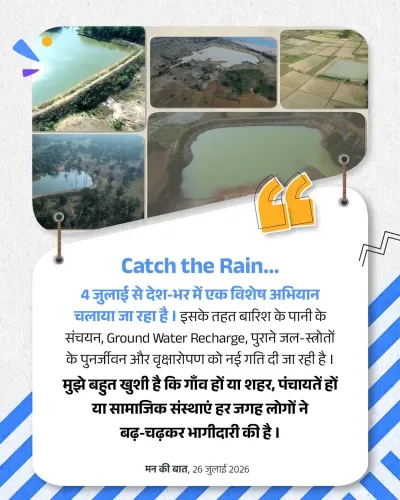
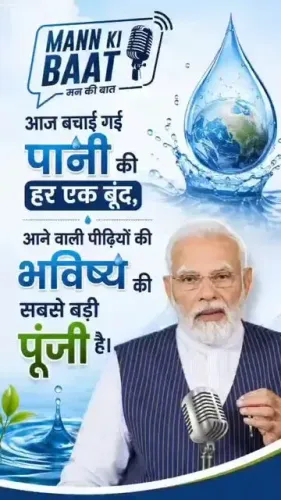
Union Minister Piyush Goyal on 26 July 2026 backed the Centre's 'Catch the Rain' drive, urging citizens to save every drop of water in a post linked to PM Modi's Mann Ki Baat programme during peak monsoon season.
Key Takeaways
Piyush Goyal posted on 26 July 2026 urging citizens to 'save every drop of water', tagging the post to #MannKiBaat .
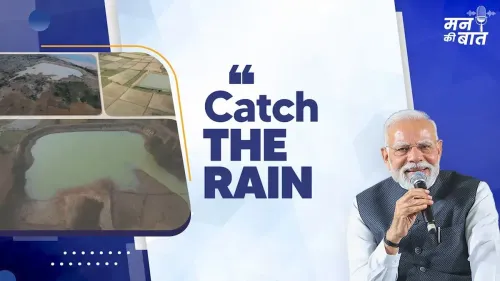
The 'Catch the Rain' campaign was launched in 2020 under the National Water Mission to promote rainwater harvesting during the monsoon.
Mann Ki Baat , PM Modi's monthly radio address, has been running since October 2014 and frequently spotlights civic conservation drives.
The Ministry of Jal Shakti oversees both the Catch the Rain campaign and the Jal Shakti Abhiyan (launched 2019 ), which targets water-stressed districts.
Key stakeholders include farmers , urban local bodies , and urban residents facing groundwater depletion across India.
Union Commerce and Industry Minister Piyush Goyal on Sunday, 26 July 2026 amplified the Centre's water conservation message, urging citizens to save every drop of rain in a post tied to Prime Minister Narendra Modi's monthly radio programme Mann Ki Baat.
Context
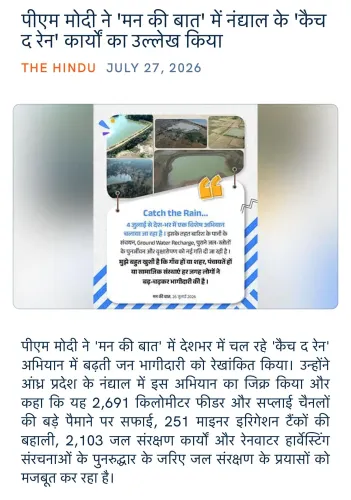
Goyal's post carried the bilingual message — 'Catch the rain... पानी की हर बूंद बचाएं' ('Catch the rain... save every drop of water') — alongside the hashtag #MannKiBaat, signalling that the episode addressed water conservation as a public priority. The post was shared during the peak of India's southwest monsoon season, when rainwater harvesting is most actionable for households and communities.
Mann Ki Baat, launched by PM Modi in October 2014, is a monthly radio address that routinely spotlights civic campaigns and calls citizens to action on issues ranging from cleanliness to water security. Senior ministers amplifying the programme's themes on social media has become a standard practice within the ruling dispensation.
Policy Backdrop
The 'Catch the Rain' campaign was initiated in 2020 under the National Water Mission, with the stated aim of encouraging states, urban local bodies, and individual households to create and restore rainwater harvesting structures before and during the monsoon. The campaign's core message — 'catch the rain where it falls, when it falls' — directly mirrors the slogan Goyal echoed in his post.
The campaign operates in conjunction with the Jal Shakti Abhiyan, launched in 2019, which targets water-stressed districts for intensive conservation work. The nodal body for both initiatives is the Ministry of Jal Shakti, which coordinates with state governments on the construction of check dams, ponds, and rooftop harvesting units. India's chronic groundwater depletion and erratic monsoon distribution have made such campaigns a recurring feature of central government outreach.
Stakeholders and Impact
The primary beneficiaries of rainwater harvesting campaigns are farmers, who depend on groundwater for irrigation during dry spells, and urban residents in cities where over-extraction has sharply lowered water tables. Urban local bodies are key implementers, responsible for mandating and facilitating rooftop harvesting systems in residential and commercial buildings.
Public messaging by senior ministers during the monsoon months is intended to sustain citizen participation beyond government-led infrastructure projects. Social media amplification of Mann Ki Baat themes extends the programme's reach to younger, digitally connected demographics who may not tune in to the radio broadcast.
What's Next
State governments are expected to release progress reports on rainwater harvesting structures built under the Jal Shakti Abhiyan and Catch the Rain campaign as the monsoon season advances. Subsequent episodes of Mann Ki Baat may carry further updates on water conservation targets and citizen success stories, with ministers likely continuing to amplify the messaging across platforms. The monsoon window makes the coming weeks the most critical period for translating awareness into on-ground action.
Point of View
Where cabinet ministers reinforce the programme's themes on social media to multiply reach. The water conservation message fits squarely within a broader governance narrative that frames environmental stewardship as a citizen duty rather than solely a state responsibility. By invoking 'Catch the Rain' during peak monsoon, the Centre is also drawing attention to the Jal Shakti Abhiyan's unfinished agenda in water-stressed districts, where groundwater depletion remains a structural challenge. The timing underscores how social media has become an integral layer of India's public-health and environmental communication architecture.
NationPress
25 Oct 2026
Frequently Asked Questions
What is the 'Catch the Rain' campaign in India?
The 'Catch the Rain' campaign is a government initiative launched in 2020 under the National Water Mission that encourages states, urban local bodies, and citizens to build or restore rainwater harvesting structures during the monsoon season.
What did Piyush Goyal post about water conservation?
On 26 July 2026, Piyush Goyal posted urging citizens to 'catch the rain' and 'save every drop of water', linking his message to PM Modi's Mann Ki Baat radio programme with the hashtag #MannKiBaat.
What is Mann Ki Baat and when did it start?
Mann Ki Baat is a monthly radio address by Prime Minister Narendra Modi, launched in October 2014, in which he discusses public issues and civic campaigns directly with citizens across India.
Which ministry handles rainwater harvesting schemes in India?
The Ministry of Jal Shakti is the nodal central ministry responsible for water resources management, overseeing schemes such as the Catch the Rain campaign and the Jal Shakti Abhiyan.
Why is rainwater harvesting important in India?
India faces chronic groundwater depletion and variable monsoon patterns, making rainwater harvesting a critical tool for farmers and urban residents to secure water supply during dry spells and reduce dependence on over-extracted groundwater.